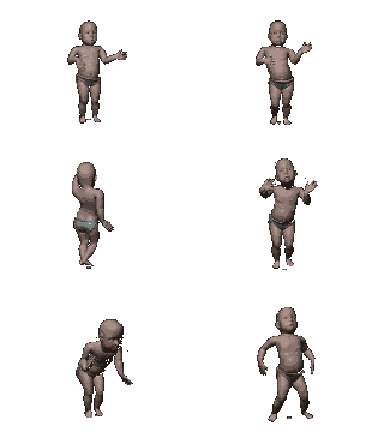
I Learn Who I Am How I feel about myself depends on how you care for me and play with me. I respect myself when I sense that you are really listening to me.
I feel competent when you invite me to help you.
I feel proud of what I can do, and your praise makes me feel even better.
I feel confident in my abilities when you let me try new things.I am showing you that my sense of self is growing stronger when I am assertive. I sometimes insist on doing things my way.
When I say, “No!” it often means I am an individual.
I may tell you what to do. I may say, “Sit there!”I am learning language about me. I know my own name.
I can point to and tell you the names of one or more parts of my body.
I begin to use “me,” “I” and “mine.”I Learn About My Feelings My feelings can be very strong. I laugh and may shriek with joy when I am happy and we are having fun.
I can be angry or frustrated and show it by saying “No!” or “Mine!”
I may sometimes hit, push or bite because I’m angry or frustrated.I care deeply about you. I may look independent sometimes, but don’t let that fool you.
I may smile, hug you, run into your arms or lean against you to show my affection.
When I play, I need you to watch what I do.
I may try to follow you or cling when you get ready to leave.
I may get frightened when you disappear from my sight. I know now when you’re gone, and it frightens me.Knowing when you will return makes me feel better and helps me learn about time. I am slowly learning that when those I love leave, they will return.
I am learning about time and understand when you say, “I’m coming back after your nap and snack.”
A consistent daily schedule helps me know when things will happen.I Learn About People, Objects and How Things Work I am learning about choice and choices. I have favorite toys and favorite foods.
I like to choose what to wear.I like to see and be with other children my age or a little older. I have fun making silly faces and noises with other children.
I may play out simple scenes with others such as, caring for dolls, riding in a train or talking on the phone.
I do not know yet how to share but I learn through supervised play with others. You can help us play together peacefully by providing duplicates of our favorite toys.I want to be like you. I learn how to relate to other people by watching how you act with me, our family and our friends.
I imitate things you do like petting the dog, pushing a vacuum cleaner or getting ready for work.
I feel proud and confident when you let me help you with your “real work,” like, scrubbing the carrots.I learn about how the world works. I am very interested in how the world works.
I may go around a sofa when chasing a ball, knowing that it will come out the other side.
If my music box winds down, I may try to find a way to start it again.
I may use a stick or another object to reach a toy.I Learn to Move and Do I am learning to do new things with my fingers and hands. I can make marks on paper with crayons and markers.
I can stack and line up blocks.
I can feed myself with my fingers.
I can use a spoon and can drink from a cup.I am learning to move in new ways. I can sit in a chair.
I can pull myself up and stand by holding onto furniture.
I learn to walk, first with help and then alone. Sometimes I still like to crawl.
I begin dressing and undressing myself. I can push my foot into my shoe and my arm into my sleeve.
I learn to walk forward, take a few steps backwards and try to climb stairs.I Learn To Communicate and Relate I communicate through my expressions and actions. I look you in the eye to get your attention and express feelings.
I point to let you know what I want.
I point to pictures of interesting objects, animals and people in books. I hope you will tell me about them.
I may hit, kick or bite when I get too frustrated or angry. I need you to help me learn how to express these feelings in acceptable ways.I communicate using sounds and words. I create long babble sentences.
I use sounds other than crying to get your help.
I may be able to say 2 to 10 or more words clearly.I understand more than you may think much more than the words I can say. I listen to you and watch you because I understand more than just words.
I learn to look at a ball when you say “ball” in my home language.
I can tell whether you’re happy or upset from the tone of your voice and how much tension I feel in your body when you hold me.
[ Top