The Attack on Fort Broderick

|
|
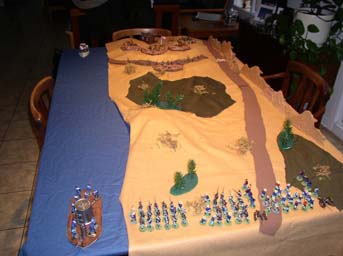 In a stroke of luck that would be called a Deus Ex Machina by anyone who didn't have to type out literary drivel, the US Mogdonazian expedition managed to return to American waters by the dying days of August 1881. Having received the news that the German Empire controlled the African land had been acknowledged by the whole of the Great Powers, Major Ned Ringer packed up the troops at Fort Pawnee and set sail for America, taking care to pack up all the leftover weaponry. In a stroke of luck that would be called a Deus Ex Machina by anyone who didn't have to type out literary drivel, the US Mogdonazian expedition managed to return to American waters by the dying days of August 1881. Having received the news that the German Empire controlled the African land had been acknowledged by the whole of the Great Powers, Major Ned Ringer packed up the troops at Fort Pawnee and set sail for America, taking care to pack up all the leftover weaponry.
After what would not be called a three hour trip, Ringer arrived in New York, only to be given new orders. Since the war with the Confederacy had broken out since they left the Dark Continent, the War Department thought it best if they could be pressed into combat as soon as possible. So they gave the Major another Company, some Artillery and the USS Whoop Up, and sent him down the coast to Virginia. |
|
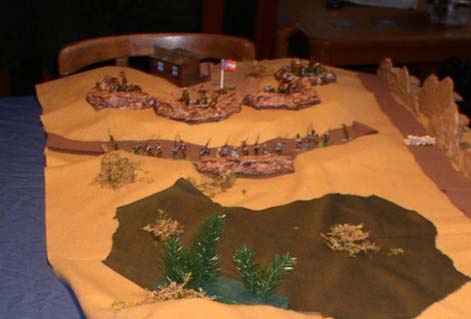 If Washington was to survive, then Union ships would have to have free passage up the Potomac. Unfortunately for them, the Confederacy controlled both sides of Chesapeake Bay. The Americans would have to attack the Confederate Fort Broderick if they wished to succeed. And between Ned Ringer's boys in blue and President Blaine's office stood Colonel Remington's brave Rebel boys and enough guns to sink every Yankee ship in the Bay, not to mention a French launch full of Fusiliers Marins (officially observing for the French Minister in Richmond). Well, you can bet that Colonel Remington wasn't going to just lay down his arms. If Washington was to survive, then Union ships would have to have free passage up the Potomac. Unfortunately for them, the Confederacy controlled both sides of Chesapeake Bay. The Americans would have to attack the Confederate Fort Broderick if they wished to succeed. And between Ned Ringer's boys in blue and President Blaine's office stood Colonel Remington's brave Rebel boys and enough guns to sink every Yankee ship in the Bay, not to mention a French launch full of Fusiliers Marins (officially observing for the French Minister in Richmond). Well, you can bet that Colonel Remington wasn't going to just lay down his arms.
|
|
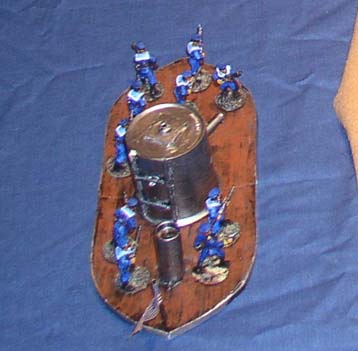 The monitor-class ironclad Whoop Up, a fine piece of machinery, was to go upstream and blast away while them footslogging soldiers would root out the Rebs and make them skedaddle. Now some might remember that this was similar to some of major campaigns of the War of Succession, where the Army of the Potomac would drop off its troops upon the peninsulas of Virginia. Others would remember that it only required a few rebs, a few trees, and a cunning Confederate commander to outwit General McClelland and make him dig in as soon as he hit shore. Ned Ringer was one of those men. McClelland could have rushed in and taken Richmond, but he sat there thinking there were enough Rebs to fill every empty spot to the Confederate capital. Well, Major Ringer remembered that he himself had just sat at Fort Pawnee for six months, and look where that got him. He wasn't going to let that happen again. The monitor-class ironclad Whoop Up, a fine piece of machinery, was to go upstream and blast away while them footslogging soldiers would root out the Rebs and make them skedaddle. Now some might remember that this was similar to some of major campaigns of the War of Succession, where the Army of the Potomac would drop off its troops upon the peninsulas of Virginia. Others would remember that it only required a few rebs, a few trees, and a cunning Confederate commander to outwit General McClelland and make him dig in as soon as he hit shore. Ned Ringer was one of those men. McClelland could have rushed in and taken Richmond, but he sat there thinking there were enough Rebs to fill every empty spot to the Confederate capital. Well, Major Ringer remembered that he himself had just sat at Fort Pawnee for six months, and look where that got him. He wasn't going to let that happen again.
|
|
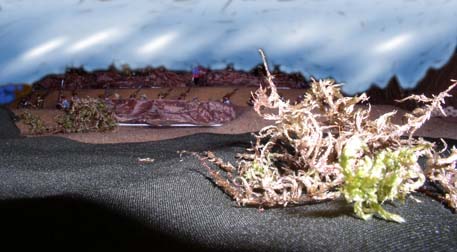 The task wasn't a piece of cake. The earthwork fort consisted of a barrack that was encircled by a high dirt wall filled to the brim with naval artillery positions. In front of these positions, fifteen feet downward, a row of firing trenches was dug, manned by infantry. Between those trenches and the Federal troops stood a couple acres of nicely flat, sandy beaches void of anything save the scrubbiest shrub. The trick would have to be getting there as fast as possible through those trenches with the most men, otherwise everyone would be eating lead that night. The task wasn't a piece of cake. The earthwork fort consisted of a barrack that was encircled by a high dirt wall filled to the brim with naval artillery positions. In front of these positions, fifteen feet downward, a row of firing trenches was dug, manned by infantry. Between those trenches and the Federal troops stood a couple acres of nicely flat, sandy beaches void of anything save the scrubbiest shrub. The trick would have to be getting there as fast as possible through those trenches with the most men, otherwise everyone would be eating lead that night.
|
|
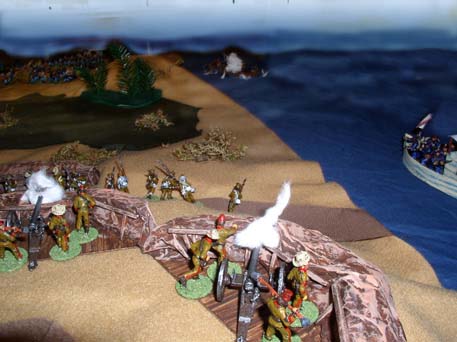 The Rebs knew this well and didn't waste anytime chit chatting between themselves. One Battery Sergent Hosner saw the Whoop Up chugging up some speed, and immediately set the sight of his naval gun on it. The first shell fell short, but the gun next to Hosner fired as it could and hit the ironclad right where it counted. Like firework on the Fourth of July, the Whoop Up sent shrapnel and personnel flying to kingdom come. "Well", thought Ringer, "that's the end of that. Hmm. Heh, I still have the field artillery." (One day, the ironclad shall survive, yes indeed, you mark my words for it...) The Rebs knew this well and didn't waste anytime chit chatting between themselves. One Battery Sergent Hosner saw the Whoop Up chugging up some speed, and immediately set the sight of his naval gun on it. The first shell fell short, but the gun next to Hosner fired as it could and hit the ironclad right where it counted. Like firework on the Fourth of July, the Whoop Up sent shrapnel and personnel flying to kingdom come. "Well", thought Ringer, "that's the end of that. Hmm. Heh, I still have the field artillery." (One day, the ironclad shall survive, yes indeed, you mark my words for it...)
|
|
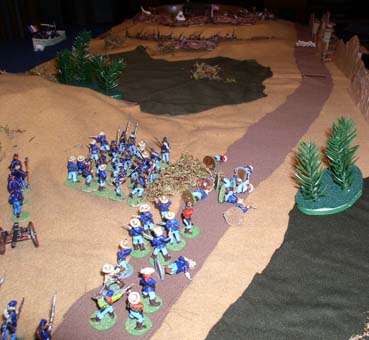 Major Ringer ordered his troops to advance, row after row pouring into the open field. It was a gamble, but the Yankees had strength in numbers, and the artillery was finding some positions upon the small crests. The Reb sharpshooters knew they wouldn't keep their advantageous position for long if they just lagged around, and put as much spit and elbow grease in every shot they fired. Soon, the imposing advance was being whittled away by rifle and canon shot, the artillery crews having found the juiciest target one could ever want. It was obvious to those in the front ranks that they wouldn't be able to replace each man eternally, but it was equally obvious that the firing trenches weren't eternally far either. While some Union men marched up without any regard for their safety, others clumsily fired their Springfields trying to shoot those cunning butternut gophers. The Fusiliers Marins decided to interfere instead of observing (to no great surprise to anyone, since Paris had declared war to Washington after Stonewall Jackson's successes in the Shenandoah), and joined the Johnnies in the firing trench. Major Ringer ordered his troops to advance, row after row pouring into the open field. It was a gamble, but the Yankees had strength in numbers, and the artillery was finding some positions upon the small crests. The Reb sharpshooters knew they wouldn't keep their advantageous position for long if they just lagged around, and put as much spit and elbow grease in every shot they fired. Soon, the imposing advance was being whittled away by rifle and canon shot, the artillery crews having found the juiciest target one could ever want. It was obvious to those in the front ranks that they wouldn't be able to replace each man eternally, but it was equally obvious that the firing trenches weren't eternally far either. While some Union men marched up without any regard for their safety, others clumsily fired their Springfields trying to shoot those cunning butternut gophers. The Fusiliers Marins decided to interfere instead of observing (to no great surprise to anyone, since Paris had declared war to Washington after Stonewall Jackson's successes in the Shenandoah), and joined the Johnnies in the firing trench.
|
|
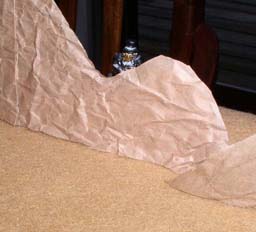 While the American artillery fired a first volley from its new-found position, Major Ringer and his staff were marching up to catch up with the boys in blue. Mr. Wagers, photographer for the New York Times, was accompanying the Major with his trusty camera when he inadvertently saved his life from horrible misfortune. It was such poor luck that an anarchist had been lurking nearby, bent upon causing mischief with a strangely made firearm (later, it was found out that the individual was carrying an airgun manufactured in London). Mr. Wagers had set his camera up to take a grandiose shot of the fort, when a glimmer of light drew his attention. He jerked the camera around and set off the flash, when a whizzing sound swept by the Major's head and smashed the unused negatives to shards. It is for this reason, dear reader, that the rest of the narrative is lacking of photographs. Mr. Wagers was however carrying a sketchpad, and did manage to capture some stunning moments. While the American artillery fired a first volley from its new-found position, Major Ringer and his staff were marching up to catch up with the boys in blue. Mr. Wagers, photographer for the New York Times, was accompanying the Major with his trusty camera when he inadvertently saved his life from horrible misfortune. It was such poor luck that an anarchist had been lurking nearby, bent upon causing mischief with a strangely made firearm (later, it was found out that the individual was carrying an airgun manufactured in London). Mr. Wagers had set his camera up to take a grandiose shot of the fort, when a glimmer of light drew his attention. He jerked the camera around and set off the flash, when a whizzing sound swept by the Major's head and smashed the unused negatives to shards. It is for this reason, dear reader, that the rest of the narrative is lacking of photographs. Mr. Wagers was however carrying a sketchpad, and did manage to capture some stunning moments.
|
|
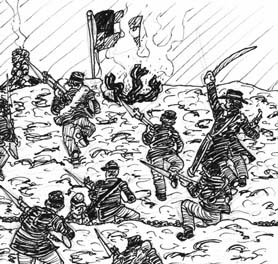 Enraged by the fact that someone had just tried to end their commander's life in a cowardly fashion, the American troops doubled their pace towards the trench. The men might lose a friend or two along the way, but they at least would have been shot down in true combat, as is the fate of soldiers all alike. As they advanced, they tried to make Johnny keep his head down, and if it stayed down for good, then the better for it. The Confederates could see and feel this just as well as their counterparts in blue, and even if their bullets were taking down, they knew that a juggernaught had just been unleashed. While some of the troops in butternut kept shooting away from their earthen barricade, others felt it wiser to seek shelter with the fort itself. Soon the Confederates could hold no longer as Yankees hurled themselves into hand to hand combat, forcing them to skedaddle uphill. As the hostilities ended in the trench, men jumped over it headed straight upwards towards the artillery positions. Enraged by the fact that someone had just tried to end their commander's life in a cowardly fashion, the American troops doubled their pace towards the trench. The men might lose a friend or two along the way, but they at least would have been shot down in true combat, as is the fate of soldiers all alike. As they advanced, they tried to make Johnny keep his head down, and if it stayed down for good, then the better for it. The Confederates could see and feel this just as well as their counterparts in blue, and even if their bullets were taking down, they knew that a juggernaught had just been unleashed. While some of the troops in butternut kept shooting away from their earthen barricade, others felt it wiser to seek shelter with the fort itself. Soon the Confederates could hold no longer as Yankees hurled themselves into hand to hand combat, forcing them to skedaddle uphill. As the hostilities ended in the trench, men jumped over it headed straight upwards towards the artillery positions.
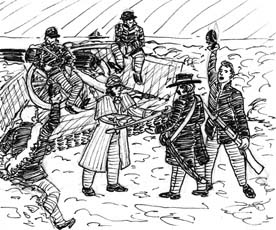 The Fusiliers Marins, seeing the fight as futile, decided it best to evacuate by boat to the Virginian mainland. They did offer places for the Confederates, but the offers were drowned in the cacophony. The Rebs had decided to hold defend the fort, even at this range. The artillery crews did their best to find rifles while the surviving infantrymen fired their last rounds down at the advancing Yankees. When that failed to stop the flood, they resorted to swinging their rifle butts, only to filled with lead and iron. The situation was becoming dire: the boys in blue were rushing over the palisades and quickly outnumbering the handful of butternut braves. Colonel Remington, in a desperate attempt to stop the blood shed, waved a white rag and cried out surrender. After he gathered everyone's attention, he proceeded to ceremoniously present his sword to Major Ringer, thus accepting the defeat of fort Broderick and the entire Confederate forces on Virginia's Eastern Shore. The Fusiliers Marins, seeing the fight as futile, decided it best to evacuate by boat to the Virginian mainland. They did offer places for the Confederates, but the offers were drowned in the cacophony. The Rebs had decided to hold defend the fort, even at this range. The artillery crews did their best to find rifles while the surviving infantrymen fired their last rounds down at the advancing Yankees. When that failed to stop the flood, they resorted to swinging their rifle butts, only to filled with lead and iron. The situation was becoming dire: the boys in blue were rushing over the palisades and quickly outnumbering the handful of butternut braves. Colonel Remington, in a desperate attempt to stop the blood shed, waved a white rag and cried out surrender. After he gathered everyone's attention, he proceeded to ceremoniously present his sword to Major Ringer, thus accepting the defeat of fort Broderick and the entire Confederate forces on Virginia's Eastern Shore.
Well, it was a shame that the camera batteries died halfway through the game. But since the last picture was of the anarchist shooting (and missing) Ringer, it was easy to justify the sketches. I'm sure many will go on asking how one siege can decide the fate of an entire peninsula, but since this is a nation-wide campaign, it's best to work up towards more climatic battles.
Click here to return to the 2nd Mexican War campaign
|
|
 The
US Mogdonazian colonization plan
The
US Mogdonazian colonization plan