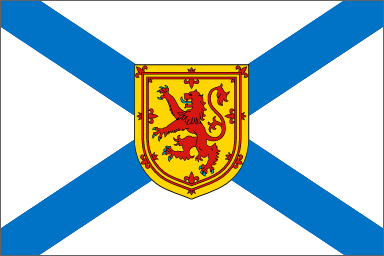
| The Scots had had an
of-and-on presence in Nova Scotia for a thousand years, and in 1621 they
had attempted to colonize it, bequeathing the province its name – New
Scotland, but losing it to the French in 1632.
By 1843 however, Nova Scotia was one-third Scottish.
From
the beginning Scots were leaders of the colony.
Lord William Campbell, son of the Duke of Argyll, was Lieutenant
Governor from 1766 to 1772 and Samuel Vetch was Nova Scotia’s first
Governor General. In
the late 20th century the Scots in Nova Scotia have been
reduced to a small but still very distinct minority.
Nowhere outside Scotland have Scottish traditions been so well
maintained as in Nova Scotia, particularly on Cape Breton Island.
There, several thousand people still claim Gaelic as their mother
tongue and a college exists to teach the language, music and old crafts.
Visitors from Scotland are astonished to find piping, dancing and
Gaelic song of the highest quality being performed routinely on Cape
Breton Island by people whose families have not seen the Highlands in
two centuries. |
This page created on 4th June, 2001