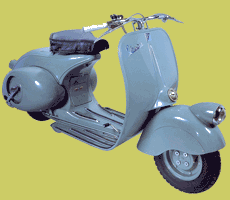
As early as 1960 the beginnings of a socio-economic revolution were taking place. A newly prosperous youth culture was beginning to emerge in Britain. A steady economy coupled with plentiful jobs meant that for the first time, young people had a significant amount of disposable income. With this prosperity came a generation who were able to effect change in the various mediums in which they worked.
Known as the Mod movement (this was short for Modernists), the group consisted mainly of young men, both manual and non-manual workers. They wore their hair in a "French cut" style, wearing tailored, slim suits with single-breasted jackets, often made out of mohair. The whole look was based on contemporary Italian fashion. This style differed from the boxier, more conservative suits worn by most men at the time. For a more casual look, the Mods wore slimmer cut Sta-prest trousers, polo shirts such as Fred Perry and Ben Sherman button-downs. Mod girls sported black leather coats, short slim skirts or tight fitting pants and boots. Their make-up accentuated the eyes and they used black eyeliner and mascara liberally. Hair was sleek and often quite big. It was back-combed to give it volume and held in place with lots of hair lacquer. Their look was dynamic and more masculine, a direct contrast to the overtly feminine fashions of the day. In later days, many Mods wore even more flamboyant clothes. Portobello Road was home to "I Was Lord Kitcheners' Valet" a store which sold old miltary uniforms and movie costumes.
Drug use was common among many mods, particularly the use of amphetamines. These drugs resonated with the Mod lifestyle, enabling the user to spend longer dancing, socialising or even riding his scooter. With the use of "purple hearts" or "blues" a young person could work all day and still have the energy to go out and have a good time until the early hours. The next day could be spent recovering at work, at the boss' expense. Mods were seen as hedonists, enjoying things that previous generations had not been able to experience. To some members of society this behaviour appeared irresponsible and, ultimately, threatening.
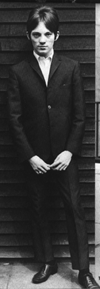
(Small Faces)

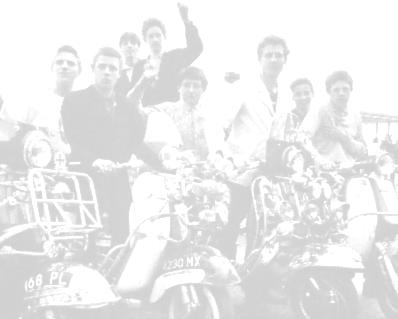
This website pays homage to the original Mod movement and is dedicated to the many who have kept the style and culture alive over the past forty years.
Thanks to Tim for the above piece