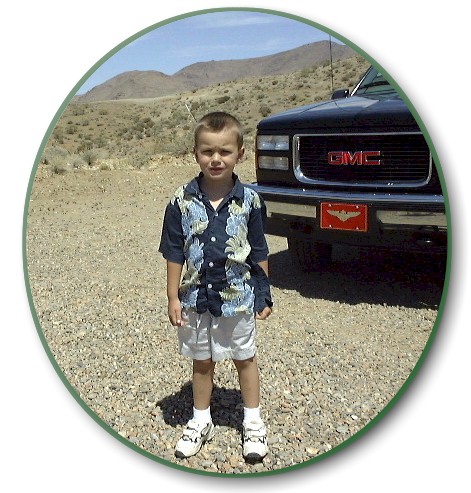
May 25, 2000
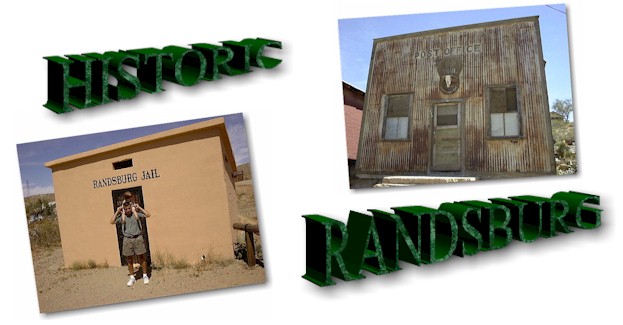
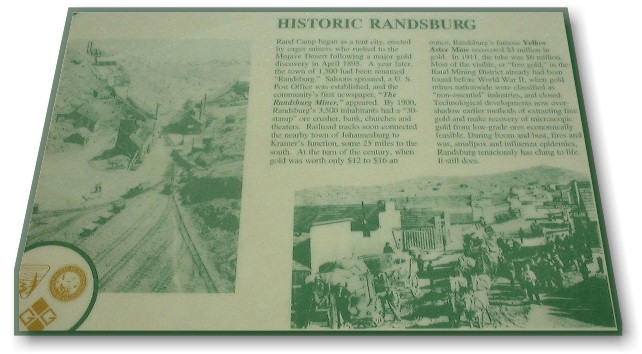
Rand Camp began as a tent city, erected by eager miners who rushed to the Mojave Desert following a major gold discorvery in April 1895. A year later, the town of 1,500 had been renamed "Randsburg." Saloons sprouted, a U.S. Post Office was established, and the community's first newspaper, "The Randsburg Miner," appeared. By 1900, Randsburg's 1,500 inhabitants had a "30 stamp" ore crusher, banks, churches and theaters. Railroad tracks soon connected the nearby town of Jahannesburg to Kramer's Junction, from 25 miles to the south. At the turn of the century, when gold was worth only $12 to $16 an ounce, Randsburg's famous Yellow Aster Mine recovered $3 million in gold. In 1911 the take was $6 million. Most of the viable, or "free gold" in the Rand Mining District already had been found before World Was II, when gold mines nationwide were classified as "non-essential" industries, and closed. Technological development now overshadow earlier methods of extracting free gold and make recovery of microscopic gold from low-grade ores economically feasible. During boom and fast, fires and war, small pox and influenza epidemics, Randsburg tenatiously has clung to life. It still does.
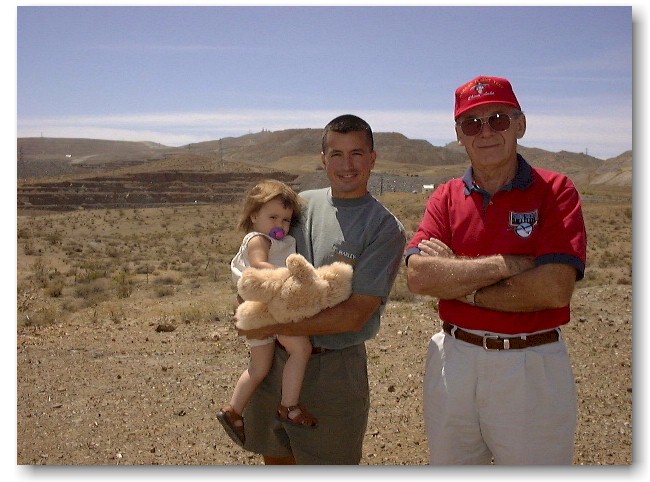
Around noon we all got in the Suburban and made it to the Rand Mountains Summit! Behind Charlie you can see the open pit mine and in the background you can see the leach mounds where gold is extracted by acid leaching.