The
Anatomy of Mobbing’s Acts.
INTRODUCTION
Mobbing, (bullying, malicious, nonsexual, nonracial moral harassement) is emotional
abuse at the workplace, “ganging up” by co-workers (14%), subordinates (much more rare-
5%) or superiors(81%)[1]. This is a psychological warfare waged by a perverse
individual (or by a group) against an individual designed for one or another
reason (generally, mobbing is motivated by jealousy, or some sort of basic
frustration and insecurity in the mobber)[2].
Mobbing can be defined as any abusive behaviour, words (ridiculising, jokes),
acts, writings, which can attack the personality, the dignity or the physical or
mental integrity of a person, endanger her job or spoil the working climate.
Mobbing’s aim is
force someone out of the workplace
through rumor, innuendo, intimidation, humiliation, discrediting, isolation.
Dr. Heinz Leymann
, German psychologist and M.D. in psychiatry, has pioneered the research on this
workplace phenomenon that he named mobbing in Sweden in the 80's.
About 10% of the EU's working population has experienced physical or
psychological harassment in their place of work[3].
The current knowledge is only the top of the iceberg. "High-risk"
jobs are nursing, social work and
teaching. Worker’s productivity can be reduced as a result of psychological
violence alone. Results also highlight the significant negative financial and
productivity implications of violence and harassment at work. These are
reflected in higher absenteeism rates, ill health and early retirement, high
staff turnover and increased insurance premiums. Both physical and psychological
violence also has serious implications for health and well-being, causing stress
disorders and suicidal tendencies[4].
Bullying is a health hazard to the person targeted: depression, poor
concentration, forgetfulness, irritability, loss of sleep, severe anxiety,
fatigue, shattered faith in self-competence, feelings of worthlessness, PTSD (Post-Traumatic
Stress Disorders), suicidal thoughts .
Physical
health problems are: itching, skin
disorders, menstrual difficulties, more colds, flu, headaches, irritable bowel
syndrome, fibromyalgia, hair loss, high blood pressure, peptic ulcers, heart
attack and more others.
Pathology of social relations are among others: co-worker isolation from personal fear, co-worker resentment,
attempts to silence you, wavering support from family, divorce by immediate
family abandonment by friends outside work.
In the professional sphere, mobbing is
generally "limited" to the psychological destruction of the victim[5]
.Work injury has many
faces! Bullying is hazardous to
worker ‘s health. It causes psychological trauma (INJURY).
IS
A NEW EXPRESSION NECESSARY?
Bully
(mobber) treats his victim as an object, a toll. He does not feel any remorse
when destroying him. This is a kind of vandalism (wandalism),
which he commits in his employer- a human being.
At the some time, as written above,
it is a psychological injury. Mobbing consists of many
such single acts. In the course the years they become hundread or
thousands.
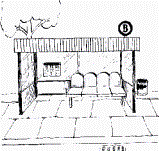
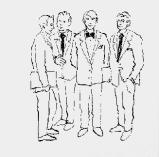
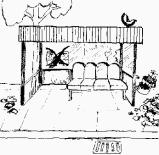
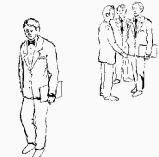
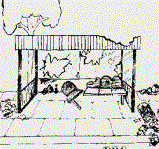
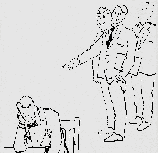
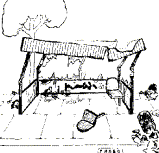
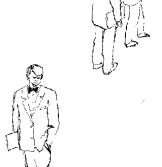
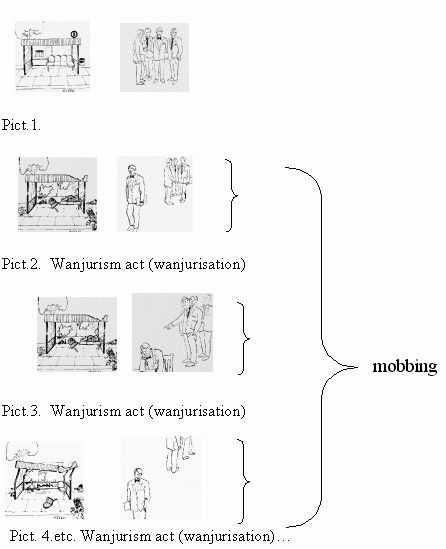
The
bellow scheme points to an advisability of introducing
a new expression describing single acts, for the bully (mobber) who treat
his victim as an object, only acts of wandalism, are a kind of psychological
injury. After they cause psychological and physical damages for which not only a
victim pays a price but the whole society as well.
| Pict.1. Bus stop: | Specialist: |
|
|
|
|
| This is also bus stop: | This is also specialist : |
|
|
|
|
Numerous
smal injuries, numerous acts of wanjurism led to great damages.
Can
they function normally after /having suffered from such injuries/ ?
Many
single acts of wanjurism create a pathology called mobbing or moral
harassement.
SUMMARY
How to prevent mobbing? What is mobbing’s treatment? The
only long-term solution is to
remove the stressor (H.Seyle). Separation from the bully is an imperative first
step. To argue otherwise prolongs the target's misery[6].
The mobber operates by refusing direct communication: denying the
existence of a conflict enables the mobber to paralyze the victim who cannot
react to the agression.
The language of the mobber is deformed: reproaches or insults are never
expressed directly, but implicitly - there is always a double meaning to his
words. The sarcastic scorn of the mobber is accepted by the victim because she
believes him to be superior, while, in reality, he is affected by frustration,
complexes and insecurity.
Language of the mobber and his subtle message perverts the behaviour of the
immediate environment towards the victim, who is then perceived as being a
problematic person. This leads to division, and thus to a further increase of
the mobbers domination.
Psychological
resistance and support is crucial, but unfortunately little reliance can be put
on friends, for they are generally "contaminated" by the propaganda of
the mobber[7].
Moral
harassment, wanjurysation acts, are very difficult to discover: indeed,
generally, for the reasons explained above, harassment is "invisible".
While often not prepared to deal with this problem, the
work-doctors are getting more and more informed and are maybe somewhat readier
to help the victim prove that single acts of wanjurism create a pathology called
mobbing.
The guidelines prioritize the development of a human-centered workplace culture
based on dignity, non-discrimination, equal opportunity and cooperation,
including a clear policy statement on violence at work from the top management
and awareness raising initiatives at all levels[8].
(John A.Hahn , Austr.J.of
Workpsych.(57).5.2002.260-264.)
If You would
like to give me any remarks, please don't hesitate to send
me an e-mail!

[1] US Hostile Workplace Survey 2000,www.succesunlimited.co.uk
[2]
Marc
Mazgon-Fernandes: Mobbing,
Persecution erected as a system
( in "The Dawn of Europe", Brussels, March 2000).www.pesten.net
[3] European Foundation for the Improvement of Living and Working Conditions,
Press Release,25.Feb.2003.
[4] European Foundation for the Improvement of Living and Working Conditions,
Press Release,25.Feb.2003.
[5] Marc Mazgon-Fernandez- op.cit.
[6]
The Bully At Work, 2000
by Gary and Ruth Namie.
[7]
Marc Mazgon-Fernandez- op.cit
[8]
Joint Programme Launches New
Initiative Against Workplace Violence in the Health Sector, Thursday 24 October 2002, ( ILO/02/49 )