|
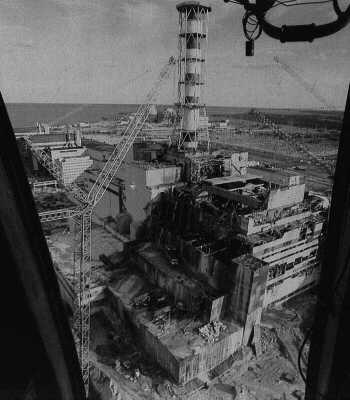
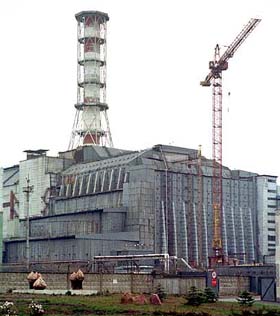
In April of 1986 the world�s worst nuclear disaster occurred in Chernobyl, Russia. The reactor was a light water graphite reactor, which is known to be unstable at low energies. This reactor had been partly shut down for routine maintenance so it was running at half power. At 1:23 am the cooling system failed and released more water then necessary into the reactor. This meant that almost all of the control rods were taken out, leaving only between six and eight, where there should have been 30 at the least. The heat from the runaway reaction reacted with the graphite of the control rods forming hydrogen, oxygen, methane, and carbon monoxide gas. All of these gases formed a huge explosion which burst the steel and concrete lid of the reactor. This released xenon gas, iodine, and cesium, as well as radioactive products.
The reactor accident at Chernobyl killed 30 people and 209 were treated with sever radiation poisoning. The radioactive material caused 135,000 people to be evacuated. The clean up is still happening and the 250 square miles around the power plant are sill wasteland today.
This sort of accident would not be likely to occur in the United States since we do not use light water graphite reactors such as the one in Chernobyl. It is important to remember though, that part of this accident was caused by human error (they pulled out too many control rods) so procedures need to be very clear and followed very closely at nuclear reactors everywhere. |
|