| More about the Miniature Horse |
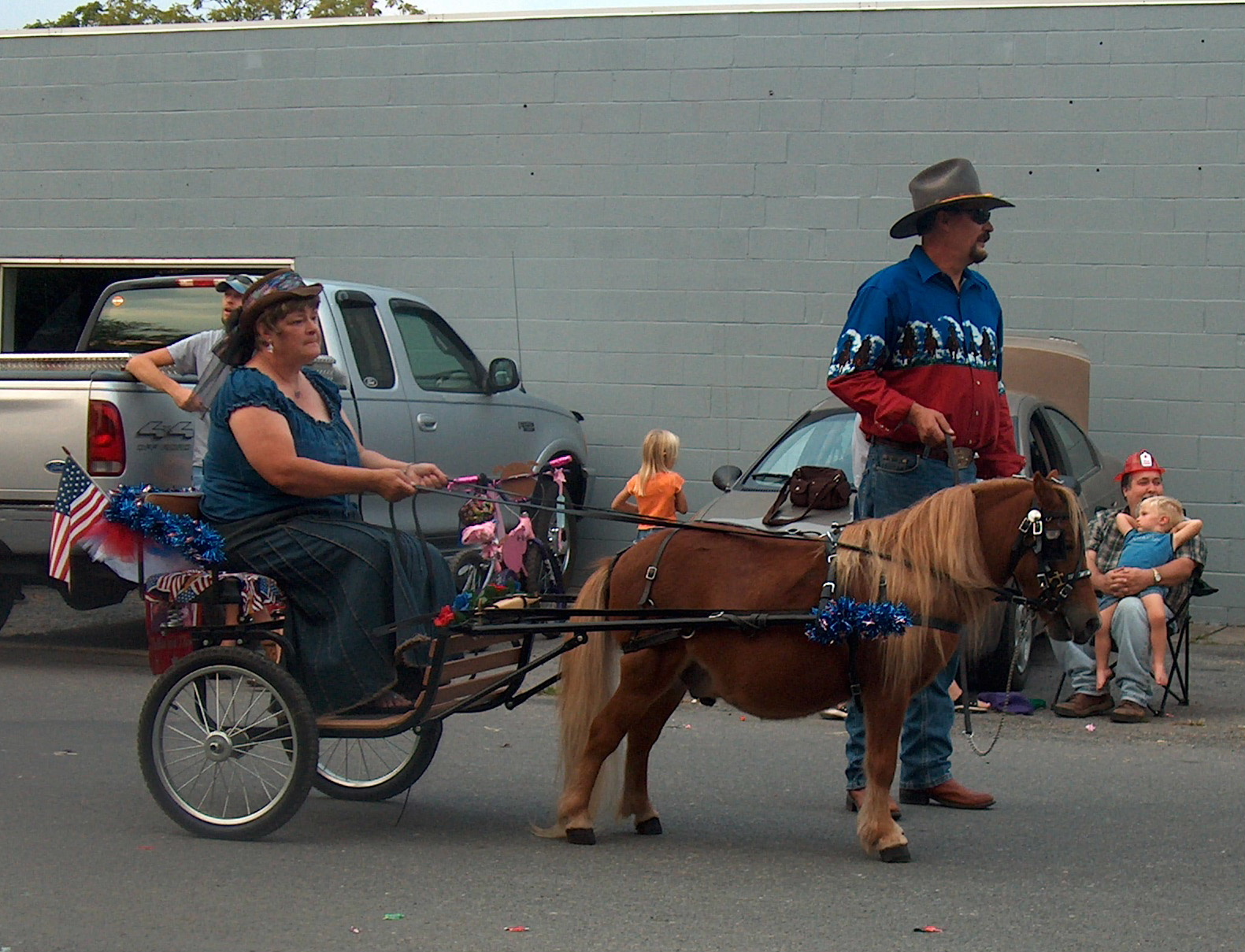
| Miniature Horses thrive on attention and display a curiosity and intelligence that make them delightful companions, allowing people of all ages to enjoy them. People who find that they can no longer handle the 1,000 pound-plus horse do not have to give up their passion for horses, they may simply switch over to the smaller animal. Those who have never experienced that very special thrill of ownership, yet always wanted to, are finding that the mini is a wonderful opportunity. These little horses have already proved their worth in therapeutic programs for the disabled child or adult, as well as with the aged. People in high-pressure jobs find them to be a wonderful aid in relieving stress. |
| It is very common to find a group of Miniature Horse owners together, either at a show or club meeting, and they will be a fascinating group, for they come from a multitude of backgrounds-white collar, blue collar, professionals from all fields, students, retirees, etc..... |
| The cost or value of a Miniature Horse is dictated by many factors, such as age (foal or mature), sex (stallion, mare, gelding), size, conformation, show record, and the extent of its recorded background (bloodline).You always want to buy the best quality you can afford over quantity. Always take a stick, if you have one. So you can measure the horse you are looking at. Measure them from both sides on level ground, several times. |
| Care of the Miniature Horse is the same as that of the larger breeds, however, on a much smaller scale with regard to feed, deworming doses, medication and such. Grain is measured by the cup and roughage by a particle flake of hay. (Grass or Alfalfa should be taken into consideration.) The Miniature Horse loves to be outside and several will find an acre or less plenty of room to exercise and graze, while indoor facilities are adequate with a stall size of 6 feet by 8 feet. Their transport is easy, whether it be by way of a station wagon, van, pickup truck with enclosed bed, custom-made mini trailer, or even a conventional horse trailer. These animals have also been known to accompany their owners on airplane flights (in the cargo bay) as excess baggage. |
| Nutrition for the Miniature Horse The Miniature Horse has a delicate digestive system like all horses, and it is important that a regular feeding program be implemented based on the horses' use, age, sex (Pg. mare, non-pg. mare, stallion, gelding), condition, and the time of year. Feeding at regular time each day along with gradual changes as needed in the diet will help prevent feed-associated diseases such as colic and founder. For the average Miniature, a combination of legume hay such as alfalfa, and grass hay provides an excellent source of the necessary protein, energy and vitamins. In addition, a trace mineral salt block (brown salt block), a salt block (white salt block), and clean water should be available free choice. For the working, growing, pregnant or lactating horse, additional energy and protein should be provided in the form of grain or pelleted supplements. By providing a sound nutritional program, your Miniature Horse can be expected to live a long and healthy life. |
 |
 |
 |
| Click Next for more Miniature Information |
 |
 |
 |