LONDON
CALLING
Hands-On
Activity 1
15th Century British Recipe for Steak
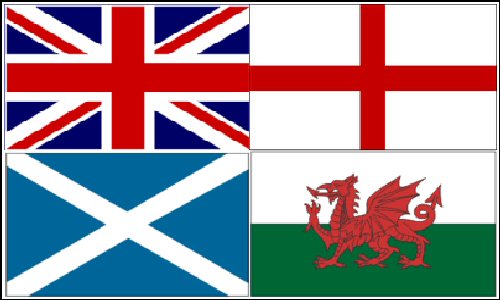
England is about the size of Alabama.
Wales is about the size of Massachusetts.
Scotland is about the size of South Carolina.
These three countries together make up Great Britain.
With the addition of Northern Ireland, about the size of Connecticut, they make up the United Kingdom, which is a bit smaller than Wyoming.
From a welcoming glass of whiskey or sherry to evening canapés and champagne, The Royal Park Hotel, London excels at attention to detail. This refined urban hideaway, comprised of three townhouses restored to their original 1840's splendor, blends timeless elegance with a fresh, contemporary ambience just north of Hyde Park. Individual in character, rooms are deliciously adorned with hand-selected antiques, Regency colors and canopied mahogany four-poster and half-tester beds.
A stroll across Hyde Park—ideal for a morning jog—brings you to the shops of Mayfair and Knightsbridge. Plunder Harrods and Harvey Nichols, and then treat yourselves to some culture at Royal Albert Hall, the Natural History Museum or the Victoria & Albert Museum. West End restaurants and theaters are within easy reach and, for the perfect take-home treasure, the eclectic boutiques of Notting Hill and the Saturday Portobello antiques market await. London entertainment
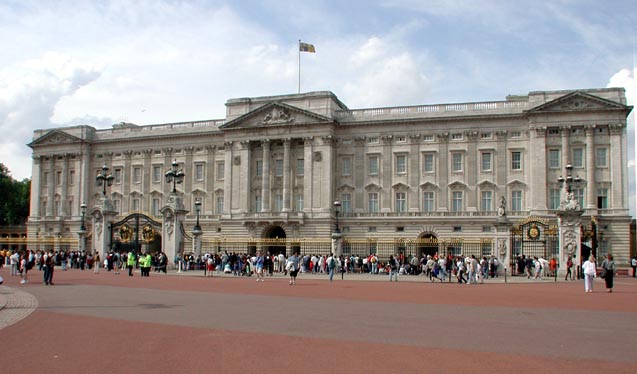
Whether you're viewing the changing of the Queen's foot guards or her horse guards, a trip to Buckingham Palace will give you a dose of pomp and uniquely British style. Two months out of the year you can do even better — getting a peek inside the royal digs, furnished, among other things, by some of the best artifacts from the royal collection. These paid tours walk visitors through the palace state rooms.
Perhaps the most famous of London's churches, Westminster Abbey and St. Paul's Cathedral, have played almost equally prominent roles in British history.
Westminster Abbey, an architectural masterpiece built in the 13th to 16th centuries, has been the crowning and burial site of monarchs since 1066. But ambassadors of British culture are also enshrined there; among others, Chaucer, Darwi, and Handel are buried at Westminster.
St. Paul's Cathedral, with its massive dome and famous mosaics, provides an incredible 360-degree view of London. A well-timed visit might offer a peek of the centuries-old, St. Paul's gentlemen and boys choir. St. Paul's was also the site of Prince Charles's marriage to Princess Diana.
 << Big Ben webcam
See
Parliament in
action at the Palace
of Westminster.
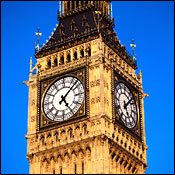
The seat of the two houses of Parliament since 1256, The Palace of Westminster
is a neo-gothic building nestled along the banks of the River
Thames. The building is home to Big Ben, the four-faced 14-ton bell
originally hung in 1858.
The National Gallery, London houses one of the greatest collections of European painting in the world. These pictures belong to the public and entrance to see them is free.
Enjoy an afternoon tea in the British customary style.
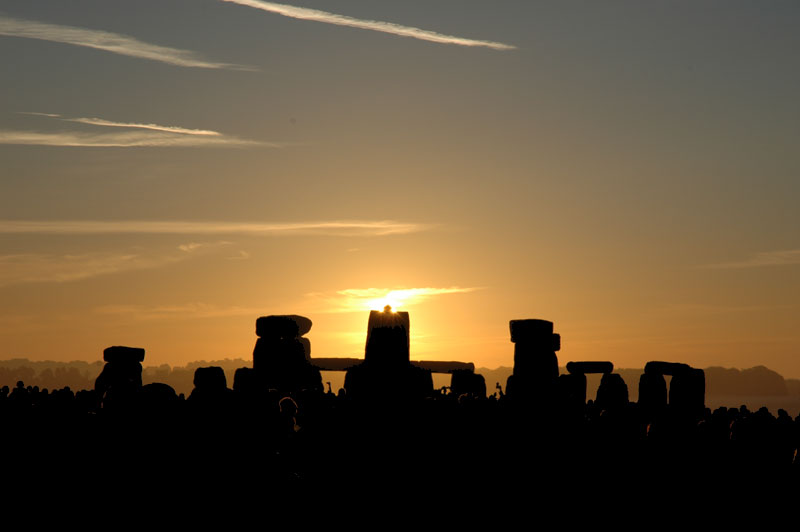
Stonehenge
 |
NIGHTLIFE! Partying hard in London after sightseeing.
Cargo
Website: www.cargo-london.com
A new bar, restaurant and club, which looks set to bring a healthy dose
of style and glamour to an otherwise dull part of town. Housed underneath
three viaducts named M, D and F (short for music, drink and food), Cargo's
regular events include Raison D'etre (Soul), Come Shake the Whole (electro,
German) and Ill Commotion (old-skool hip-hop).
Cherry
Jam
Website: www.cherryjam.net
Consistently rated as one of London's best clubs since opening in 2004,
Cherry Jam is also among the friendliest spots in town. With a laid back
atmosphere (that extends to non-pretentious staff) it's a venue best explored
on weekdays when the grooves are still first-rate, the door policy less
forgiving and queues for the bar (we recommend some of Cherry Jam's excellent
cocktails) less likely to upset. Very good indeed.
The
End
Website:
www.endclub.com
With Fridays and Saturdays devoted to guest DJ sets, the remainder of
the week is taken up by 'Discotec' (Thursdays - gay funk, disco), Trash
(Mondays - disco, glam rock, soul, punk and 80's electronica) and 'Swerve'
(Wednesdays - drum and bass). Generally regarded as one of the central
London's nicer venues.
The Electric Ballroom
Website:
www.electricballroom.co.uk
Used also for live gigs, The Electric Ballroom is a well-established (if
slightly rundown venue) on the Camden High Road. Although the club currently
faces an uncertain future (because of plans by London Underground to redevelop
the site) the traditional Friday night mix of Industrial, techno and punk
goth crossover continues. On Saturdays, the goth crowd is replaced by
more mainstream clubbers, with DJ sets of 70s-90s disco, funk, house,
garage and R'n'B.
Fabric
Website:
www.fabriclondon.com
An impressive state-of-the-art superclub in trendy Clerkenwell, which
was (in a previous incarnation) a Victorian meat cellar. With over 24,000
sq.ft of club space, that includes 3 dancefloors, there's plenty to keep
even the most occasional clubber entertained (such as the bass loaded
body sonic dancefloor). And, with a 2,500 capacity, it's not surprising
that even the facilities here have a novel twist (toilets are funky unisex
jobs). However, unless you have a highly masochistic penchant for queuing,
get there early on Friday/Saturday nights. A 24hr music licence ensures
that the fun stops only when you've had enough. Fab.
Royal Weddings (fun page)

SCOTLAND - Fàilte
The majority of Scots live in the central belt, which spreads from Glasgow in the west to Edinburgh, virtually on the east coast. Public transport here is efficient and most places are easily accessible by train and bus. To the south and north it can be a different story: off the main routes, public transport services are few and far between, particularly in more remote parts of the Highlands and Islands.
With careful planning, however, practically everywhere is accessible and you'll have no trouble getting to the main tourist destinations. In most parts of Scotland, especially if you take the scenic backroads, the low level of traffic makes driving wonderfully stress-free.
Scotland’s
story is told through its ancient
monuments and historic
buildings. |
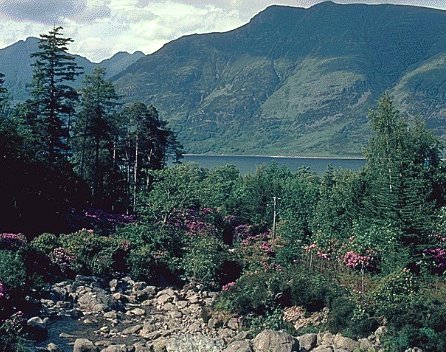 Liathach, Beinn Allgin, Torridon |
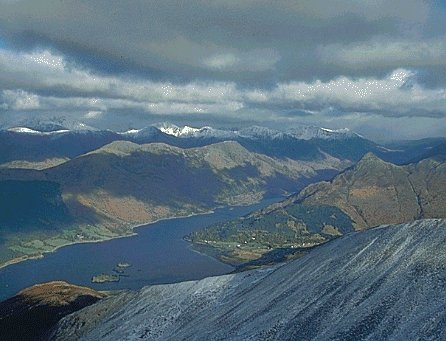 Loch Leven, Glencoe |
We
invite you to explore Scotland's historic sites in the care of Historic
Scotland. These include prehistoric
standing stones, medieval
abbeys, great gardens,
palaces,
lighthouses,
mills, cathedrals,
brochs
and magnificent castles
- over 300 properties spanning 5000 years of history. |
Autumn
can be one of the best times of year in the Highlands - the leaves
slowly turn from green to yellow and red, lighting up the glens
with a salute to the sun. Red squirrels scamper about gathering
in food for the approaching winter; stags roar defiantly from the
hillsides; salmon make their way upstream in our rivers. This is
a great season for hillwalking, photography, nature-watching and
relaxing in the freedom of the Great Outdoors. |
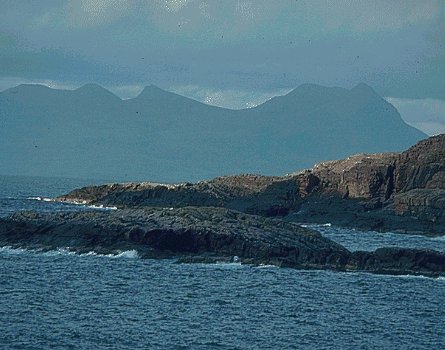 Mor Coigach |
|
Faeries across history and cultures
The antiquity of the belief is shown by its being found among all branches of the Celtic and Teutonic families, and in countries which haven’t had, within historical times, any communication with each other. If it be no entirely of Celtic origin, there can be no doubt that among the Celtic races it acquired an importance and influence accorded to it nowhere else. Of all the beings, with which fear or fancy peopled the supernatural, the Fairies were the most intimately associated with men's daily life. Throughout most of these former celtic nations : Ireland, Scotland, Wales, Brittany and Germany, the Fairies have become things of the past. A common belief is that they existed once, though they are not now seen. There are others to whom the elves have still a real existence, and who are careful to take precautions against them. It would be difficult to find a person who knows the whole Fairy creed, but the tales of one district are never contradictory of those of another and are still present even if they sometimes remain as a confused jumbling of all superstitions.
|
|
| The
word "clann" comes from the Gaelic and means children,
and its members claimed kinship from the common ancestor whose name
they bore, and even the poorest clansman considered themselves of
nobler birth than any southerner.
In the 17th century the chief of the clan was both a gentleman and a barbarian. He held his territory by consent of the clan whose members were his tenants, and they gave their loyalty to the chief.
|
|
| Tartan has become the main symbol of Scotland and Scottish Culture. It is an emblem for those of Scottish descent around the world. With Scottish National identity probably greater than at any time in recent centuries, the potency of Tartan as a symbol cannot be understated. |
About St. Andrew
The Heather and Thistle Society
Now it's time to pack and get ready to board the Eurorail. Our next destination is ITALY!