|
| WELCOME! |
|
To Dr. Brady's 6th Grade Math and Social Studies Web Page.
|
|
|
|
|
|
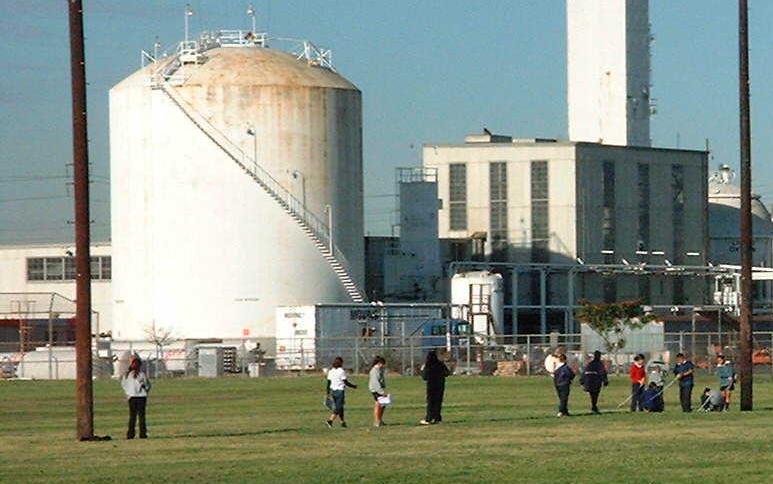
A) Find the building�s Diameter and its Radius. B) Find the building�s volume.
Refer to the drawing below. The Department of Parks needs to put a tall green metal fence around Weed Valley Park. The Department of parks also needs to plant grass sod in the park. 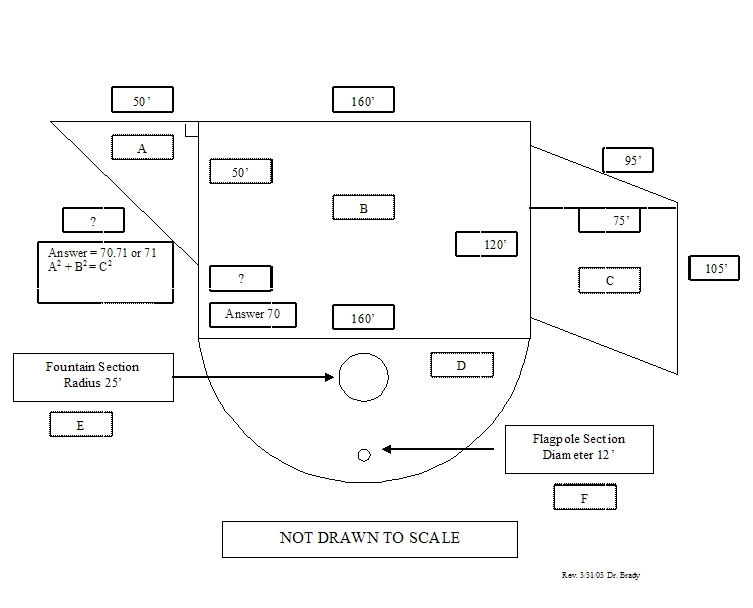
from The Lousiana Expansion, Mapping the Louisiana Territory.
To estimate height using this method, you will need two yardsticks or metersticks and a sunny day. Now you can use the formula below to estimate the height of the tree.
Here's an example.
First Way:
Second Way: Remember, you are using ratios/proportions of lengths and triangles! If a Boy Scout Troop in Manhattan can successfully use this method to estimate the height of the World Trade Center Towers, in 2000/2001,YOU can use this method to estimate heights with accuracy. Dr. Brady HAS used this method in the field with accuracy and teaches Scout Leaders how to do this problem and the problem below! It Works!
By The Dartmoor Professor Sherlock Holmes and Doctor Watson were on the final leg of their six-hour hike from the wilderness railroad junction to their favorite camping spot where they were planning to enjoy a week of rest and fishing. �Watson, our vacation begins just over this hill and across the river. I can�t wait to set up camp and fish.� Both Holmes and Watson froze at the summit of the hill as they looked with disbelief at the burned out bridge that they were to cross to get to their campsite. �I wonder what happened Holmes?� �Well Watson. It is easy to say that it was an act of nature and not man that caused this fire.� �Holmes, how can you tell that from here? Shouldn�t you be inspecting the path to the river to look for any types of tracks to determine if men were involved?� �No need to Watson, the bridge, and the giant boulder and tree shell next to the bridge are telling me everything I need to know. Let�s get closer to take a better look.� �You see Watson, the bridge lost in nature�s game of where Lightening will strike. From the looks of it the lightening struck at the top of the shell, spiraled down until it hit the rock. When the lightening hit the rock it left a darkened crack in the rock and bounced off onto the bridge. You will notice, using your senses, that the wind blows in an eastwardly direction. This was good for the forested area to the west of us as it was spared the fire. I would rather see a bridge go up in flames than such a beautiful forest.� �But Holmes, our path across the river has been destroyed. It will take several days to get to our campsite if we have to travel fifteen miles upriver to the next bridge in order to cross the river.� �Watson, we have our bridge.� �Holmes, you have to be crazy. There is not any bridge in sight.� �Look around you Watson. Nature is providing us with the basic necessities. What nature lacks in her gift we have on our backs.� �Holmes, what are you talking about.� �Watson, once again you see but you do not observe!� �Look to the north, upriver. Look at the five majestic conifer trees bordering the river, each one set a different distance from the river bank as if they were guarding the eastern front of the forest preserve. That is our gift from nature.� �But Holmes, that does not answer how we are to cross the river.� �Again, Watson�you see but you do not observe. One of those trees should be tall enough that when cut and felled it will cross the river and provide for us a bridge.� �But How Holmes? How do we know which one?� �We use the same principle that I told you about when you chronicled my success in the Musgrave Ritual.� �I am lost Holmes, really lost now.� �Watson, it is elementary. We must find the height of the tallest tree in order to select it as the one to give us passage across the river. Remember how I spoke of using my walking stick of six feet. That walking stick threw a shadow of nine feet. Then I calculated that a tree of sixty-four feet would throw a shadow of ninety-six feet. It is simple we use the same mathematical, logical, approach.� �Holmes, we don�t have the necessary equipment and we don�t know the width of the river.� �Again Watson, you see but you do not observe. We have my walking stick, your valuable climbing rope, all two hundred feet that you have knotted every at every foot. And, we have our long handled axe.� �But the river Holmes, the river! How wide is it?� �Watson, I will calculate the width of the river as you calculate the heights of the trees. We both will be working with triangles and proportions.� �Let me show you how I will do my calculations before I guide you onto your task. Give me you sketch pad.� �Holmes quickly drew a sketch and showed it to Watson.�
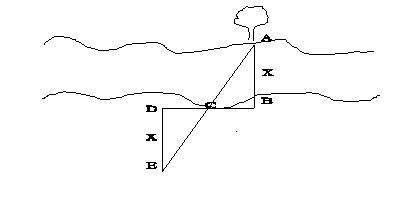
�Do you see that large, majestic, tree on the other side of the river? I have selected that to be the landmark. That is point A. I am going to place one stick on this side of the riverbank, directly opposite our landmark. That stick is point B. I will next walk along the shore at a right angle to A and B. I can walk as far as I want to. But let�s say I walk 30 feet. At that point I will place another stick. That stick will be point C.� �Watson, do you see the points of an imaginary triangle?� �Yes Holmes, but the triangle is over water. It has no purpose!� �Again�� �I know, I see but I do not observe. Please go on Holmes.� �That is my first triangle. Now I will create my second triangle, this one over land, and I will then tell you the width of the river. From point C I will walk another 30 feet and place another stick, known as point D. Now I have the bases for two triangles, each base being equal in length.� �Holmes, I get it now! I see it�.� �You are going to walk away from the river, at a right angle. When you see points C and A line up you will stop and put another stick. That stick is point E. Holmes you have two equal triangles drawn!� So now Watson you ARE seeing and observing. I congratulate you! What can you deduce from two equal triangles?� �Holmes, The distance across the river, from point A to Point B is equal to the distance from point D and E!� �Correct Watson. Now, let me give you your directions.� �First. I will hold my walking stick straight up. Please measure the distance of the shadow.� �It is 9 feet Holmes.� �So, a rod of 6 feet throws a shadow of 9 feet.� �Just like the Musgrave Ritual, Holmes.� �Exactly, now you must measure the shadows of the five trees. And using triangles and proportions determine the height of the trees. But looking at the lay of the land, and the situation, we have to bring in more data before we can calculate which tree is the one needed.� �Holmes, Don�t I have to find a tree that meets your measurement of the river?� �Again Watson, you see but you do not observe.� �Watson, look at the trees. Each tree is a different distance from the riverbank and when you cut a tree down you usually leave 3-4 feet of tree standing�that becomes the stump. And then for safety you will want to add another three feet for the tree to overlap onto the shore. So Watson we need a tree that�s height is equal to the width of the river plus the distance away from the river, plus four feet of left-behind stump, plus two feet of overlap.� Watson, listen carefully. As I measure the width of the river I want you do draw a chart accounting for everything I have told you. You will have 5 rows, one for each tree. The first column will be the width of the river, the second column will contain the distance from the riverbank, the third column will contain the number four for the four feet of stump left behind, the fourth column will contain the number four for the four feet of overlap. And the fifth column will be the total of columns one to four. The sixth column will contain the number six representing the height of the walking stick. The seventh column will contain the number nine, representing the shadow thrown by the walking stick. The eighth column will contain the length of the tree�s shadow and the ninth column will contain the height of the tree based on the formula of ; Shadow of the Tree over the Shadow of the Walking Stick is equal to the Object Height over the Walking Stick Height� �As I once told you, �Not a Moment to waste�.The Game is afoot!�� Several moments later Holmes returned to an excited Watson who showed him the detailed chart. �That looks excellent Watson, now put the number 35 in the column where you have the width of the river. Good Job, come follow me and we will measure the shadows.�
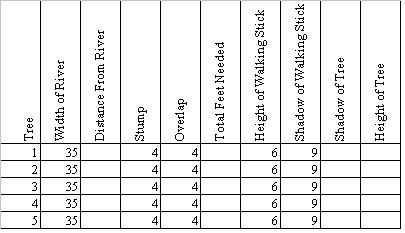
When Watson finished yelling out the distances he went over to Holmes. �So Holmes, what tree do we cut?� �At the moment we won�t cut anything. The heights need to be calculated based upon all the data presented. Watson, take the data and figure out which tree will be our bridge.�
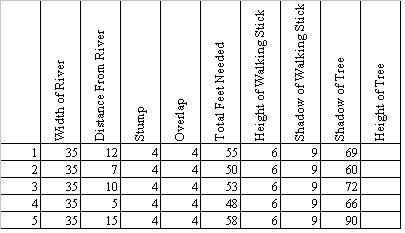
�I already have Watson. But it would be unfair of me not to give you this opportunity to grow in the knowledge and wisdom of such a fine discipline as Mathematics. I�ll tell you this; if you are correct I will fell the tree, set up camp, and make the evening meal. That is a pretty good deal, Watson. Don�t you think?� �It sure is Holmes, it sure is! But your proposal sounds as if I will have to do everything if I am wrong.� �Then Watson, pray be precise. Calculate with accuracy and not a moment to waste.�
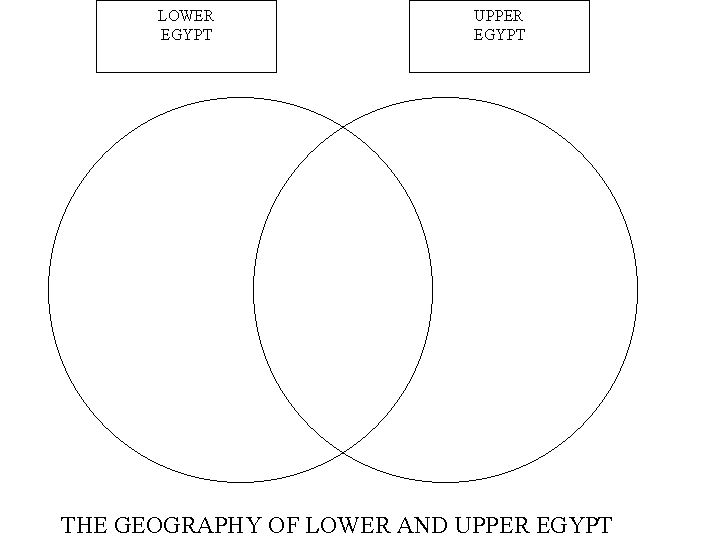
1. The Geography of the lower Nile and the geography of the upper Nile. 2. The Tigris and the Euphrates Rivers compared to the Nile River. 3. The Code of Hammurabi and the Ten Commandments. 4. Hammurabi and Confucius. 5. The geography of China and the Sub Continent of India. 6. The Rivers of India and the Rivers of China. 7. Buddha and Confucius. 8. The Phonecians and the Lydians. 9. The Governments of Rome and Greece. 10. The people of Skara Brae and the people of Early Mesopotamia.
6.1 Hunters and Gatherers 6.2(a) Mesopotamia 6.2(a) Egypt 6.2(a) Kush 6.3 Ancient Hebrews (Israelites) 6.4 Ancient Greece 6.5 Ancient India 6.6 China 6.7 Rome
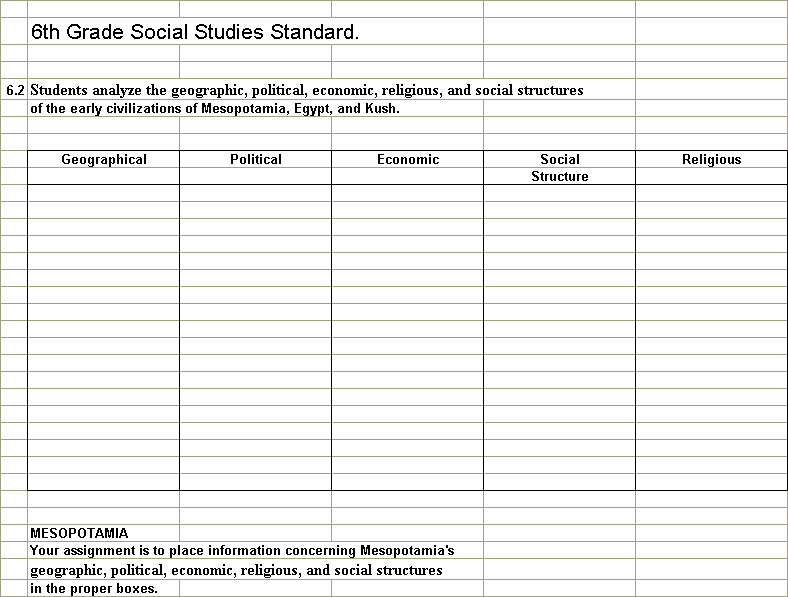
Each student will look at the 6th grade Social Studies Standards and show knowledge of the standard by explaining/answering the items presented in standards 6.1 to 6.7.
An example is given using Standard 6.1.
Each student is to write an essay describing the role of WATER in ancient civilization in general. The student is then to continue the essay by describing the role of water for each of the 6th Grade Social Studies standards. In ending, the student is to describe the role of water in Modern Civilizations, showing similarities and/or differences with the ancient civilizations listed in the 6th Grade Social Studies standards. This historical analysis/creative thinking piece cannot be done in less than 500 words. (Introduction and description, ancient days, 9 geographical areas, modern days, compare and contrast, ending)
At the end of the year individual worksheets will be required for the following standards: Each student will have the opportunity to use the worksheet templates on the classroom's computers as well as have the templates copied to a disk for use at home.
|
|
All pieces of the case study must relate to the selected country.
|
|
Students in Scouting
|
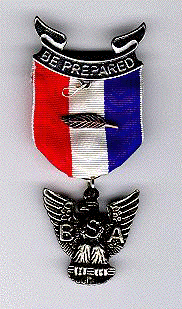 On the road to Eagle Scout?
 Although the 6th Grade Curriculum was not planned for Scouting, it affords a student in Scouting a chance to complete, or partially complete, the requirements for at least three Merit Badges. Those Merit Badges are:
|
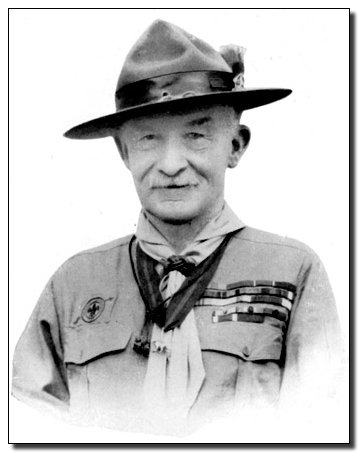 If you are a scout and interested in meeting the requirements for any of these Merit Badges, please contact Dr. Brady (Eagle Scout, 1969).
Remember Scouting's policy on "Two Deep." Bring a buddy who can pass the requirements. Need a book to read about a successful person? Try one of these:
|
| Some Benefits of Scouting |
|
What happens to a Scout? For every 100 boys who join Scouting, records indicate that:
|
 |
| The William T. Hornaday Award for Distinguished Service in Conservation |
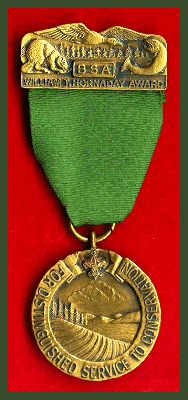 Dr. William T. Hornaday, for whom the award is named, was the director of the New York Zoological Park and a member of the Boy Scouts of America Executive Board. The conservation award program was initiated by Hornaday in 1914, to honor Boy Scouts whom have done distinguishable work in the field of conservation, and continues to be the oldest conservation award given in America.
 For 20 years the program was funded through Hornaday�s Permanent Wildlife Protection Fund. Upon Hornaday�s death the program was sponsored by the New York Zoological Association and named in Hornaday�s honor. The Boy Scouts of America approved the award in 1938 and gave the first medals, under the auspices of The Boy Scouts of America, in 1942. Since 1942 nearly 2,000 Boy Scouts and, in some cases, leaders have been presented the William T. Hornaday Award for Distinguished Service in Conservation. In 1970 Eagle Scout Michael J. Brady was awarded the William T. Hornaday Award for Distinguished Service in Conservation. Presenting the award was Attorney Gregg William Hornaday, Great Nephew of William T. Hornaday.
|
|
Apollo I, The Challenger, The Columbia and Scouting.
|
Within these groups of heroes were special heroes to me. We shared a brotherhood, the brotherhood of scouting, and with some of these heroes I held a special bond, that of Eagle Scout!
My father was a career Marine and as we went from duty station to duty station the tradition and pride of the Corps started to grow within me. The space program was introduced to me through the flight of Marine Astronaut John Glenn. I was hooked! And I devoured books and newspaper articles on the space program. One thing I found was that many of the original astronauts were scouts and some were Eagle Scouts, a rank I had my eyes on! I had my heroes and role models!
On Tuesday, January 27, 1967, I was living on the Marine Corps Air Station at Kaneohe Bay Hawaii. What should have been a "Typical" afternoon for a 7th grader turned into one of shock as the Base took on a feeling of gloom. Three astronauts; Command Pilot Virgil Grissom, Senior Pilot Edward White, and Pilot Roger Chaffee died when their space module, Apollo I, burned during a training exercise.
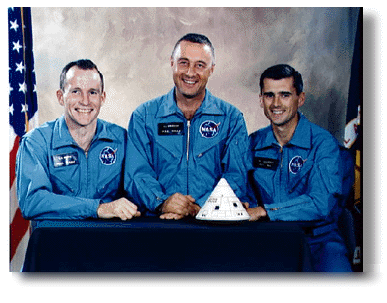
On June 9, 1969, I attained the rank of Eagle Scout and joined the brotherhood of many of the Astronaut Scouts. On July 20, 1969, Eagle Scout Neil Armstrong stepped down from the Lunar Module, "The Eagle", and became the first human to walk upon the moon. The dreams of Chaffee, Grissom, and White came to fulfillment.
Tragedy, and death, were averted in April of 1970, when Apollo 13 suffered a crippling power failure. Commander James A. Lovell, Jr., Command Module Pilot John L. Swigert, Jr., and Lunar Module Pilot Fred W. Haise, Jr.,did not consider failure, and death, options. They were able to take control ofthe situation and adjust to the limitations placed upon them. Although they did not land on the moon, they did return to earth unharmed.
Again, Scouts were among the crew. Lovell was an Eagle Scout and Swigert was a Second Class Scout. Lovell's official NASA Biography lists "Eagle Scout" immediately after the heading of "Special Honors." See James Lovell's NASA Biography
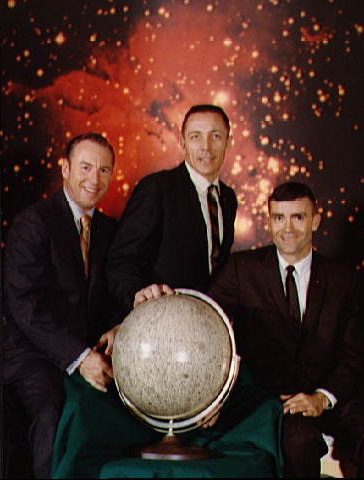
Without a doubt, these men were able to apply the Scouting principle of S.T.O.P. Survey, Think, Observe, Plan.
Unfortunately, the continued success of the space program was not without further tragedy. On Tuesday, January 28, 1986, the Space Shuttle Challenger exploded 73 seconds after lifting off. Those lost abord the shuttle were; Mission Commander Francis R. Scobee; Pilot Michael J. Smith; Mission Specialists Ronald E. McNair, Ellison S. Onizuka, and Judith A. Resnik; and payload specialists Gregory B. Jarvis and Christa McAuliffe. Christa McAuliffe was also the first teacher in space.
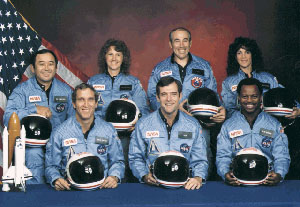
Again, an Eagle Scout was among its crew; Ellison S. Onizuka.
And tragedy struck again on the morning that inspired this article. The Shuttle Columbia claimed another 7 astronauts. Those lost aboard the shuttle were Commander Rick Husband; Pilot Willie McCool; Mission Specialists Dave Brown, Laurel Clark, Kalpana Chawla; Payload Commander Mike Anderson, and payload specialist Ilan Ramon of the Israeli Space Program.

Rick Husband was a Second Class Scout, David Brown was a Life Scout, Michael Anderson was a Webelos Scout, and the Girl Scouts were represented by Laurel Clark.
Hopefully the honor roll of deceased astronaut scouts will not grow beyond these men and women.
|
|
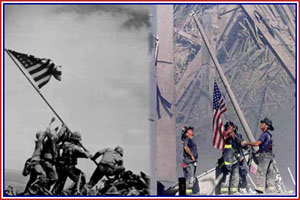
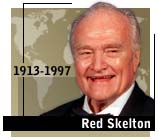
Red Skelton As a schoolboy, one of Red Skelton's teachers explained the words and meaning of the Pledge of Allegiance to his class. Skelton later wrote down, and eventually recorded, his recollection of this lecture. It is followed by an observation of his own.
I - - Me; an individual; a committee of one. Pledge - - Dedicate all of my worldly goods to give without self-pity. Allegiance - - My love and my devotion. To the Flag - - Our standard; Old Glory ; a symbol of Freedom; wherever she waves there is respect, because your loyalty has given her a dignity that shouts, Freedom is everybody's job. United - - That means that we have all come together. States - - Individual communities that have united into forty-eight great states. Forty-eight individual communities with pride and dignity and purpose. All divided with imaginary boundaries, yet united to a common purpose, and that is love for country. And to the Republic - - Republic--a state in which sovereign power is invested in representatives chosen by the people to govern. And government is the people; and it's from the people to the leaders, not from the leaders to the people. For which it stands One Nation - - One Nation--meaning, so blessed by God. Indivisible - - Incapable of being divided. With Liberty - - Which is Freedom; the right of power to live one's own life, without threats, fear, or some sort of retaliation. And Justice - - The principle, or qualities, of dealing fairly with others. For All - - For All--which means, boys and girls, it's as much your country as it is mine. And now, boys and girls, let me hear you recite the Pledge of Allegiance: I pledge allegiance to the Flag of the United States of America, and to the Republic, for which it stands; one nation, indivisible, with liberty and justice for all. Since I was a small boy, two states have been added to our country, and two words have been added to the Pledge of Allegiance: Under God. Wouldn't it be a pity if someone said that is a prayer, and that would be eliminated from schools, too?
|
|
Dr. Michael J. Brady met Sherlock Holmes on a cold and rainy August afternoon in the year 1991. It was on that date Dr. Brady walked from his London hotel Piccadilly Circus to pick up a book containing several Sherlock Holmes stories by Arthur Conan Doyle. Somehow, on the flight back to Los Angeles the next day, the mysteries of Sherlock Holmes became like the air that was being breathed. The mysteries were working their way into Dr. Brady 's blood and "The game was afoot!" An interest became an obsession to the point of Michael's wife and children traveling to London in October of 1997 and standing at the entrance of 221 B Baker Street . Dr. Brady�s wife, in the spirit of Lady Hilda Trelawney Hope ("The Second Stain�), asked the same question of Mr. Holmes, "Has my husband been here, Mr. Holmes?" And it has been to the door of 221 B Baker Street that Dr. Brady has traveled daily to vicariously live the adventures recorded by Dr. Watson. These visits inspired Dr. Brady to write an Interdisciplinary Curriculum based on the Four Novels and Fifty-Six short stories that Sir Arthur Conan Doyle wrote about Sherlock Holmes. Dr. Brady successfully used this curriculum while teaching psychologically disturbed students in the California Youth Authority. It was in this setting that Dr. Brady was instrumental in forming what might have been the only Sherlockian society behind bars, "The Dartmoor Residents." Along this journey Dr. Brady was encouraged by many people throughout the world, especially by the Late Jeremy Brett (the most recent TV Sherlock Holmes) and the Late Dame Jean Conan Doyle (Arthur Conan Doyle�s daughter). In 1995 Dr. Brady's efforts were recognized as he was honored with the Educator of the Year award. In 1998, Dr. Brady left correctional education to teach at a local high school. Dr. Brady is a member of several Sherlockian societies including "The Trained Cormorants" of Long Beach, California and "The Man with the Twisted Konjo" (lip) of Tokyo, Japan. His writings on Sherlock Holmes may be found in various national and international Sherlockian Journals, one in particular is "The Shoso-in Bulletin" of Toyko, Japan. Dr. Brady firmly believes that reading helps people become better writers and through reading the doors of the world are opened up with the turn of each page. Dr. Brady was able to prove this belief with the results he received while in correctional education. Needless to say, Dr. Brady was elated with an article from The London Times that reported the use of Sherlock Holmes stories to help raise the reading level of young male students in England. That report, dated February 9, 1998, is presented in its entirety, courtesy of The London Times.
SHERLOCK HOLMES and Philip Marlowe are helping to solve the mystery of why boys perform so badly in English classes compared with girls. The case of the clueless pupils now appears to have been cracked, with the discovery that detective fiction can ignite the boys' interest and improve their literacy. The theory was tested among teenagers in comprehensive schools where boys were achieving considerably lower grades than girls. Studying short stories by Sir Arthur Conan Doyle and Raymond Chandler was found to encourage boys and girls alike to produce better creative writing, in research for the Qualifications and Curriculum Authority. A study says that work by boys in particular was "far better constructed ... the characters were more fully realised and the descriptive writing was far more precise" after sharing the experiences of Marlowe, Holmes and Dr Watson. The importance of fact and plot are thought to be the key to unlock the boys' interest. The findings are included in Can Do Better, published by the authority tomorrow, to be sent to all schools. The study draws together strategies to improve boys' poor performance at English when compared with girls. Figures released by the Department for Education and Employment last week showed that 5 per cent more girls than boys reached required national curriculum levels in English tests for pupils at 7, 11 and 14. At GCSE, girls consistently outperform boys. For the authority's report, short stories by Chandler and Conan Doyle were studied by teenagers in comprehensive school classes where boys were achieving far lower grades than the girls. In particular, they analysed Chandler's use of short sentences, ironical humour and narrative techniques such as flashback. When asked to write their own short stories afterwards, the pupils came up with work that is said to have delighted their teachers. The reports says: "The girls' writing was more adventurous than before and the boys wrote stories that were more realistic. The boys' stories met the GCSE criteria more fully than before and generally matched the quality of the girls' writing." Experts believe that detective fiction bridges the gulf between young boys' well-documented preference for non-fiction, and girls' interest in the development of character and relationships. An understanding of these "feminine" aspects of literature brings higher marks in GCSE and A-level English examinations. Alan Smithers, director of the Centre for Education and Employment Research at Brunel University, said that the boys were attracted to crime stories by the well-structured plots. He suggested that schools capturing boys' interest in this way could move on to other authors - such as H.G. Wells or John Buchan - and then towards those who are perceived by boys as too feminine, such as Jane Austen. Professor Smithers added: "Reading is a means to an end, and to access these skills you have to engage pupils' interest. "Boys tend to be more interested in order and pattern, as well as the investigative ideas behind a detective story and non-fiction. It can be very satisfying for them to pick their way through that investigation and come to the right answer." To engage the interest of boys in primary schools, the authority's report will advise teachers not to disapprove of the way boys generally seem more influenced than girls by action heroes on television. Rather, they should encourage boys to make up stories using these characters, increasing their ability to construct a narrative and to develop character. Holmes and Marlowe have a rather longer pedigree. Conan Doyle's analytical hero became popular in the 1890s, and successive film and television adaptations have long outlasted his creator, who died in 1930. Chandler's private-eye novels were launched in 1939 and have been the subject of several Hollywood films. The author died in 1959. Good English? It's elementary "To Sherlock Holmes she is always the woman. I have seldom heard him men tion her under any other name. In his eyes, she eclipses ... the whole of her sex. It was not that he felt any emotion akin to love for Irene Adler. All emotions and that one particularly were abhorrent to his cold, precise, but admirably balanced mind." Sir Arthur Conan Doyle, A Scandal in Bohemia Short, sharp and punchy "It was about eleven o'clock, mid-October, with the sun not shining and a look of hard wet rain in the clearness of the foothills. I was wearing my powder-blue suit, with dark shirt, tie and handkerchief, black brogues, black wool socks with dark blue clocks on them. I was neat, clean, shaved and sober, and I didn't care who knew it." Raymond Chandler, The Big Sleep. |
|
221 B By Vincent Starrett
Here dwell together still two men of note
A yellow fog swirls past the window-pane
|
|
Special Links The University of Montana at Missoula, Montana.
|