|
Instruments of Cuba
|
When people think
of instruments of Cuba, they think of popular instruments in Latin America.
|
However...Cuba does have authentic instruments of their own. As you continue,
you will be able to
|
learn about popular
instruments as well as authentic. Afterwards,
you can decide for yourself which
|
| instruments should
be used for the music of Cuba.
|
|
Two Kinds of Instruments
|
|
Authentic Instruments
|
|
|
|
Popular Instruments
|
|
|
|
|
|
|
|
Most of the instruments listed below are from the
percussion family. This means that the
|
instrument must be struck ior hit with an object.
Each instrument has a unique background.
|
|
|
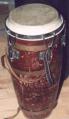
Conga
Drum
|
This instrument is played by using your hands to
make the sound. Most ciongas come in different sizes and are played
sitting down.
|
|
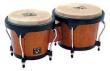
Bongo
|
This instrument is higher in pitch. To play
this instrument one must be able to use their hands
|
|
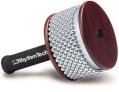
Cabasa
|
This instrument is played by holding the metal beads
in ones hand and twisting them back and forth.
|
|
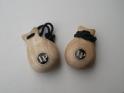
Castinets
|
These instruments create a "clicking" sound. They
are usied in dance music.
|
|
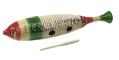
Guiro
|
This instrument creates a "scraping" sound due to
the ridges on the body. It is also called the "wooden fish".
|

|
Shekere
|
This instrument orginally came from Africa and was
adopted into Latin Culture through imigration..
|

|
Maracas
|
To play this instrument, one must shake it with their
hands. This instrument is the hardest to play because one must have
a lot of control.
|
|
Authentic Instruments
|
|
These
instruments are normally made from authentic materials. Most of the
|
time, musicans make their instruments
out of natural resources including shells, wood,
seeds, and
|
other materials found in nature.
The following instruments belong to thepercussion family
|
|

|
SHEKERE
|
This instrument is played by holding
the base in your hands and either shaking controllable or running one's
fingers across the seeds.
|
|
|
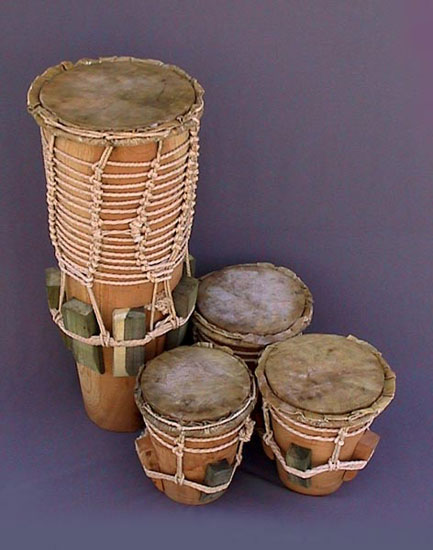
BATA DRUM
|
|
|
ABAKUA DRUM
|
Both of these drum produce sound
by your hands. The different sizes of the drum produce different timbres
(sounds)
|
|
|
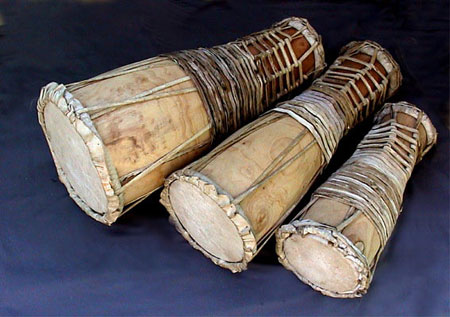
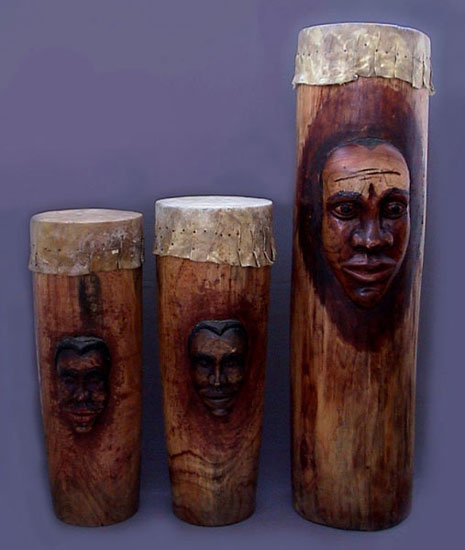
YUKA DRUMS
|
These drums produce a low sound.
One must be seated to play them.
|