BANANARAMA
Profile of An Enduring
Legacy
By M. Jason DeBoard
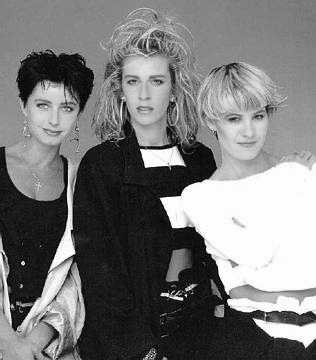 Honored by the
Guiness Book Of World Records as the most successful British pop group in
music history, Bananarama has proven to be a bona-fide music industry
institution. Not even the mid-1990’s craze of the Spice Girls -- seemingly the
only threat to this claim -- could knock Bananarama off their pedestal.
Honored by the
Guiness Book Of World Records as the most successful British pop group in
music history, Bananarama has proven to be a bona-fide music industry
institution. Not even the mid-1990’s craze of the Spice Girls -- seemingly the
only threat to this claim -- could knock Bananarama off their pedestal.
Originally
consisting of childhood friends Karen Woodward and Sarah Dallin, it wasn’t until
Dallin started attending the London School of Fashion and struck up a friendship
with fellow classmate Siobhan Fahey, that things began to gel. The rest, as they
say, is (pop music) history.
Before earning
world-wide fame, the group had a humble genesis that consisted of singing at
friends' parties and at nightclubs, where they performed accompanied by karaoke
tapes. Drawing inspiration
from the British children's television program THE BANANA SPLITS and the Roxy
Music song "Pyjamarama,” they came up with an amalgam, henceforth known as
Bananarama.
Soon after, the girls caught the attention of ex-Sex Pistols drummer Paul Cook,
who brought them into the studio to record and produce their first single "Aie A
Mwana" a cover of the Swahili Black Blood song.
While not a hit by
any stretch of the imagination, it was popular in the local clubs and caught the
attention of the indie music group Fun Boy Three. In 1981, the two groups
recorded "It Ain't What You Do (It's the Way You Do It).”
The next year, Fun
Boy Three returned the favor by backing the girls on a cover of the 1965
Velvettes song “He Was Really Sayin’ Something.” The song would land at number
10 on the charts, becoming the first of Bananarama’s many hits.
From the very
beginning, the group had a strong stage presence -- small town charm with just
enough sass and sex appeal to keep an audience’s attention. Initially playing
down their talents, the trio retained considerable control over their careers,
in regards to not just their image but the material they chose to record.
In 1983, they
worked with producers Tony Swain and Steve Jolley to record their first full
album, Deep Sea Skiving, which brought the group three more hits: “Shy
Boy,” a cover of Steam’s “Na Na, Hey Hey (Kiss Him Goodbye)” and “Cruel Summer”
[their first U.S. hit]. The next year,
their sophomore album, titled simply Bananarama, produced the hit “Robert
DeNiro’s Waiting,” as well as the thinly-disguised political protest song,
“Rough Justice.”
There would be a
two year hiatus before Bananarama’s next album, True Confessions.
Teaming up with the production trio of Stock/Aitken/Waterman, the group would
reach the pinnacle of its success with a cover of Shocking Blue’s “Venus,” which
would reach number one on both British and U.S. charts.
Another single from
this album, “A Trick Of The Night” would be another hit on both sides
of the Atlantic, thanks to the song being featured on the soundtrack of the Whoopi Goldberg film JUMPIN’ JACK FLASH. At about this time, Siobhan married
Eurhythmics guitarist Dave Stewart.
1987 saw the
release of WOW, the group’s fourth album and its’ last with Siobhan. It
would spawn the hits “I Heard A Rumor,” “Love In The First Degree,” “I Can’t
Help It,” “I Want You Back” and “Nathan Jones,” a cover of the 1971 Supremes
original.
Siobhan’s growing
disdain for the Stock/Aitken/Waterman sound that Bananarama (and other pop acts
like Kylie Minogue, Rick Astley and Jason Donovan) had become synonymous with,
led her to step out on her own in search of a more fulfilling career.
Initially planning
on a solo career, Siobhan would resurface a year later as one half of the
alternative rock duo Shakespeare’s Sister. Trading in her squeaky clean “pop”
image for that of a harder edged, gothic rock goddess, she surprised fans and
critics alike with her new image and sound. Shakespeare’s Sister would achieve only
moderate success and disband in 1993.
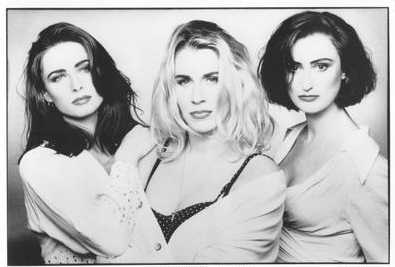 In the meantime,
Karen and Sarah had planned to move forward as a duo but constant pressures from
those around them -- most notably their record company -- led to the addition of
a new member to complete the trio. An acquaintance from over the years, Jacquie
O’Sullivan had honed her skills as both a performer and songwriter while a member
of a group called the Shillelagh Sisters.
In the meantime,
Karen and Sarah had planned to move forward as a duo but constant pressures from
those around them -- most notably their record company -- led to the addition of
a new member to complete the trio. An acquaintance from over the years, Jacquie
O’Sullivan had honed her skills as both a performer and songwriter while a member
of a group called the Shillelagh Sisters.
Not missing a beat,
the “new” Bananarama forged on. Two tracks from the WOW album -- “I Want
You Back” and “Nathan Jones” -- were re-recorded prior to the album’s release,
with Jacquie’s vocals overlaying Siobhan’s. The new line-up then wrote and
recorded their next hit “Love, Truth And Honesty,” followed by a cover of the
Beatles’ “Help” (both were originally released as singles and later appeared on
The Greatest Hits Collection album).
After almost four
years without new material, Bananarama bounced back with the release of their
Pop Life album in 1991. Produced by Youth, the project was a departure from
the ultra slick, assembly line sound from the group’s numerous hits under Stock/Aitken/Waterman.
Pop Life
featured a cover of the Doobie Brothers' "Long Train Running" and four other
hits: “Preacher Man,” “Only Your Love,” Ain’t No Cure” and “Outta Sight.” Shortly after the
album's release, Jacquie left the group over “creative issues;” Karen and Sarah
decided not to replace her and continued on as a duo. It would take the pair
almost two years to complete their next project.
Per their recording
contract with London/Polygram, this would be Bananarama’s last album for the
label. Karen and Sarah had originally conceived this project as an ABBA tribute
that would have been titled ABBA Banana but it was clear that the record
company felt there was very little commercial appeal left in the group.
Since Pop Life
--
while generally a fun album to listen to -- garnered lackluster sales, the record company
essentially pulled rank and pushed the duo to abandon their ABBA tribute and
work with Stock/Aitken/Waterman for one more go around.
Finally released in
1993, Please Yourself was seen by many fans as a step backwards and
proved to be a disappointment. Four singles were released: "Movin' On,” "Last
Thing on My Mind" a cover of the Andrea True Connection hit "More, More, More”
and "Is She Good To You?" Ravaged by UK critics, it was the first Bananarama
album not released in America.
In addition to
being bullied into working for Stock/Aitken/Waterman, the album had been a
nightmare to record as well. Only the first half of the album had been recorded
when Sarah had to take time off due to her pregnancy. The album was finished
once she returned from Maternity Leave.
Karen and Sarah had
been particularly upset to find the release of the record being constantly
delayed, as well as the label’s incessant habit of fine tuning the album. Stock/Aitken/Waterman
had to remix it several times before executives at London/Polygram were
satisfied. Said Pete Waterman in 1994: “We took out the brilliance of Bananarama.”
Along with the lack
of aggressive advertising, it came as no surprise that Please Yourself
failed to make much of an impact. The album
originally had a limited edition release as a double disc and cassette. The fist
disc/cassette contained the ten tracks recorded for the release, plus a second
disc/cassette consisting of various remixes of previously released tracks. The
second release of the album only contained the single ten track disc/cassette.
Now without a
record deal, Bananarama decided to “freelance” by having complete control over
their work and then selling the final product – via licensing agreements -- to
different independent record labels around the world.
The duo
collaborated with independent producer Gary Miller (whom they’d met from their
days with Stock/Aitken/Waterman) for their 1996 album Ultra Violet,
released on Curb Records in North America, Dig It Records in Europe, Festival
Records in Australia and Avex Records in Japan, where it was titled I Found
Love after one of the tracks from the album. Inexplicably -- and rather odd
-- the album was never released in Bananaarama’s home country. Brittan
fans had to settle with obtaining this album as an import.
Containing a mix of
contemporary Euro rhythms and infectious melodies that Bananarama is known for,
Ultra Violet/I Found Love proved to be well received by fans and critics
but was by no means a commercial success. It featured the hits “Every Shade of
Blue,” “Rhythm of Life,” “Take Me To Your Heart,” “Don’t Stop Me Now” and “I
Found Love.”
Three years later,
Karen and Sarah reunited with Siobhan to record a cover of ABBA’s “Waterloo” as
part of Channel Four’s EUROTRASH TRIBUTE and the subsequent A Song For
Eurotrash album. The gals made it clear that Siobhan would not be rejoining
the group.
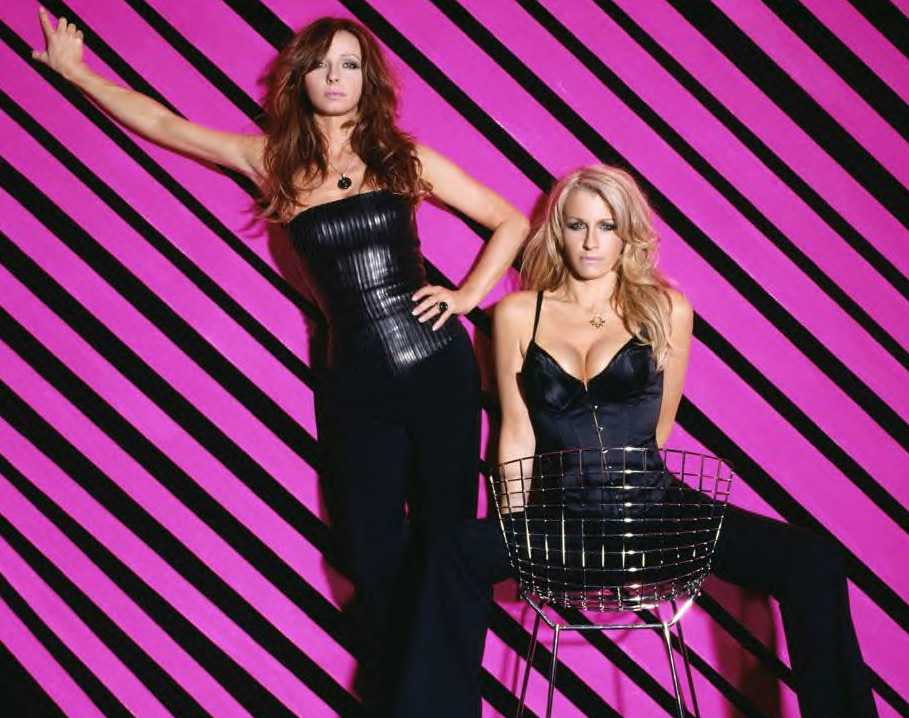 In
2001, Bananarama teamed up with French music producers Pascal Caubet and Florent
Enfer for their eagerly anticipated release Exotica. Unfortunately, the
album was a French-only release, so the rest of the world had to purchase it as
a import.
In
2001, Bananarama teamed up with French music producers Pascal Caubet and Florent
Enfer for their eagerly anticipated release Exotica. Unfortunately, the
album was a French-only release, so the rest of the world had to purchase it as
a import.
A major
disappointment, the album’s engineering alone has been the most heavily
criticized aspect. Additionally, of the twelve tracks, four were re-recordings
of past hits “Cruel Summer,” “Venus,” “Robert DeNiro’s Waiting” and “I Heard A
Rumor.” Two singles were released off this album: "Careless Whisper" and "If."
Although the duos
vocals were tweaked in some interesting harmonies and layers – which add the
only sense of texture -- ultimately the album suffered from odd production
decisions. A demo version of the album was circulated on
the Internet in 1999 to great reception. However, the final mix of the album is
rather
mundane.
In 2002, Karen and
Sarah admitted that they were unhappy with the final product but vowed to keep
the legacy of Bananarama alive. Currently, they are still together, touring
extensively throughout Europe and Asia.
©2004 M. Jason
DeBoard