

Flexibility: A measure of the range of motion available at a joint or a group of joints. It is a state of being.
Range of Motion: The full motion possible in a joint.
Joint or Articulation: The place where two bones come together allowing for movement or mobility of the skeletal system.
Hypermobility or Laxity: Looseness or slackness in the joint including soft tissues (muscles and ligaments) surrounding a joint.
Elasticity: The ability of a muscle to lengthen and return to its normal state without injury (increases with added blood flow)
Stiffness: Lack of elasticity in the muscle tendon unit.
Stretching: Primary technique used to improve the state of one's flexibility which involves the lengthening of the soft tissues of a joint.
Static Stretch: Muscle is slowly stretched and held in that posistion for several seconds (wellness related)
Ballistic Stretch: Muscles that are stretched by the force of momentum of a body part that is bounced, swung, or jerked (usu. sports specific).
Active Assistance: Using your own muscles without any assistance from an external force.
Passive Assistance: The use of an outside force such as a partner, another body part or gravity to aid you in stretching.
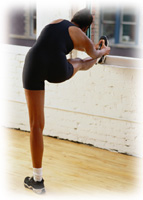
1. Bony structure of a joint (hereditty, trauma, disease, calcium deposits)
2. Amount of muscles and adipose (fat) tissue surrounding the jiont
3. Elasticity of muscles, tendons and connective tissues (heredity, injury)
4. Condition of the skin around the joint (scar tissue, injury)
5. Age
6. Level of physical activity
7. Type of physical activity
1. Reduction of stress and tension
2. Promotes mental and muscular relaxation
3. Improved circulation
4. Delays onset of as well as relief of muscle soreness
5. Reliefof muscular cramps
6. Prevention of injury
7. Reduced frequency of injury
8. Increased range of motion; pre and post injury
9. Increaesed agility
10. Can prevent some cases of dysmenorrhea in women
11. Improves posture alignment/weight support
12. Reduces/ eliminates lower back pain
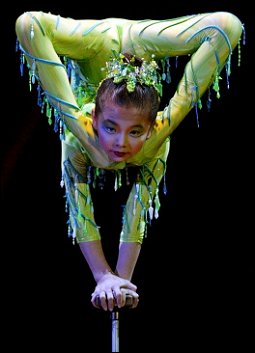
> Never stretch a "cold" muscle. Always warm up before stretching. This creates increased blood flow to the muscles facilitating increased muscular elasticity without injury.
> Although stretching may cause a mild degree of discomfort, never stretch to the piont of pain.
> Stretch slowly, quick stretches don't allow time for your muscles to relax (10-15 seconds to maintain; 30+ seconds to increase)
> Know your personal limit
> Stregnth potential is directly proportionate to the dregree of flexability of your muscles.