General Ocean Pollution History
Ocean pollution. Pollutants (substances that cause pollution)enter the ocean through accidents, carelessness, and the deliberate dumping of wastes. The ocean can absorb some types of pollutants in certain quantities because of its great size and the natural chemical processes that occur within it. But people continue to introduce more and more pollutants into the sea. The ocean will not be able to absorb it all. The ocean provides us with many necessities--and it helps keep our environment healthful. It is therefore extremely important that we work to control ocean pollution.
Oil is a major source of ocean pollution.Most oil pollution enters the ocean from oil spills on land or in rivers used to transport petroleum. Oil also seeps into the ocean naturally from cracks in the sea floor. Oil tanker and oil well accidents at sea account for only a small portion of ocean oil pollution, but their effects may be disastrous. The world's largest accidental oil spill occurred in June 1979, when an oil well blew out off the east coast of Mexico and spilled about 130 million gallons (490 million liters) of oil. The world's worst tanker oil spill occurred in March 1978, when a tanker ran aground off the coast of France, spilling 68 million gallons (257 million liters). The worst oil spill in the United States occurred in March 1989, when a tanker ran aground off Alaska and leaked nearly 11 million gallons (42 million liters).
The world's largest oil spill occurred when Iraq deliberately released about 465 million gallons (13/4 billion liters) of oil into the Persian Gulf during the Persian Gulf War (1991).
In water, much of the oil forms tarlike lumps, which litter beaches and other coastal areas. Oil also coats fish, birds, and marine mammals, killing many of them.Scientists and engineers have devised several methods to clean up oil spills. One method involves placing a ring of floating devices around the spill to prevent it from spreading. Pumps or skimming devices then collect the oil, which floats on the surface of the water. Oil may also be recovered by placing sheets or particles of floating, oil-absorbing material on the ocean surface. Burning the oil cleans a spill, but it produces air pollution. Detergents help break up spills, but they may cause additional harm to marine life. Ocean dumping.
The deliberate dumping of waste products into the sea is another major source of ocean pollution. Such products include industrial wastes and sewage. Industries dump chemicals, animal and plant matter, and other pollutants. Sewerage systems carry human wastes, ground-up garbage, and water used for bathing and laundering to the sea. Waste treatment plants remove some of the most poisonous wastes from sewage, but most treated sewage still contains material harmful to the ocean. By the late 1980's, the United States was dumping millions of tons of waste products into the ocean every year. But in 1988, President Ronald Reagan signed a law banning all ocean dumping by the United States by 1992.
Plastics dumped into the ocean form an especially damaging group of pollutants because they do not break down easily. Sea birds, turtles, seals, whales, and other marine animals eat plastic nets, bags, and packing material. Animals that mistake plastic items for food die of starvation if the plastic blocks the digestive system. Tiny plastic pellets also litter the ocean. These pellets tend to float on the ocean surface, where they disrupt the environment of microscopic, surface-dwelling organisms.
By the late 1980's, an estimated 16 billion pounds (6.4 billion kilograms) of plastic was being dumped into the ocean annually. The figure includes plastic trash discarded from ships and fishing vessels. In December 1988, an international treaty banning the dumping of plastics from ships and other vessels went into effect. Russia, the United Kingdom, the United States, and several other countries have ratified the treaty.
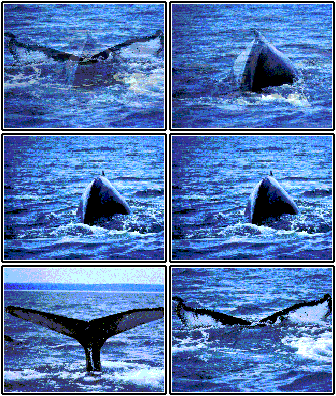
Pollution, whales and other ocean animals
Q: How does marine pollution affect whales and other ocean animals?
A. While the overall impact of pollution on the marine environment is unknown, contaminants introduced by rivers, coastal runoff, ocean dumping and various other activities are beginning to take their toll on the oceans. More than 80% of all marine pollution originates from land-based sources which are primarily industrial, agricultural and urban. Whale populations are coming under increasing stress from pollution, eutrophication and polychlorinated biphenyl (PCB) contamination.
PCBs are one of many man-made chemicals used in the production of plastics and styrofoams-common components of beach trash. Mass die offs of cetaceans thought to be related to PCBs and other environmental factors have been increasing in the last decade. For instance, an increasing number of deaths of Beluga whales (a species of white whale found predominantly in northern latitudes) have been associated with pollutants like PCBs. In many instances, the concentration of PCBs found in the tissue of Beluga whales is so high that their corpses are considered to be hazardous waste and must be handled as such. Accumulation of PCBs in the tissue of whales is also thought to alter their physiology and in turn, reduce their ability to reproduce.
Ozone depletion brought about by the burning of fossil fuels, such as oil and gasoline, is also thought to be indirectly harmful to whales. This is particularly true in the southern hemisphere where ozone depletion has resulted in increased levels of ultra-violet B radiation (UV-B) reaching the earth's surface. UV-B is known to have significant negative biological effects on phytoplankton, the species of marine algae which form the basis of the marine food chain, and krill, a diet staple for many species of baleen whales. By limiting the consumption of fossil fuels, we can actually help protect the whale's ecosystem by keeping the food chain intact. Greater protection of the world's oceans, seas and rivers is vital to provide a livable habitat for whales and other marine species.
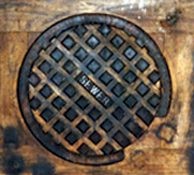
Around the world, untreated sewage flows into coastal waters, carrying organic waste and nutrients that can lead to oxygen depletion, as well as disease-causing bacteria and parasites that require closing beaches and shellfish beds. As human population grows, so will the volume of raw sewage pouring into the oceans.
 Oil Information

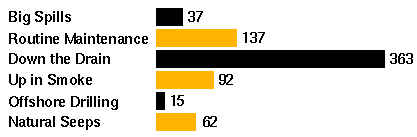
Down the Drain: 363 Million Gallons
one change can contaminate a million gallons of fresh water. Much oil in runoff from land
and municipal and industrial wastes ends up in the oceans. 363 million gallons �
much oil as one large tanker spill �. Every year offshore drilling is responsible for approximately 15 million gallons of oil spilled into the sea. The offshore drilling can cause ocean oil pollution from spills and operational discharges.
37 million gallons are lost in big spills. That only accounts for 5% of the total ocean oil pollution and it receives more coverage than any of the other reasons for pollution. However, this minor amount of the total oil pollution can harm ocean life in the sea and on the shores for many miles.
Natural seepage occurs without any direct help from people. Oddly, it is responsible for 62 million gallons each year. This form of ocean pollution is natural. Seepage from the ocean bottom and eroding sedimentary rocks releases oil.
Air pollution, which harms other parts of the ecosystem, is also partially responsible for the ocean pollution. Hydrocarbons and other particles settle on land and are then washed into rivers and seas. This accounts for 92 million gallons of the total.
137 million gallons of oil are spilt through routine maintenance. Shipping operations discharge only a few gallons at a time, but it is done frequently, and adds up to a larger number of gallons than almost all of the other reasons.
The effects of this are far-reaching. Pollution is creating a problem for all types of marine life, and thus, food sources and other natural resources are suffering. The famous Exxon Valdez oil spill in the Prince William Sound, killed many animals. Oil coats the animals' fur which insulates the animal, and makes it impossible for them to maintain body heat. If the animals attempt to clean themselves, they swallow oil. Fish that are exposed to oil have been found to develop abnormalities such as liver disease and reproductive and growth problems.
Raw Sewage
Fishing
Surfing
The Law of the Sea is a United Nations policy that aims at balancing human resources. Oddly enough, the United States was not one of the original advocates, and only added their voice in 1996. The United Nations is currently trying to answer several questions such as how much ocean pollution is actually going on, and what happens to the things dumped into the sea.

Who owns the ocean?
links