The
Competition
Garden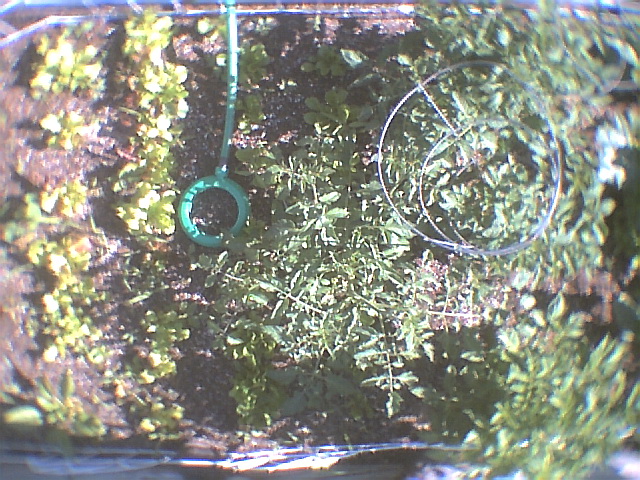 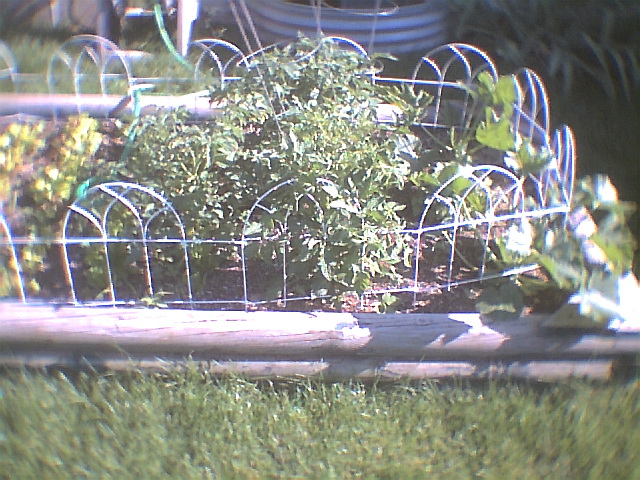 For an excellent read on a similar subject, I strongly recommend picking up a copy of Richard Dawkin's book The Extended Phenotype. Also, if you have not already, read his first book, The Selfish Gene. |
| Originally
I intended to
formalize a paper with a relatively simple thesis; replicators may
compete with each other regardless of what their form may be. However,
after finishing Steven Pinker's book The Blank Slate, and a
substantial portion of Matt Ridley's Nature Via Nurture, I have
opted to use a somewhat simpler,
and hopefully more creative means of explaining my ideas. I was up quite late the other night realizing that my idea for a paper was just not going to work, when I noticed that it was raining outside. That made me happy because I had not watered the garden outside in a few days. After another half an hour of insomnia, I noticed that the garden outside my house would provide a perfect example of how different replicators can compete and interact with one another. I covered this subject in a more broad and general sense in my essay Fidelity, Fecundity, and Longevity, but now I would like to give a more direct example. First off, we can start with purely genetic competition. There are several plants that are growing in the small garden. Among those plants there are tomato plants, lettuce, cucumber, and a whole mess of weeds. Although the tomato, lettuce, and cucumber plants are grown to purposely prevent competition amongst themselves, the weeds that have invaded the garden are competing with the other plants for the available resources that both organisms require. Each plant is inhabited by "selfish genes" that have evolved with the effect of promoting their own self replication. In this light, we can view the genes of each plant in a genetic arms race against the genes of each other plant. Further than that, each gene in all of the plants is competing for territory inside the plants genome. So we have genetic arms races on multiple levels. This, of course, is not unusual. Genetic arms races on these levels have been happening for millions of years. There is also another end to the mix, however. For there are memes that are also involved in this garden, and are exerting their effects phenotypically. For starters, the overall structure of the garden itself is the result of memetic replicators. The instructions for the spacing of each plant, and the general area that the plants occupy, are both the results of memetic instructions that have been selected presumably by the phenotype that is the size and food yield of each individual plant. In this way we can also recognize that the size of, say, a plant of lettuce might be partly a phenotype of memes. Memetic instructions influence the spacing of the plants, so the plants may grow taller in return. Memetic instructions also are in competitions with genetic instructions in the weeds. The meme that promotes the act of removing weeds for a garden will compete with genes that promote the growth of weeds. That is three levels of competition so far; genes in one plant may compete with genes in another plant, genes in a single plant may compete with each other, and memes from outside of the garden may compete with genes inside of the garden, all of these replicators combined will go into producing the resulting phenotype of the garden. But wait, what about competing memes? Memes that promote the act of weeding the garden do not stand alone, but are also in competition with other memes, such as those memes that promote the act of reading a good book, or writing frantically about the mind boggling peculiarities of theoretical biology. So we have another level of competition, memes that are competing against other memes. All of this competition can be found in a simple thing such as a home garden. Additional competing replicators might include genes located in birds or raccoons, or memes that promote weed killer products, and instructions for the weed killer products themselves. The competitions between replicators going on around us are truly amazing, and so mind boggling that I am left almost sure that I have left something out. Oh well, I think I will go weed the garden. |