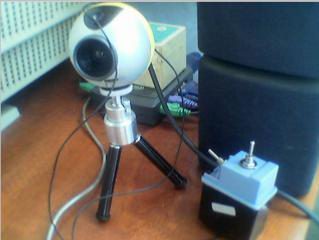
The long exposure mod is the first (and the most complicated) modification of the regular webcam. The exposure control box
is made from a old HP ink cartridge. Thank's to Keith Wiley for a well presented procedure :
http://www.cs.unm.edu/~kwiley/quickcamPro3000mod.html
This was my first enclosure for the modified webcam . I was contemplating afocal deep sky photography ,but I soon realise that webcams don't have near enough resolution for DS work.
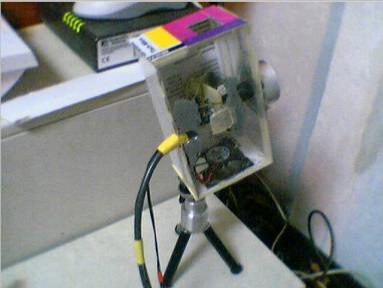
The second enclosure was adequated for the prime focus technique which made the webcam ideal for imaging some objects (planets and close double stars) .But this was only a improvisation to see the effectivness of the webcam. Whem I was convinced I moved to another (more solid) enclosure.
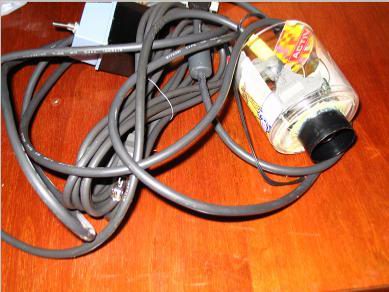
This is my current camera enclosure. The LX mode is controlled by a laptop via paralel port .I use the webcam to autoguide the telescope and to image planets.
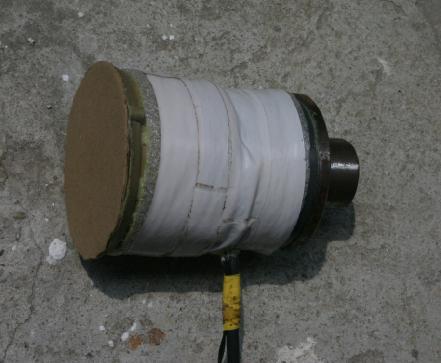
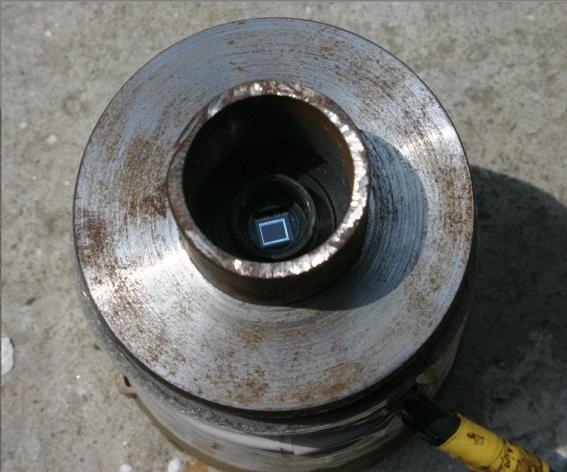
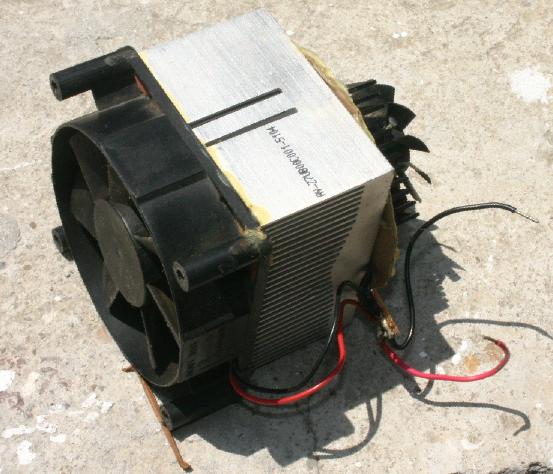
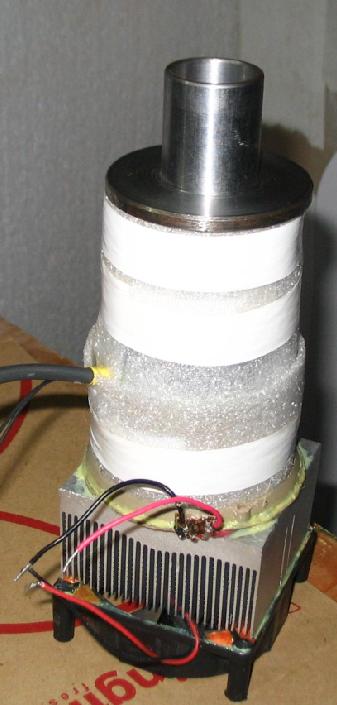
This is the cooling module .A peltier element is sandwiched between the heatsinks and connected to 12V power supply. The active ventilation and heavy heatsink are critical for the hot side .
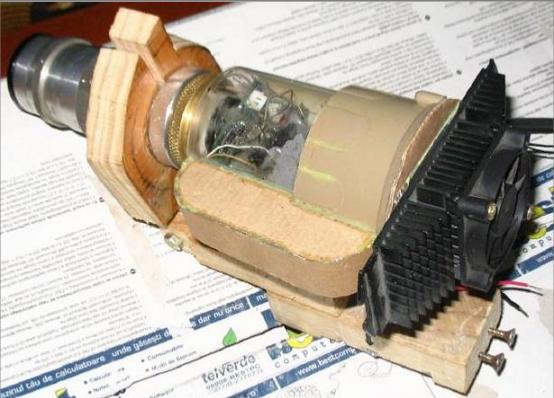
An intermediate version , with a P2 heatsink and side pipe
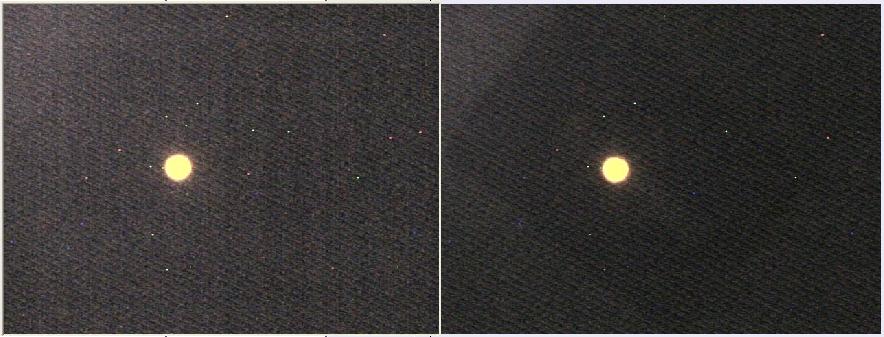
The final arrangement is cappable to lower the webcam internals some 20 degrees below ambient and the result of this cooling is less noise (see the above image made with and without cooling ).Unfortunately the ansanble is too heavy and power hungry for effective use at the telescope.
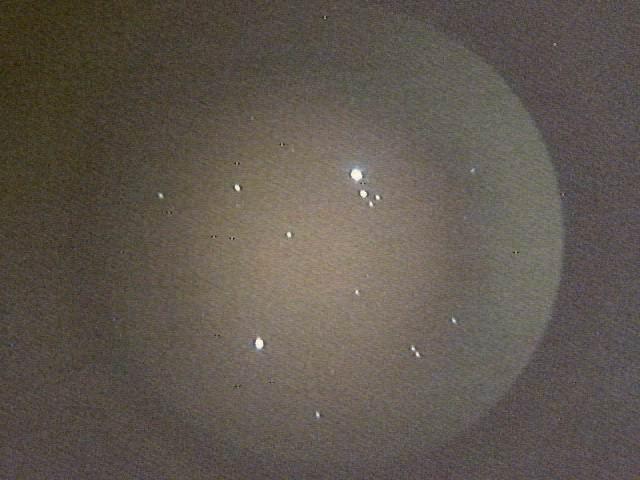
Afocal image of the region near Alcione in Pleiades. Was taken through a 114mm newtonian and 25mm plossl eyepiece
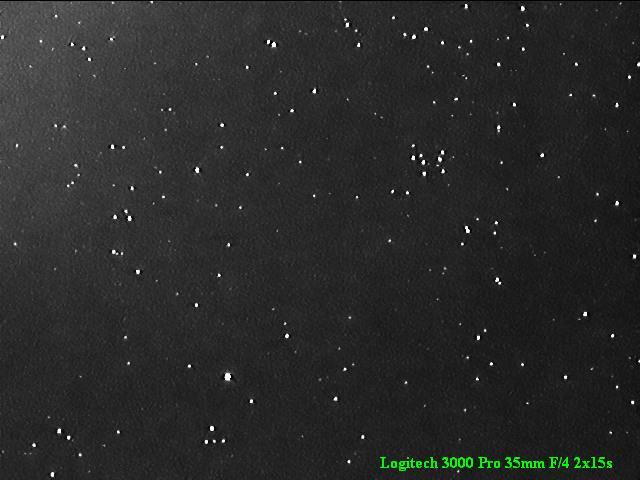
The webcam was coupled with a teleobjective (same that appears in the intermediate cooled webcam)
The object imaged was M29
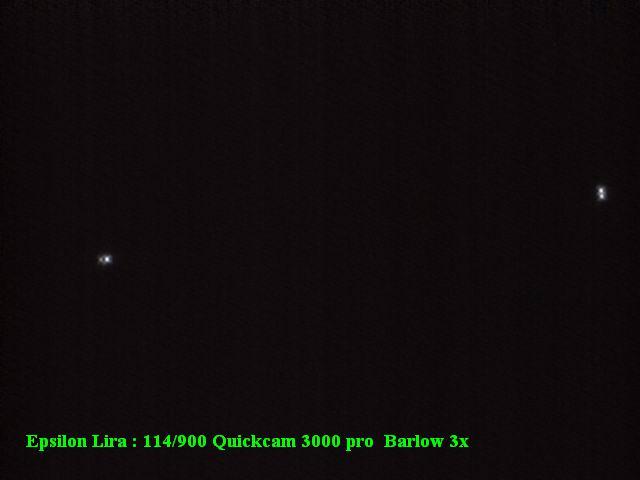
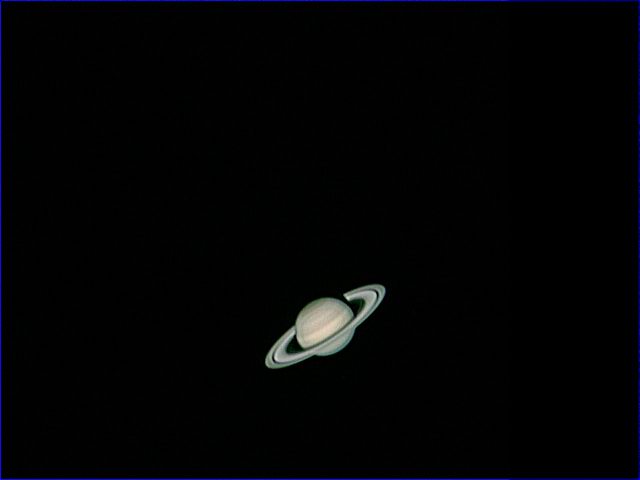
This is where webcams are shining : close and relatively bright double stars and planets
Saturn taken in prime focus of a 200 mm F/6 Newtonian with 3x Barlow