CAPPADOCIA ( Please Click for Photos )
GENERAL PACK
The ancient region of Cappadocia lies in central Anatolia, between the cities of
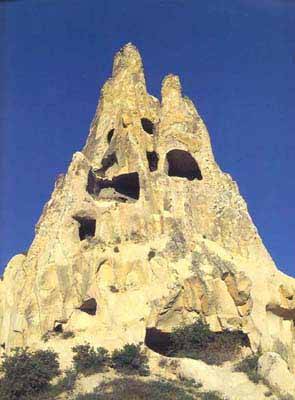
Nevsehir, Kayseri and Nigde. Here, the traveller finds one of the most fantastic
landscapes in the world. Wind and weather have eroded soft volcanic rock into
hundreds of strangely shaped pillars, cones and "fairy chimneys", often very
tall, and in every shade from pink through yellow to russet browns.
Cappadocia is an extraordinary land, combining unique and beautiful natural
features with a fascinating cultural and historical past. Hittites, Byzantines
and early Christians established important landmarks here, as did Mother Nature
with her stunning erosion of the soft volcanic deposits.
Goreme is the heart of Cappadocia and is an important area for shopping, with
its wonderful carpets and kilims, onyx souvenirs, and very fine local wines. It
is also a wonderful region for trekking and for photo-safaris. The scenery is
breathtaking in all four seasons: miniature poppies in the springtime, the fruit
and flowers of summertime, autumn's grapes and blaze of gold, and the winter
blanket of snow.
- Cappadocia History Prehistory
The first signs of human presence date from the neolithic and the calcolithic
periods. Indeed, hearths, statuettes and lithic tools made of volcanic glass or
bone have been found.
The Hittites
Signs of human life have been discovered, dating from the bronze age and the
Hittite period (3000-1750 BC). The soil contained gold, silver, copper but no
tin. Exchange developed, with Assyrians from Mesopotamia who founded trading
posts in the region. It has been established that writing existed in Cappadoce,
thanks to Assyrian tablets on which you can read the different taxes paid by the
traders to the Anatolian landowners, as well as the interests they received from
their debtors. A new artistic trend appeared in Anatolia, as a result of
cultural and religious influences from Mesopotamia.
In around 2000 BC, a people coming from Europe and passing through Caucasus
settled in Anatolia. They integrated into native life. Their language was Indo-European
and they were influenced by the native cultural and religious rituals. Their
writing, in the shape of cuneiforms can be found on numerous plates. They
progressively built an empire , Hatusas (today's Bogazköy). After 600 years of
reign, they were defeated by the Phrygians and their empire was dismantled. Some
Hittite strongholds remain in central and south-east Anatolia.
The Persians
Other peoples took over the region ; the Kimmers, then the Medes and the
Persians who named the region "Katpatuka", which means "Country of thoroughbred
horses". Since they worshipped Fire, the volcanoes were sacred. Alexander the
Great, a Macedonian king, defeated the Persian armies in 334 and 332 BC and
dismantled the Persian empire.
The Romans
Then the Romans invaded the region and it became part of the Roman empire. As it
was one of the most extreme limits of the empire, they built fortifications
around Kayseri and brought in their legions. Christianity, coming from Palestine,
spread in the south of Anatolia, then in Cappadoce. The first Christians
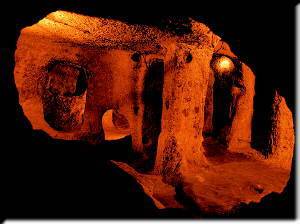
emigrated to the cities and villages. They started digging the first churches
and settled in the dwellings made in the rocks.
Byzantium
After the partition of the Roman empire into two parts, Cappadoce, influenced by
Byzantium, was often a battlefield between Sassanides and Byzantines. Under the
ruling of Leon III, the idolatry of icons was banned. In Cappadoce, this rule
lasted 100 years, but it was hardly respected because the people who worshipped
icons found refuge in the monasteries of Cappadoce. In the 11th century, the
Turkish Seljoukides, led by their chief Alparslan, invaded Anatolia and defeated
Romanos Diogenes, the Byzantine emperor.
GENERAL PACK