| April 2004 Phi Theta Kappa-Missouri Regional Newsletter p.6 |
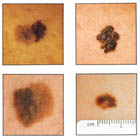
| FYI Health Series: Face the mirror: 1. Check your face, ears, neck, chest, and belly. 2. Check both sides of your arms and the tops and palms of your hands. Sit down: 1. Check the front of your thighs, shins, tops of your feet, and in between your toes. 2. Now look at the bottom of your feet, your calves, and the backs of your thighs � first one leg, then the other. (You will need a hand mirror for the backs of your thighs.) Stand Up: 1. Use the hand mirror to check the buttocks, lower back, upper back, and the back of the neck. (It may be helpful to look at your back in a wall mirror by using a hand mirror.) If you do the exam regularly, you will know what is normal for you and can feel confident. Remember the warning signs and check with your health care professional or dermatologist if you find something. The most common skin cancers � basal cell and squamous cell � often take the form of a pale, wax-like, pearly nodule, a red scaly, sharply outlined patch, or a sore that does not heal. Another form of skin cancer � melanoma � often starts as a small, mole-like growth. The ABCD Rule for Early Detection of Melanoma Almost everyone has moles. The vast majority of moles are perfectly harmless. A change in a mole�s appearance is a sign that you should see your doctor. Here�s the simple ABCD rule to help you remember the important signs of melanoma and other skin cancers: Almost everyone has moles. The vast majority of moles are perfectly harmless. A change in a mole�s appearance is a sign that you should see your doctor. Here�s the simple ABCD rule to help you remember the important signs of melanoma and other skin cancers: A is for ASYMMETRY: One-half of a mole or birthmark does not match the other. B is for BORDER: The edges are irregular, ragged, notched, or blurred. C is for COLOR The color is not the same all over, but may have differing shades of brown or black, sometimes with patches of red, white, or blue. D is for DIAMETER: The area is larger than 6 millimeters (about � inch -- the size of a pencil eraser) or is growing larger. Other important signs of melanoma include changes in size, shape, or color of a mole or the appearance of a new spot. Some melanomas do not fit the ABCD rule described above, so it is particularly important for you to be aware of changes in skin lesions or a new skin lesion. Other warning signs are: A sore that does not heal A new growth Spread of pigment from the border of a spot to surrounding skin Redness or a new swelling beyond the border Change in sensation � itchiness, tenderness, or pain Change in the surface of a mole � scaliness, oozing, bleeding, or the appearance of a bump or nodule. Now let us look at some �skin cancer facts.� Most of the more than one million cases of nonmelanoma skin cancer diagnosed yearly in the U.S. are considered to be sun-related. Melanoma, the most serious type of skin cancer, will account for about 54,200 cases of skin cancer in 2003 and most (about 7,600) of the 9,800 deaths due to skin cancer each year. |
 |