
BOMBING IN KUTA-BALI
The Bombing of Bali
December 31, 2002
Reporter :
Ross Coulthart
Producer : Nick Farrow
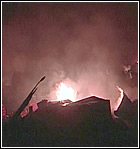 After
the bomb blasts in Bali, it didn't take long for the finger of suspicion to
be directed at an Islamic boarding school in a town called Solo in central
Java. For here in the classrooms of the Ngruki school, hundreds of Muslim
students are taught the glory of waging jihad against the Christian
infidels.
After
the bomb blasts in Bali, it didn't take long for the finger of suspicion to
be directed at an Islamic boarding school in a town called Solo in central
Java. For here in the classrooms of the Ngruki school, hundreds of Muslim
students are taught the glory of waging jihad against the Christian
infidels.
The school's head teacher is a cleric named Abu Bakar Bashir. He and his
group are the major suspects in the Bali bombing. Sunday was the
first media organisation to interview him after the tragedy, which killed
180 people, including at least 100 Australians. Western intelligence
agencies now believe there's strong evidence that Bashir is a key leader of
a terrorist group, which spans Malaysia, Singapore and Indonesia, called
Jemaah Islamiah.
In fact, the U.S. Ambassador to Indonesia, Ralph Boyce, told Ross Coulthart,
who asked if it put Abu Bakar Bashir at the centre of terrorist activity,
that "it puts the responsibility squarely on the Government of Indonesia to
take this, what we could lead information, and develop it in a way that it
can become evidentiary and actionable."
Admissions made by Omar Al Faruq to US interrogators in September have left
the US and Australia in no doubt that Abu Bakar Bashir is directly
implicated in terrorist acts with key figures in his Jemaah Islamiah group.
The evidence also shows clear links with Osama Bin Laden's Al Qaeda group.
And the US has now turned up the heat on Indonesia to act asserting for the
first time that it had now independently corroborated many of Al Faruq's
claims.
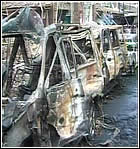 Ross
Coulthart asked Ambassador Boyce how seriously the US took the allegations
of Al Faruq. Boyce replied: "As a whole we find the information that Faruq
provided quite compelling, quite detailed, quite specific, hangs together
and it is corroborated by other information that we have at our disposal."
Ross
Coulthart asked Ambassador Boyce how seriously the US took the allegations
of Al Faruq. Boyce replied: "As a whole we find the information that Faruq
provided quite compelling, quite detailed, quite specific, hangs together
and it is corroborated by other information that we have at our disposal."
Is this a big historical moment for Indonesia, asked Coulthart, as it comes
under pressure to act against the terrorists? Boyce had no hesitation in
responding: "I think it's not overstating it to say that Indonesia is at a
crossroads, at a crossroads with the Indonesian people, and the eyes of the
world are upon the Government, and how they will conduct themselves in the
coming days and very well could be a historical period that we are heading
into."
For weeks before Bali, the US was pressuring Indonesia to investigate
aggressively alleged Islamic terrorist groups — but those pleas fell on deaf
ears. At the very highest levels of the Indonesian Government an
investigation into Abu Bakar Bashir was actively obstructed. Vice President,
Hamza Haz, said anyone who wanted to arrest Bashir would have to deal with
him first. "There have been some bombing incidents this year, " said Haz,
"but they have nothing to do with any Islamic figures in Indonesia."
Hamza Haz has been hounded by the local media to justify his earlier
comments. The Vice-President gave this explanation for his earlier
reluctance to act: "If I had said that there are terrorists in Indonesia
then nobody will want to come here to Indonesia — don't you think?"
While Indonesia was trumpeting draconian new anti-terrorism decrees finally
rushed through parliament, it was left to the Foreign Minister's chief of
staff, Marty Natalegawa, to justify Indonesia's lack of resolve:
Coulthart: "The dreadful possibility is that if action had been taken
sooner, if the Americans' warnings and other warnings had been heeded
sooner, hundreds of people need not have died in this senseless attack?"
Natalegawa: "Well, these are one of those 'if' questions — 'what if'
questions."
Coulthart: "At the very least, the comments of your Vice-President have been
unhelpful, haven't they?"
Natalegawa: "Aaaah, let's say there have been comments which reflect the
diversity of views in Indonesia. I mean ..."
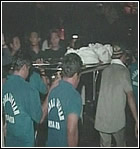
A month ago, Time magazine detailed Faruq's confession to the
American CIA of his involvement in terrorist activities. Faruq cracked on
September 9, admitting he was an operative of Al Qaeda. The CIA report
quoted in Time says that Faruq named Abu Bakar Bashir as having
authorised Faruq to use Jemaah Islamiah operatives to conduct bombings in
Indonesia and Malaysia.
Ross Coulthart asked Abu Bakar Bashir: "What about the evidence obtained by
the Americans from Omar Al Faruq, who claims that you have personally been
involved in instigating acts of terrorism — bombings inside Indonesia?" Not
surprisingly, Bashir replied: "It's fake evidence and America is lying."
The CIA report was leaked to Time to put more pressure on the
Indonesian Government to act against Bashir and his group. But Indonesia has
a long history of CIA propaganda, and senior politicians, including Hamza
Haz, said the Time article was nothing more than that. Instead, Haz
invited Bashir to lunch!
Indonesia's State Intelligence Agency, BIN, indicated to "Sunday" that the
confession of Omar Al Faruq was not enough to support a charge against
Bashir. Until recently, Indonesia chose to ignore other evidence against
Bashir. In December 2001, within weeks of the September 11 attacks in the
U.S., intelligence officials in Singapore and Malaysia seized surveillance
videos of US, British, Israeli and Australian facilities in Singapore, being
targetted by Jemaah Islamiah terrorists. Fifteen members of Jemaah Islamiah
were arrested trying to buy 21 tonnes of explosives for truck bombs. Under
interrogation, they named Abu Bakar Bashir as the godfather of terrorist
acts across South-East Asia. The Al Qaeda operative who masterminded the
attacks was an Indonesian citizen, Fathur Al Ghozi. A former student of
Bashir's school in the 1980s, Al Ghozi confessed to his role in a
Philippines bombing that killed 22 people in December 2000.
Bashir defended Al Ghozi's murderous acts to Sunday on the grounds
that they were done in the defence of Islam: "So long as he is defending
Islam and the minute Islam is attacked, it is approved by the religion.
Muslims are obliged to defend Islam. You cannot do nothing."
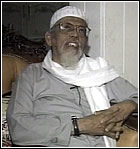 Apart
from his stint in hospital, Abu Bakar Bashir was clearly enjoying the
unprecedented publicity that has come with his international vilification as
a terrorist. He denied any involvement in terrorism, asserting that he
simply represents the Indonesian Mujahedin Council, an allegedly non-violent
political organisation. But it was in this council that the CIA informant Al
Faruq linked up with an operative from Jemaah Islamiah, Agus Dwikarna.
Dwikarna was later arrested at Manila airport after security guards
discovered plastic explosives in his suitcase. He's now in jail in the
Philippines. But the mastermind of the Philippines bombing and many other
attacks is still at large. Riduan Isamuddin, better known as Hambali, is
wanted in Singapore and Malaysia, and is believed to run the day-to-day
terrorist operations of Jemaah Islamiah. Now a major suspect in the Bali
bombing, he's also a former student of Abu Bakar Bashir. Bashir told Ross
Coulthart: "I knew Hambali as a religious teacher and a businessman. So I
don't know anything more. But I am quite sure that he's not a terrorist."
Apart
from his stint in hospital, Abu Bakar Bashir was clearly enjoying the
unprecedented publicity that has come with his international vilification as
a terrorist. He denied any involvement in terrorism, asserting that he
simply represents the Indonesian Mujahedin Council, an allegedly non-violent
political organisation. But it was in this council that the CIA informant Al
Faruq linked up with an operative from Jemaah Islamiah, Agus Dwikarna.
Dwikarna was later arrested at Manila airport after security guards
discovered plastic explosives in his suitcase. He's now in jail in the
Philippines. But the mastermind of the Philippines bombing and many other
attacks is still at large. Riduan Isamuddin, better known as Hambali, is
wanted in Singapore and Malaysia, and is believed to run the day-to-day
terrorist operations of Jemaah Islamiah. Now a major suspect in the Bali
bombing, he's also a former student of Abu Bakar Bashir. Bashir told Ross
Coulthart: "I knew Hambali as a religious teacher and a businessman. So I
don't know anything more. But I am quite sure that he's not a terrorist."
Still protesting his innocence, Abu Bakar Bashir was finally arrested by
Indonesian police. As US Ambassador Ralph Boyce told "Sunday," investigators
now accept the truth of Omar Al Faruq's claims: "I saw a report from a
senior Indonesian official today, saying that he has validated all the
Time magazine claims."
An Islamic extremist group, Defenders of Islam, were outside police
headquarters in Jakarta this week when their leader Habib Riziq Shihab, was
hauled in for questioning. Although groups like this one are not part of the
mainstream, Western intelligence agencies believe there is evidence that
individuals in it are now aiding and abetting Jemaah Islamiah and Al Qaeda.
It's questionable whether Megawati's government has the political will to
crack down on them — when it clearly ignored America's demands for months.
Broadcaster Wimar Witoelar, a former adviser to the former Indonesian
President Gus Dur, said police completely ignored presidential demands for a
crackdown only a few years ago.
 There
are also strong Indonesian military links to some of the extremist Islamic
groups. Military-backed Muslim militia have been used to carry out State
terror across Indonesia. And the Kopassus special forces have previously
been caught planting so-called terrorist bombs using the same type of
explosive apparently used in Bali. Coulthart asked Witoelar if the military
could have been involved. Witoelar replied: "I think it's almost impossible
for the military not to be involved. At least those parts of the military
who are not part of the official command."
There
are also strong Indonesian military links to some of the extremist Islamic
groups. Military-backed Muslim militia have been used to carry out State
terror across Indonesia. And the Kopassus special forces have previously
been caught planting so-called terrorist bombs using the same type of
explosive apparently used in Bali. Coulthart asked Witoelar if the military
could have been involved. Witoelar replied: "I think it's almost impossible
for the military not to be involved. At least those parts of the military
who are not part of the official command."
The tragic events in Bali were a wakeup call for Indonesia. Whether it heeds
that call is another question entirely. But Indonesia can no longer risk
doing nothing.