Crisis Centre Diocese of Amboina
|
Tuesday, 18 July, 2000, 14:57 GMT 15:57 UK Moluccan refugees' flight from terror
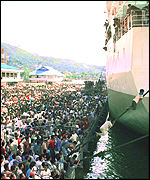
Thousands have been forced to flee their homes By Joanna Jolly, Indonesia
"For 38 years I didn't have a problem with the Muslims. My family is also Muslim. I don't know why this happened," says a Christian refugee from Indonesia's troubled Moluccan Islands. He does not want to be named for fear of reprisals, although he now lives in a refugee camp in the city of Manado, the capital of Sulawesi.
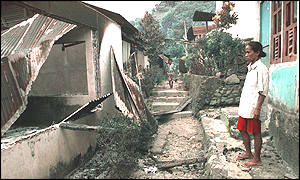
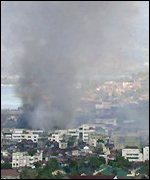
In November last year, he was forced to flee the island of Ternate when Muslims went on a rampage, burning down the houses of Christians and their Muslim supporters. "It is better we stay in Manado until the government makes our churches new and says we can go back to Ternate," he says from his new home, a mat on the floor of an old training centre which has been taken over by refugees. There are around 10,000 Christian refugees in Manado, according to the co-ordinator of Manado refugee crisis centre, Yan Roberts. Every week new groups of refugees arrive, fleeing violence on the nearby island of Halmahera.
Once here, the refugees rely on the local community and church groups for food and medical aid. "The government has declared that they will only help until the end of May. They have no more money to help," says Mr Roberts who is also attempting to send aid to Christian refugees still in Halmahera. Camps In Ternate, Muslim refugees who fled fighting on the island of Halmahera, live in similar circumstances. Some 90,000 Muslims have found refuge in the homes of sympathisers or have built shelters under tarpaulins in make-shift camps around the island.
"We used to live in good economic conditions so people feel very bad about the violence," says Muhammed Ali, the leader of a group of some 2,000 Muslim refugees living in a warehouse outside Ternate city. "Our lives before the violence were so much better. Now we are poor," he says, describing how many of the refugees' houses were burnt down in an attack by Christians last September. These refugees receive food and medical aid from international aid agencies. Their children attend the local school, but their living conditions are far from good with each family allocated only meters of floorspace on which to cook and sleep. Violence Refugees on both sides fled their homes following violent attacks. Both groups say they have no idea what provoked the fighting and only want to return home as soon as possible.
"My 11-year-old grandson was killed in January. He was in the street when he was killed by a bomb thrown by Christians," says Miriam, a Muslim refugee from the island of Bacan who is now living on a chicken farm in Ternate. "We want to go back, but there are still many Christians in Bacan," she says. "We don't know why the violence started. We have forgotten what it is all about."
|