
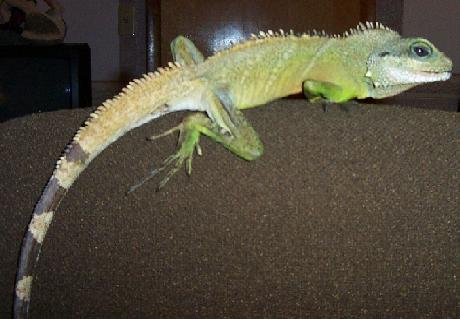
Group:
Origin: Indonesia, Vietnam, Thailand, and South China
Average life span: 10-20 years
Disposition: Baby dragons can be quite jumpy and may run from you. With frequent handeling they will calm down pretty quickily. I'v never once seen or heard of an agresive water dragon, so it isn't hard to tame them at all. For their first few years they still want to jump alot and may wiggle alot when you hold them. With patience, you can have them sit on your sholder for a while before they feel like moving.
Size: Males on average can get up to 3 feet (including tail). Females are a bit smaller. Females look alot different also. Once a dragon is a year and a half old you can usually tell the sex. Males will have brown circles on the bottom of their hind legs near their cloaca. They will have more colors, more wider hides, and bigger spikes. Females look the same as baby dragons really, and they need to be given dirt to dig in. Females can lay eggs even with out a mate, this means the eggs are unfertile and will not hatch. If she has no where to lay them they may get stuck inside her causing alot of problems.
Heating/Humidity: The cage needs to be around 85 degrees. The basking spot should be atleast 95 degrees. The cool end of the cage should be around 80. The humidity needs to be very high-80%. Temperature should drop 10 degrees at night. UVB lights are needed for water dragons.
Housing: Glass and screen cages are a water dragans worst enemy. Dragons will run into the glass causing snout problems or rub their noses on screen cages causing worse snout damage.
-Water dragons needs verticle cages, more tall and long. They love to climb and need to be able to. Lots of branches are needed.
-Lots of plants (live or fake) are a must. There should be alot of dark places where the dragon can hide and plants are best to use. Lots of live plants is best to help the humidity stay high.
-Subsrate can be dirt, sand, newspaper and many things.
-A large water bowl is needed. Small kitty litter pans make the best water bowls. The water is frequently deficated in my dragons so they should be cleand often.
Feeding: Young dragons should be fed an omnivorous diet. They should be fed daily. Lots of insects and some fruits/vegies should be given to them. They will eat alot of crickets, meal worms, wax worms, and earth worms. They can be fed apples, bananas, frozen mixed vegies, kale, collard greens and some others. Dragons will almost never eat fruits/vegies that are just sitting in a bowl. Cut them up into tiny peices and put insects such as meal worms with the fruits/vegies. This way they will accidently grab some of them when going after the insects.
-They should then be introduced to pinkies and fuzzies. Soon they will no longer require any more fruits or vegies in their diet.
-Medium sized dragons (about 2 feet long) should be fed pinkies, fuzzies, and super worms.
-Larger dragons can then start to eat hoppers and soon enough they can eat adult mice.