WorkingDevices
Wireless flood sensor
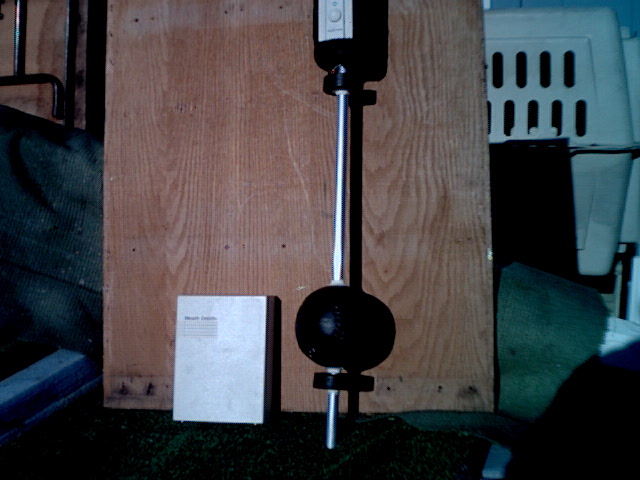
By : merc inariThe project came out to be very helpful to me in early years of college because I got good grades for it and then I was able to put it to use during the heavy rains of 1998. Informed by the weather forecast about possible flooding around the county, I installed the sensor on my front yard. The sensor was activated in the middle of the night by the rising flood in the street caused by clogged drainage!! This definitely prompted me to do something and I had plenty of time to do it (like sandbag my driveway). The image below shows the Flood Sensor in a complete assembly
Notice how the transmitter is embedded at the top of the sensor painted in black (right next to the white box, left). The head of the sensor pictured below is made out of hard foam, it encloses the switch that activates the transmitter. When the Sensor is planted at a spot where it is deemed to flood, the rising water will raise the ball float (regular plastic ball, at the base of sensor)moving the plastic shaft up and closing the switch to activate the transmitter. The receiver (left of sensor, white box) can be place as far away as 100 feet in diameter from the transmitter (from my specs) and will emit a door bell chime when activated. The rod is aluminum and the shaft is clear plastic. Dimensions, directions and drawings on how to make this is available from me for a fee if you are interested.
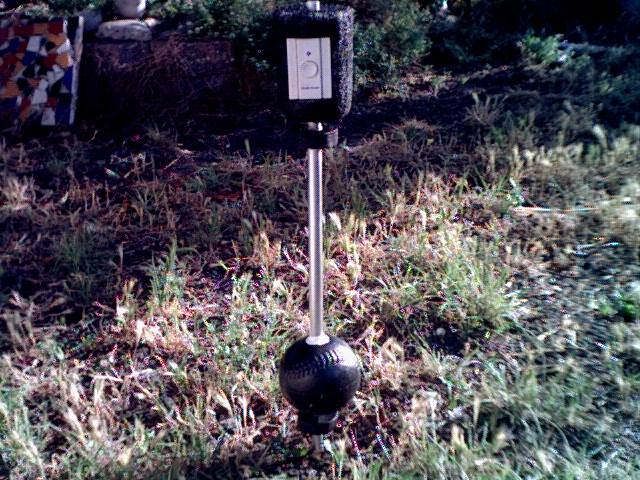
The transmitter and receiver of this flood sensor is just a regular wireless door chime that can be purchased at local Walmart or Kmart for as much as $15 to $20. The cost of making this device is really cheap compared to the job that it can do--to warn you of danger. The batteries on the transmitter can last a long time but make sure to perform a regular test on this by activating it once in a while. It also helps to secure the sensor properly to avoid it from getting carried away.