Making no-fly zones work
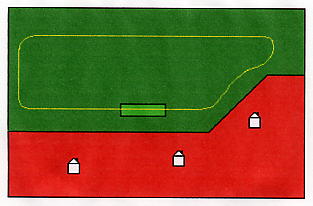
Although the idea behind no-fly zones is commonsense, they are rather harder to work in practice. Firstly, everyone must be aware of where they can and cannot fly. This necessitates displaying the zones on a map on the flying field and referring to them in the flying site rules. Secondly, a degree of policing is needed. This usually falls to the committee member or duty member in charge of flying activity on a given day.
He or she should be responsible for keeping an eye on flight patterns to ensure that no-one is repeatedly overflying surrounding properties. Often a friendly reminder is all that is needed, but some sanction e.g. grounding must be available for use against pilots that repeatedly and wilfully ignore no-fly zones.
Roles of the duty member
The duty member, in addition to monitoring no-fly zones, has a role to play in monitoring the aircraft being flown for excessive noise. he or she should be able to submit any aircraft that sounds unduly noisy in the air to a ground based noise check. In some cases, he or she may decide that even if the noise limit is met, further silencing work is required because of the offensive quality of the noise being produced.
Lest the above measures sound rather draconian, it needs to be remembered that the aim is to assist pilots in having somewhere to fly. Avoiding one corner of a flying field is surely a better option than not being able to use the field at all.
|