|
|
|
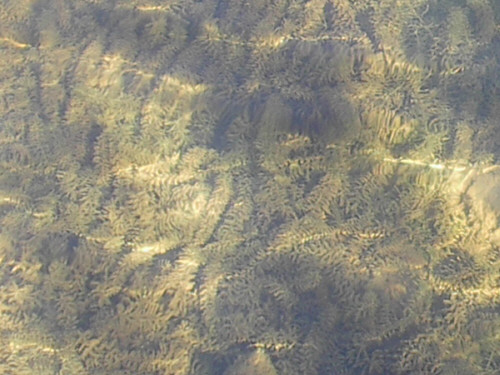
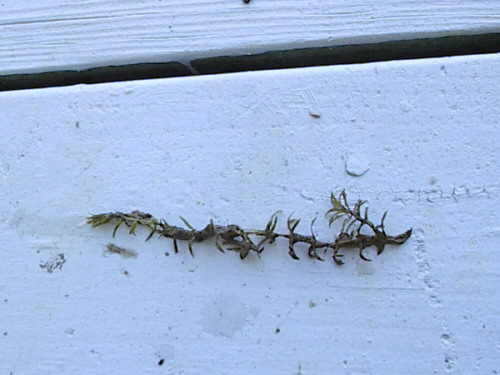
HydrillaHydrilla is an aquatic plant that is not native to the United States. Its origin is Africa. The plant was imported into the United States as an aquarium plant. This plant is hearty. It can reproduce in three ways. It flowers, and the blooms drop to the bottom of the water. The plant under stress produces tubers on its roots, which can survive for up to ten years. Each section of its stem can root and form a new plant. Hydrilla is now prevalent in the Catawba River chain. In 1999, 400 acres of Mountain Island Lake were covered with hydrilla. The plants were first found behind the island across from Latta Park just before the bend in the lake. A fisherman who mistakenly thought it would attract bass probably introduced it. In 1999, the plant was found from the sandbar to the Route 16 bridge. Last fall a resident of Mountain Island Harbor spoke to the Mountain Island Marine Commission; hydrilla was in his cove. It is now found in Duck Cove. The plant is so dense that it can clog the water intakes for Charlotte-Mecklenburg Utilities, Gastonia and the Riverbend Steam plant. Duke Power and Charlotte-Mecklenburg Utilities have started control measures. There are three ways to approach the problem. The plants can be mowed. The methods of plant reproduction make this futile. Initially, eradication was attempted by using a mild herbicide. It did not work. Last fall 5,000 sterile carp were introduced into the lake. The carp eat hydrilla. They are sterile because they are not native to the United States. They are imported from China. Each carp must be ten inches long or they would become a meal for the bass. Their appetites are greatest when they grow from ten inches to 24. Ordinarily they live for two to four years. Duke Power and Charlotte-Mecklenburg Utilities shared the expense for the fish. Plans currently call for the release of another 4,000 sterile carp. The results are going to be evaluated by both parties.
Hydrilla ControlBoats easily spread hydrilla. Boat ramps are usually the first areas to show evidence of its presence. The plant clings to the props and crevices of boat motors. It drops into the water when boats are taken in and out of the lakes. This is how it spreads from lake to lake. We checked our motor when we returned from a trip up to the sandbar. Our route was up the main corridor of the river. We did not go into the shallow areas up stream. An inspection of the motor when we returned revealed a surpising amount of hydrilla caught in the motor. Some of it was caught in the points of the pontoons. There was quite a bit of hydrilla floating in the area between the sandbar and Latta Park. Check your engines and boat bottoms, and carry the hydrilla out of the lake to dispose of it. This plant has the ability to distroy the recreational value of the lake. It grows too dense for boating, it kills fish, it makes swimming impossible and makes water-skiing difficult. |
|
Send mail to [email protected] with
questions or comments about this web site.
|