The Battlefield of Sekigahara Continued


| |
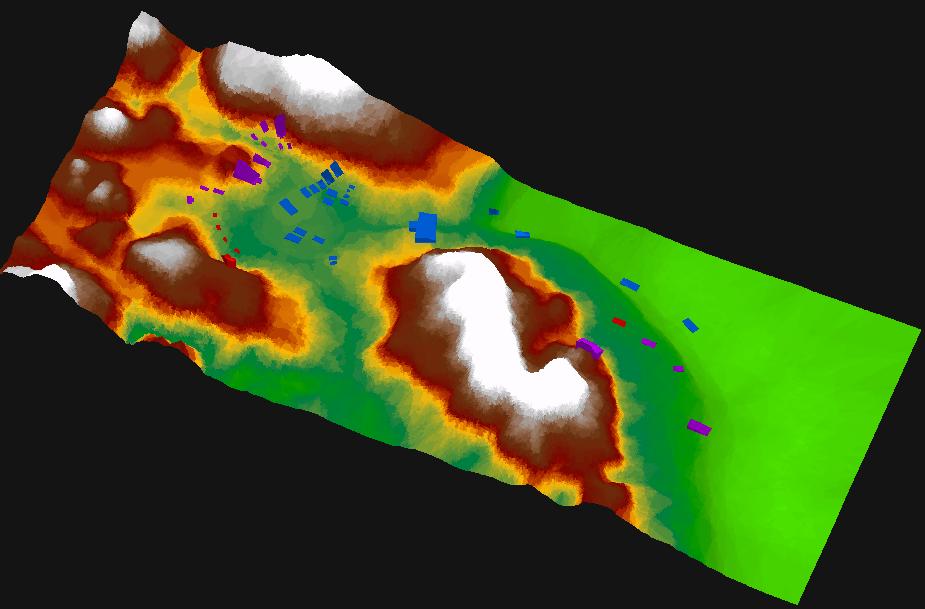
North is to the upper-right. The troops are superimposed on the battlefield, their respective sizes roughly corresponding with the number in each battalion. Color coding is as follows: Purple = Western Army, Blue = Eastern Army, Red = Turncoats.
| |
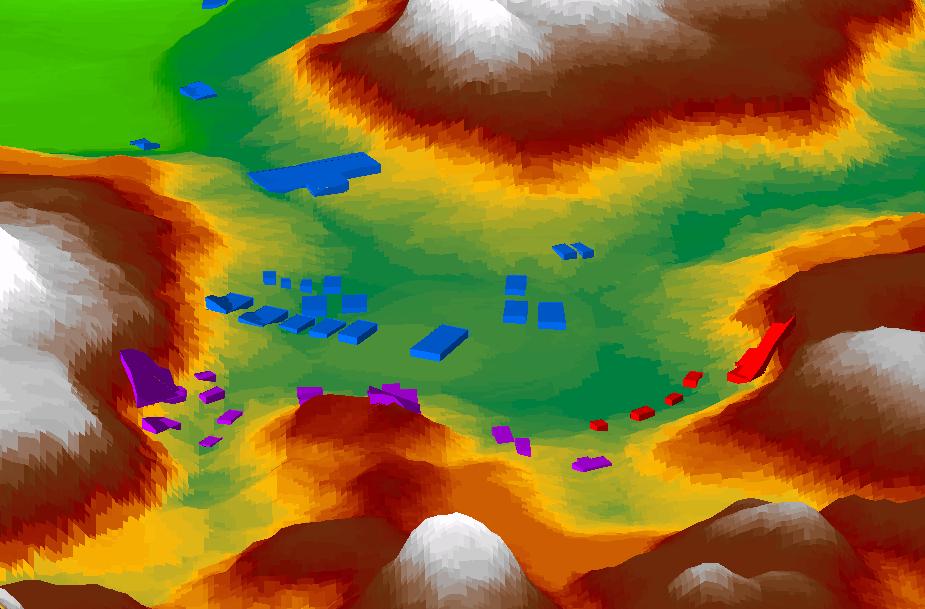
North is to the left. The largest Eastern Army (blue) unit is that of Tokugawa Ieyasu, with 30000 men. Situated near Mount Nangu, Ieyasu held back for most of the battle, letting his vanguard units take the brunt of the fighting. The largest Western Army (purple) unit is that of Ukita Hideie with 17000, just barely visible over the crest of little Mount Tengu, while the large unit north of him is Ishida Mitsunari, with 6000 men. Kobayakawa Hideaki, with 15600 men, is visible towards the south.


North is to the upper-right. The troops are superimposed on the battlefield, their respective sizes roughly corresponding with the number in each battalion. Color coding is as follows: Purple = Western Army, Blue = Eastern Army, Red = Turncoats. Source. North is to the left. The largest Eastern Army (blue) unit is that of Tokugawa Ieyasu, with 30000 men. Situated near Mount Nangu, Ieyasu held back for most of the battle, letting his vanguard units take the brunt of the fighting. The largest Western Army (purple) unit is that of Ukita Hideie with 17000, just barely visible over the crest of little Mount Tengu, while the large unit north of him is Ishida Mitsunari, with 6000 men. Kobayakawa Hideaki, with 15600 men, is visible towards the south.


| |

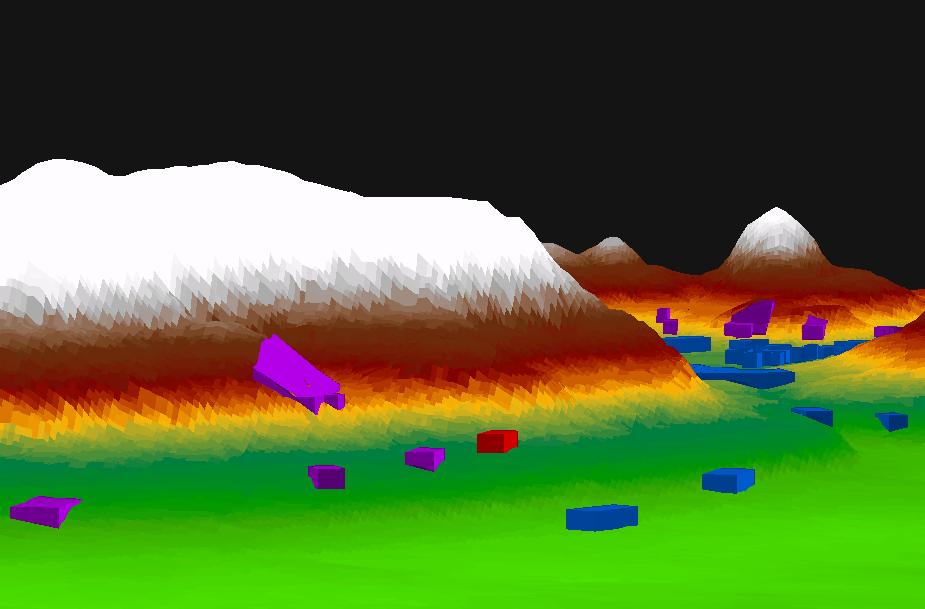
Visible here is the eastern side of the battle, looking due south. This side of the field was comparatively inactive, due to the turncoat Kikkawa Hiroie (shown in red). Môri Hidemoto, situated on Mount Nangu with 15000 men, also lay dormant for the duration of the battle. In comparison with the relatively sparsely populated eastern side, the dense concentration of troops in the valley of Sekigahara can be seen in the distance.


Visible here is the eastern side of the battle, looking due south. This side of the field was comparatively inactive, due to the turncoat Kikkawa Hiroie (shown in red). Môri Hidemoto, situated on Mount Nangu with 15000 men, also lay dormant for the duration of the battle. In comparison with the relatively sparsely populated eastern side, the dense concentration of troops in the valley of Sekigahara can be seen in the distance.


Click for a fly-by of the battlefield. It is a large file -- please be patient.

Click for a fly-by of the battlefield. It is a large file -- please be patient.


Hosted by www.Geocities.ws

1