I liked Uruguay, but I needed to press on south across the River Plate to Buenos Aires. I had a football match to watch on Saturday 10th, of all things, of which more later.
I could ride for several hundred kilometres to the first available road crossing of the Rio Plata (this would also involve passing through the schoolboy-amusing Uruguayan town of Fray Bentos, centre of the corned beef industry). I elected instead to take the coast road through the capital, Montevideo, to the old port of Colonia, and the ferry to Buenos Aires.
The road to Montevideo is a terrific new dual carriageway with a beautiful light grey asphalt finish (these things take on a particular significance when you�re riding around a continent on your own with no-one to talk to).
All the billboards by the side of the road faced the traffic heading towards Punta del Este -- hotels, casinos, liquor �- because people were heading in that direction to spend money. You come home -� to Montevideo or to Argentina -� when that money runs out. But the other side of the road had no traffic on it.
More than a third of the country lives in the capital. The urban sprawl is spreading at a staggering rate along the coast from the historic heart of Montevideo, tumbling and bundling east as new development after new development eats up the forested shoreline. The first houses you pass are still unfinished... then new... then just a few months old... and so on and so on as the road takes you closer to the old city.
It is an experience to see the metropolis growing in front of your eyes.
The seafront road passes blocks rich and poor with wonderful views along the coast and out to sea. A team of stewards was busy cordoning off stretches of the road for a forthcoming motor race. Buses thundered past, shoppers hurried along, all was noise and movement and colour.
Naturally, as I had no time to stop and see anything, I fell head-over-heels in love with the place.
|
Gunther�s Travels: Buy any book by John Gunther you can find � most likely secondhand . Classic sweeping journalistic forays into the inner workings of the countries he visits. His aim is to find out what makes a place tick; who really runs things (and where possible to rubbish Communism).
|
|
An armed policewoman waved me away when I tried to stop the bike for a sneaky photo-op in the XXXX -� you�ll have to trust me when I say I was there � so I didn�t have the time to take it all in. John Gunther writes of ' ' but that was in 19xx. These days one monstrous carbuncle is much like another. It didn�t stand out.
In a sidestreet minutes from the centre I found a busy caf� serving wondrous XXXXX, the national dish. Three young waiters wearing bow-ties and fraying white shirts zipped in and out of the front door ferrying orders on battered old trays to hungry office workers up and down the block.
A young-ish man in a business suit hailed me from across the street as I parked up and checked the map. He bounced over to ask if I was lost and could he help? He was carrying a motorcycle helmet: we were brother bikers, and therefore he wanted to help me. What could be more natural? What a nice bloke!
The road west to Colonia was clear and easy, with far less development on this side of town. I have images in my head of marshy land � perhaps that�s why all the hard work is being done in the other direction.
Through an area called Neuva Helvetica � New Switzerland � that was completely flat but, to remind the immigrants of home, also spotlessly clean.
Someone had taken the time to plant hundreds of pine trees a generation or two ago. We can be immensely grateful for their hard work, even if they never saw the results themselves: mile after mile of tall, proud trees line the road in to Colonia, a simple but effective way to make the road and the whole area more beautiful.
The travel books recommend Colonia for its preserved historic centre and the shopping opportunities created to milk the money of several million Argentines across the estuary. I saw less of this in the short time I was there. Rather, having dumped my gear in the town�s only cheap-o fleapit hotel, I took myself off on a tour of the outskirts, looking for life behind the tourist fa�ade.
Dirt roads, slavvering hounds with a taste for raw motorcyclist, corrugated walls and cardboard roofs, unpainted doors falling off hinges, blown and bald tyres abandoned on unlit street corners, impish kids barefoot chasing the bike, round the bend a huge walled estate with guards at the gate.
And then, at the very edge of town, where the houses are that little bit more worn and unloved, I came across a compound filled to overflowing with old cars. And I mean old � 20�s Buicks and 30�s Fords and more, perhaps 30 cars all told, a line of them on uneven ground that looked like a detachment of drunken soldiers, wobbling and unsteady on their feet and, not to put too fine a point it, wrecked.
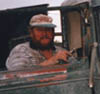
As I got off the bike to look closer, Grizzly Adams emerged from the shack that stood in the middle of the compound, accompanied by three of the biggest dogs I have ever seen. This is the edge of town and out here no-one can hear you scream. I judged distances and calculated that the dogs would pull me to shreds before I�d even started the engine, so I waved and proffered a shaky �Ola�... and that�s how I met Hugo.
Hugo is a big bear of a man. Hot water and soap are strangers to him. When I shook his hand I felt a hesitation, as if he hadn�t shaken hands with anyone, least of all a stranger, for many years. A kinder, gentler soul you will not find.
Hugo rescues the old cars that even in a land of old cars are too old. The ones that are rusting away in the corner of a field which the farmer wants to cultivate, or abandoned on a suburban roadside where the residents still care enough to want to get it moved.
Hugo repairs what he can and fires engines up for the first time in decades. The cars are gradually taking over the whole of his plot and I�m certain when he needs to that Hugo will knock down his one-room shack to make space for a Chevrolet or a grand old Cadillac.
- Why do I do this? What a question. Because they are beautiful.
Hugo�s mother was born over the river in Argentina, up in Missiones country where it�s hot and steamy. He doesn�t care for it. She was of Swiss stock, but he hasn�t thought of visiting Switzerland.
Hugo lives on the edge of Colonia and cares for his cars, which continue to rust and to grow old but they are doing it together and in safety. If I ever get back to Uruguay I would like to visit Hugo again, and I rather feel that he will be there, come what may, with his cars and trucks and his three big dogs.
I rode the long way back to town, coming at dusk upon a monstrously massive vehicle with German numberplates. XXX and XXXX were inside when I knocked and we chatted (in German � I surprised myself) about their three years on the road through South America and my three weeks.
They were wearing pressed tracksuit trousers and wanted for no comfort inside the monster, which they had had shipped over from Munich. The view from inside the truck as the sun set over the waters of the Mar del Plata was divine. They were the most relaxed human beings I have ever met.
A fantastic journey, but very different from mine. I�m still trying to work out how much it must all cost them � so you see, I still have all these Western hang-ups about money, even after the epiphany of Hugo�s world out of time.
Back to the hotel in time for a gruesome night of rain and lightning, bureaucrats and borders... and, later still, Buenos Aires.
|