
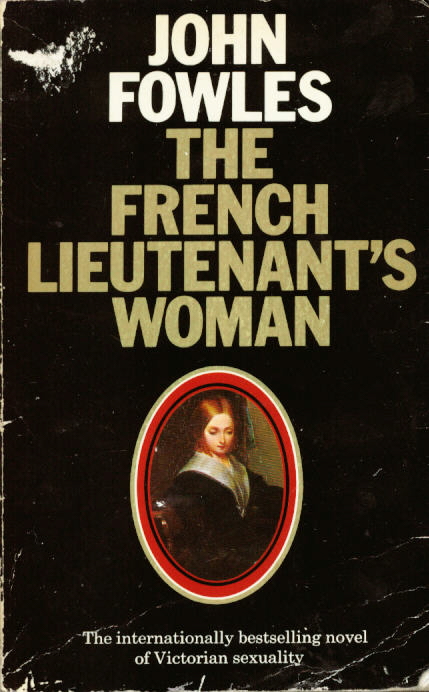
Now I know why the made the film of it, with Meryl Streep gazingly longingly out to the sea at Lyme Regis with a film crew around her...it all makes sense know! Do I feel stupid or what, but the artifice of looking at the repression and hypocrisy of
The terrifying spectre of the dreadful Mrs Poulteney who takes in the seemingly disgraced Sara Woodruff, is a marvellous creation and the weaving of the plot to three alternative endings can appear confusing, with the growing sense that you have been rather manipulated. Having read the Magus, also by Fowles (during which my brain began to hurt), I really ought to have been used to that sort of thing by now. The fates and fortunes of Smithson and Woodruff, the central characters of the piece, imprisoned by the social mores of the time are interwoven beautifully. Anyway, this isn't going well, so if you only ever read one novel about a French lieutenant's woman, make it this one......
Back to front page
Links: Lyme Regis Visitor Guide
John Fowles- the website
House of Commons, as New Labour rose, and the man himself retired from parliament "to spend" as he put it so eloquently, "more time with politics".
I can remember sitting in the House of Commons Stangers' gallery one evening, being rather pleased that I had just watched Benn make a
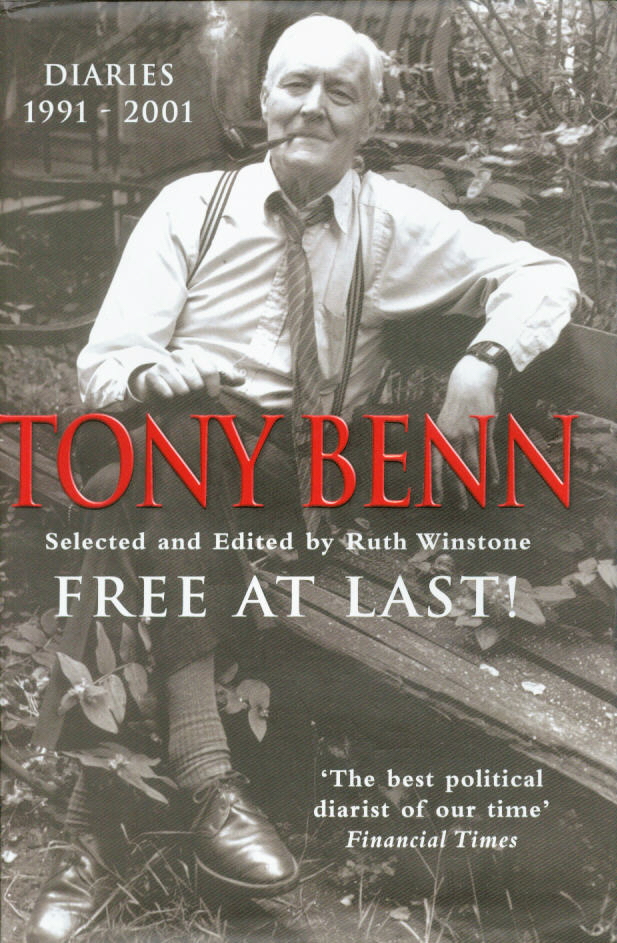
lose his way, his narrative is always immensely readable. He worries that he is becoming some kindly old man of the left, venerated as a regimental goat, and indeed one of the thoughts I had was that he appeared to be like Benjamin the old Billy-goat in Animal Farm, who watches helplessly as principle after tenet after policy are foreclosed in search of Labour's return to power. Blair's coterie's grip on the party machine becomes ever more over-weaning as a kind of Leninistic democratic centralism is applied, but Benn worries deeply about the decline of the party faithful, and the emergence of a presidential style of government.
Of great human interest is Benn's reaction to the death of his mother, and then tragically, his wife, from cancer. There are also some wonderful entires dealing with his surprisingly good relations with John Major and Ian Paisley, as well as his contacts ith Edward Heath, a similarly seemingly helpless figure in his part of the Tory party. Benn scores well in his efforts to keep personalities out of politics, but particular bile is reserved for Neil Kinnock . It's one of those truisms of politics that one's real enemies are within one's own party rather than anyone else's'
Anyway, do read it, borrow it, or better still go and listen to TB speak. You'll be glad you did.
Links: Tony Benn interview, 2000 with CJ Stone
Tony Benn's official site
I'm ploughing through Lord of the Rings at the moment, and I can't claim to be entranced. Is it just me, or is Tolkein's poetry staggeringly terrible?
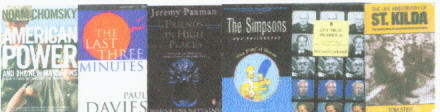
Noam Chomsky was a name that was always thick in the air when I was a politics undergraduate, and as a callow youth of 21 (about four years ago, then...),we were always told to read him, but I didn't. I had trouble reading- I used to lose concentration half-way through trying to understand the instruction on a cup-a-soup. But then American Power and the New Mandarins, written whilst Lyndon Johnson was still in the White House serves as a timely warning to his succesor-but-six, and makes a cogent plea to look at American foreign policy by taking a few steps back and putting it in the context of differing world views and development. Who now can honestly say that America's involvement in Vietnam was a good idea, and the savagery of the whole exercise is something that really merits being reminded of .It's gratifying that so many of us appear to be against this coming war. Let's hope we're all around to read the history of it. Oh dear.ramble, ramble ramble..........
The Last Three Minutes by Paul Davies reminds me very much of why I was no good at Physics at school. To this day I still come out in a sweat when I try to remember who a gold-leaf electroscope works. Bearing that in mind, getting to grips with baby universes and Black Holes is going to be a bit of an exponential leap. Some interesting stuff about the end of the world and the universe. Which Dubya, Tone and Saddam may lay on for us anyway........
I really enjoyed The Life and Death of St Kilda by Tom Steel, though. Anyone who has romantic delusions about living on a far-off Scottish Island (Dad, please note) should read this. It didn't seem to be much fun on St Kilda, but the battle for survival, and the eventual surrender of the islanders by evacuation is a gripping read.The author expertly recreates this quasi-socialist society, anomolously tied to ancient feudal bonds.
The Simpsons and Philosphy (Ed: Irwin, Conard & Skoble 2001, ibid,, op cit, QED...) is a collection of essays discussing the philosophy of the characters, themes and situations of our yellow-skinned friends. I preferred the chapters dealing with the motives og the characters (Marge, Lisa and Ned Flanders were my favourites); the more theoretical ones left me pining for a gold leaf electroscope. I don't think they really worked, did they? Whrere did all the electrons go? To a baby universe? I'm confused.
Two books from around the cusp of the Thatcher/Major changeover to finish. Jeremy Paxman's "Friends in High Places" from 1990 leaves you with a ever increasing hate of public schoolboys in general and Old Etonians in particular, and Live from Number 10, by Michael Cockerell is an enjoyable romp through the often testy relationship between Prime Ministers and Television. I can't help thinking now that television has now become so utterly multi-channeled that politics on TV can be virtually ignored by huge swthes of the population. If they're not careful, we might end up only ever seeing them on You've Been Framed (John Prescott, please note).