Physical Characteristics
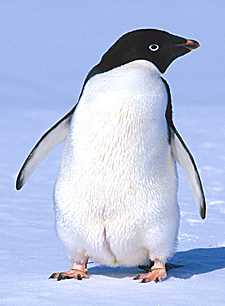
Penguins are adapted to the aqutic life Their wings are like flippers, therefore, they do not have the ability to fly. However, in the water, penguins are aglie. All pengiuns are countershaded - mostly. They have a white underside and a predominately black upperside. This is for camaflouge against their predators within the waters.
|
|
Ecology and Behavior
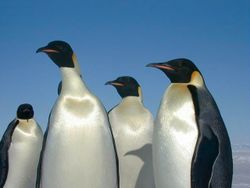
Many peguins are sociable animals, both foraging and nesting in groups. In severe weather, penguins huddle together for protection. They may be active in both day and night. Mature adults travel throughout most of the year between nesting area and foraging areas in the ocean.
Fish, cephalopods and krill are taken to varying degrees, though cephalopods and fish probably represent the major components of the diet, especially in terms of mass.
|
|
Mating Habits
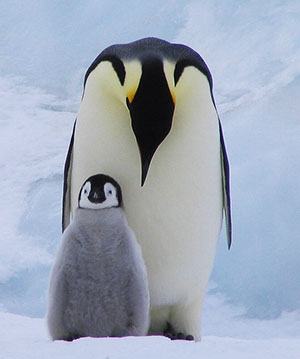
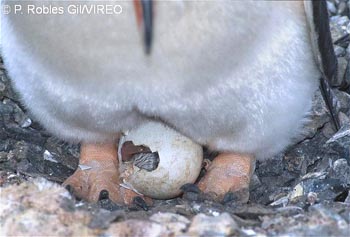
Some penguins mate for life, others, just for one reason. They generally raise a small brood, and both parents take turns on caring for the clutch and the young ones. During the cold seasons, the mates would seperate for several months to protect the egg. The male stays behind and watches over the egg, while the female goes to sea to find food to return to the chick once it's hatched. |
|
Predators
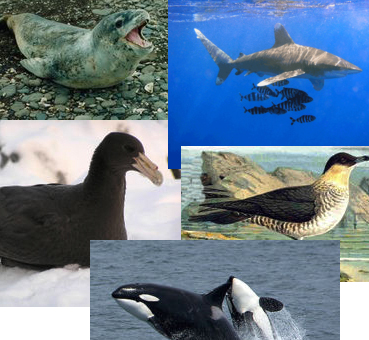
A penguin's main predators in the wild life are: Orcas, leopard seals, sharks, skuas, antartic giant petrals, and lose or abandoned sled dogs. |
|
Conservation Status
Many penguins are currently being considered for placement under the Endangered Species Protection Act. Many of the reasons are, the declining of food availability due to effects of climate changes, industrial fisheries for crustaceans and fish population, habitat distructions, foreign diseases from other animals, disturbance of breeding colonies by humans, and other acts that are dangers to penguins. |
|
Resources
|
|