 |
|
|
|
|
|
|
|
|
|
|
|
|
|
|
|
Meeting Report December 2004 |
|
|
 |
|
|
|
Our meeting on December 6th was scheduled to show the new tape slide show from Vancouver but due to a communication error the show was not sent to us. We have re-booked it for the April 2005 meeting.
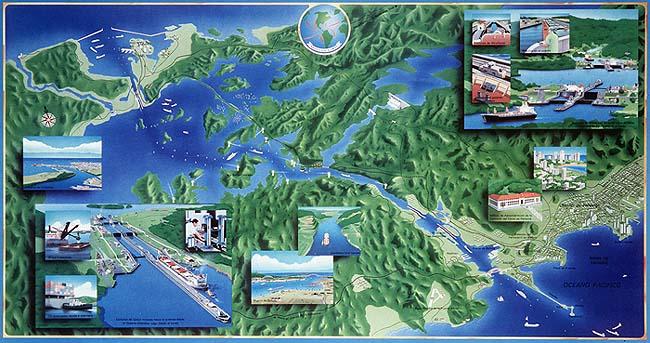
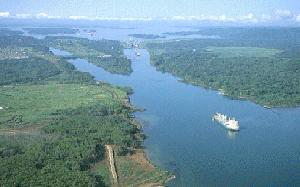
Instead we saw the slides taken by Ian Buxton whilst on a visit to the Panama Canal in April 2003. A script compiled by Ian accompanied this. The show started with a brief history of the canal that opened in 1914, and maps to show the route of the canal and the position of the locks. The canal is 50 miles long and on average a ship takes 30 hours to transit (including waiting at the port of entry). The largest ships that can transit the canal are 960 feet long and 106 feet wide, governed by the size of the locks. The most common ship to pass through the canal is the bulk carrier followed by container ships and reefers. Judging by the numbers of car carriers snapped by Ian they must come quite high up the list as well!
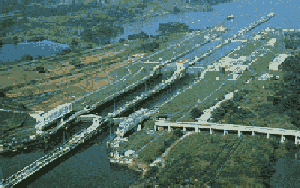
Ian took many of his slides from the canal bank but was also able to take some striking shots from the visitor galleries at the Gatun and Miraflores Locks, showing just how tight a Panamax ship sits within the lock. |
|
 |
|
|
|
|
|
 |
|
|
|
|
|
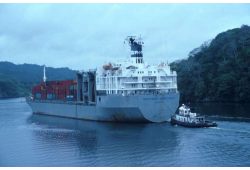
| Of course no account of the canal could be complete without some pictures of the �Mules�. Eight of these are required for a Panamax ship, two on each quarter. Ian also gave a good account of the various tugs and cranes that are used to service and maintain the waterway. Crane barges of particular interest were the 1913 German built �Hercules� with a lift of 200 tons and the 1942 built �Titan� with a 350-ton lift. |
|
|
 |
|
|
|
|
The canal is now being used more and more by cruise ships as shown by Ian�s pictures of the Panama limit �Carnival Spirit�. Some cruise ships transit the whole canal at a cost of some $103,000 and other, gulf-based ships, pass through to the Gatun Lake and then return. Ian secured a visit to the Pedro Miguel locks and then onward through the canal on board the oil products barge �Energy 8001� on its delivery voyage. This was being assisted by the tug �Drew Foss�. The barge was loaded with oil products to defray the cost of the tow. This gave a unique position to photograph ships and the passage through locks. |
|
 |
|
|
|
|
|
|
At the Atlantic end of the canal we were shown a good selection of smaller coasters operating in the area. The show ended with a few wrecks still visible after over twenty years. The most notable was a casualty of a hurricane in 1981, which was built as Gibson�s �Abbotsford�. We were pleased that the show was available at short notice to fill the gap, and was enjoyed by all especially those members who knew the canal. Our thanks to Ian Buxton for recording what must have been a very memorable visit and for the well researched commentary. |
|