| Mask. A modern diving mask has a clear tempered glass faceplate, housed in a soft silicone rubber frame. The mask lets you see under water, and also covers your nose. A good dive equipment specialist will advise on which mask is most suitable for you. Prices � from �10-�50 Snorkel Not strictly necessary for diving, but useful for some training exercises, or surface swimming. Prices from �10-�25 Fins That is �fins� not flippers! (Flipper was a fictional dolphin!) Fins are attached to your feet to enable you to swim underwater. They greatly increase the �kick� power of your legs, and they need to, because you will be wearing the rest of the gear described below. Prices from �35 to �120 (�120 buys serious fins!) BC � Buoyancy Compensator or BCD- Buoyancy Control Device or Stab (Stabilising) Jacket. You will hear them called all the above, more commonly referred to as just the �jacket�. You control the amount of air in the jacket by inlet and dump valves; in turn this determines how buoyant you are in the water, control of which is vital when diving. Prices from �150 to �350. Suit There are 2 main types - A wetsuit, which works by trapping a layer of water between the suit and your skin, which your body then warms up. Not really for use in English Waters. A dry suit, which traps a layer of air between you and the suit. Tri-laminate suits offer no thermal protection, so you will also require an insulating undersuit with it. A neoprene dry suit also provides thermal protection as well as water proofing, so they can be worn with a thin layer of clothes under them. Dry suit prices from �350. There are pros and cons with all suits, but these considerations come later on in training. |
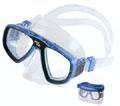 |
| Mask |
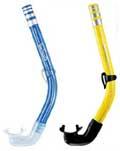 |
| Snorkels |
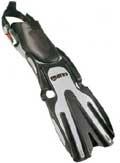 |
| Fin - you'll want two of these.. |
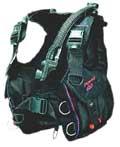 |
| Bouyancy Compensator |
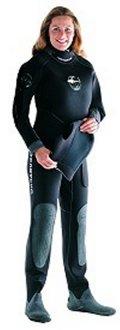 |
| Dry Suit - (model not included) |
 |
 |