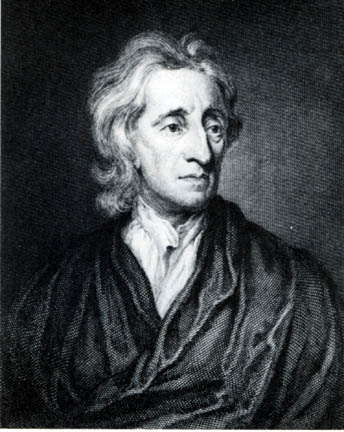
The question then is where the threshold for us to maintain our identity is; how much mental continuity is required for the survival of our identity? Also isn�t Locke making identity too dependent on memory? Those questions lead us to a different view on loss of identity due to amnesia based on the criticism of the psychological continuity theory of personal identity.
One of the early problems of Locke's theory involved a reliable means for distinguishing genuine memories from pseudo-memories -- those experiences sincerely felt to be memories, but which turn out to have false or illusory content. It would seem that the way that we would confirm our memories of a heroic moment in little league is by having others verify our being there and having performed the heroic deed. Similarly, we could discover that our sincerely held pseudo-memories of a kindness we performed as a young child, really involved our sibling, and simply resulted from our egotistically internalizing some often told family anecdotes. It seems that we need some prior criterion for personal identity, perhaps bodily continuity, as a precondition for genuine memories.
Also there is the classic puzzle of a gallant officer who in his old age remembers his greatest military success as a young officer, but fails to remember being disciplined as a boy in school. This is problematic because that younger officer clearly remembered the disciplinary act. Thus, on the memory theory, the boy is identical to the officer, the officer is identical with the old man, but the boy fails to be identical with the old man. This example disproves the above mentioned chain theory of memory, which would stipulate that the old man should remember being disciplined as a young boy.
Consciousness of what is past does ascertain our personal identity to ourselves, but to say that it makes personal identity is to say, that a person has not existed a single moment, or done one action, but what he can remember. So, as Bishop Butler already put it "consciousness of personal identity presupposes, and therefore cannot constitute, personal identity, any more than knowledge, in any other case, can constitute truth, which it presupposes."
Summing up, although amnesia appears to have the ability to control our thoughts, we would disagree with Locke concerning identity. What would be the moral or legal consequences of taking Locke�s theory seriously? In the case of a murder trial, if the convict is suffering from amnesia, and therefore not remembering having committed the deed, could he be held responsible? In our view this seems reasonable since we are not only our minds and the self cannot be seen as separated from our physical body.