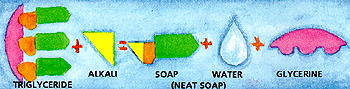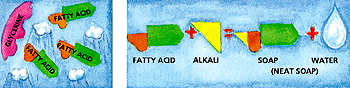
Aside from saponification, the other big soapmaking process is neutralizing the fatty acids with an alkali. By splitting the fats and oils with steam, you "yield crude fatty acids and glycerine." These acids are then distilled and neutralized with an alkali that produces soap and water.
Detergents hold one of more surfactants, creating a useful cleaning solvent. Because they are created this way, detergents are able to literally be an all purpse cleaner. We already know that detergents were created because of the shortage of fats in the World Wars. However during the wars, petroleum was a huge source for these much needed detergents. Now, detergents are developed with a variety of petrochemicals.
Now we get into how detergents are made. Surfactants are classified by their ionic properties in water. Anionic, nonionic, cationic, and amphoteric. We know that soap is an anioncic surfactant. This chemical mixes with hydrocarbons that are from petroleum. (Or fats and oils depending on your detergent or soap) This now creates a new acid.
The second reaction adds an alkali to the new acids in order to create only one molecule. The most common alkalis in the soapmaking buisness is NaOH (sodium hydroxide and KOH (potassium hydroxide).
If the alkali is NaOH, a soap is produced. These are called hard soaps. If the alkali is KOH, than a potassium soap is formed. Potassium soaps are softer. These are most likley to be in liquid hand soaps, shaving creams, and softer detergents.
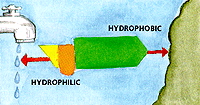
If we zoom into the end of the soap molecule you will notice that one side is attracted to the water, and the other repells against it. The molecule is attracted to oil and grease, but repelled by water.
So we have all this information, and its seems to be a little messy. Using our knowledge of surfactants I will clean it up for you. We'll say you just came back from an intense battle of golf, and your uniform is caked with dirt. (It's a dirty sport obviously...) First you try washing the used-to-be crisp white shirt with water...and you feel stupid because the water is only making it stick to the clothing.
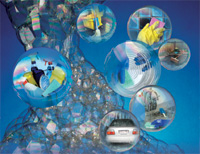
Luckily your mom had boughten some Tide laundry detergent. The water-hating end of the surfactant repells the water, but attracts the oil in the dirt. However, at the same time, the water-loving end is attracted to the water. The two sides lift the dirt, and the water wisks it away, giving the shirt a brand new look, and you smile as you run off to show how "on par" your shirt is.