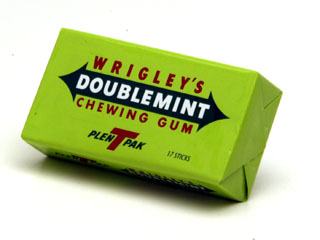
However, on the more positive side, chewing gum is arguably one of the best inventions of our time.
Believe it or not, chewing gum as we know it has been around since Ancient Greece. Named mastiche, the Greeks would chew the resin from the mastic tree. (Note: the definition of the mastichan means "to chew" in Greek...how clever)
The Mayan culture was also following in the Greeks steps. In about 200 A.D., the Mayans chewed "chicle", the root of the Sapodilla tree. Ironically, six hundred years later, the ancient empire collapsed. No more roads, no more temples, no more cities, no more culture. One of the only known Mayan customs left (known today) is chewing gum.
Thousands of miles, and hundreds of years later, the Native Americans were also chewing some sort of gum. This time it was however the resin from a spruce tree. This gum was the first commercially sold gum in America.
Spruce gum was continually being sold until paraffin wax took its place. The gum was sweetened and the sticky substance soon replaced spruce gum due to its convienence and ability to mass produce.
However, the modern day gum apperead in 1869, when chicle was imported to Mexico to use as a rubber substitute. It was James Adams however, who discovered that chicle was infact, perfect for chewing gum. He realized that chicle was far better than either spruce gum, or paraffin. Adams called the gum Chiclets, and convinced the local pharmasist to sell it, creating possibly one of the biggest fads in the world. William Semple however, patented the gum in 1869, making the substance marketable.
So how is it made you ask? And what has this got to do with Chemistry? The gum base is heated until about 115 degrees C. When it begins to have the texture of maple syrup it is filtered through a screen. After filtered many times, the gum is poured into mixing vats. This is where all the other ingredients are added. (sugar, corn syrup, glucose, food coloring, preservites, etc) Now, this homogenized mixture is put on the cooling rack. Lastly the gum is coated in a wax to hold in the suculent flavor. Then the gum is put on hold for 48 hours while the gum dries. In the last step, the gum is rolled and pressed, pushed and cut.
Gum has been here forever. Starting out as the resin from ancient trees progressing to one of the most profitable products in the world, gum has litterally changed the world. It is currently being sent in tons to hundreds and thousands of poverty-stricken children in helpless villages across Africa. It is a staple of every teenagers diet, and will in no time soon, ever, go out of fashion.