The Famine Road
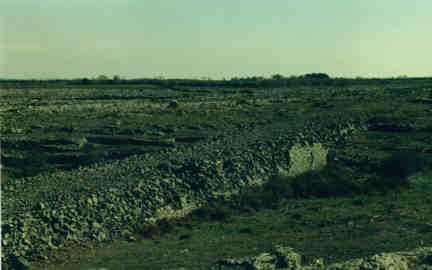
Built during the Great Famine (1846-1851) it began as a project to join two
existing roads which traverse the wild and desolate landscape of the Burren.
Labourers were recruited locally from the destitute poor, and were paid one
old penny (less than half a modern penny) for a twelve hour day breaking and
carrying stones. The money was provided by the government in the form of loans
charged against the local ratepayers under what were known as Relief Work
Schemes. Working conditions for the men, women and children were extremely
harsh, and payment depended not only on the hours worked, but also on the
quota or quantity of stones broken and carried in baskets to the road site.
The stones, broken by hand with heavy iron hammers, were graded from the largest
at six inches (or more) for the foundation layers, down to stones of not more
than one inch for the topmost layer of the road.
Practically the only food that was available to be purchased with the meagre
wages was the infamous Indian Meal - or ground maize.
This road was one of many built around this time, but before this particular
one was finished, the government, anticipating a good potato crop later in
the year, judged that the famine had ended and withdrew the funding for the
payment of wages.
The schemes were ended, and without adequate resourses of their own
to fall back on, many more people starved to death than had died during the
previous years of the famine. The only escape was to the West -America.