 "All of the faces and all of the places,
wonderin' where they all disappear" - Jimmy Buffett
"All of the faces and all of the places,
wonderin' where they all disappear" - Jimmy Buffett"All of the faces and all of the places,
wonderin' where they all disappear" - Jimmy Buffett
Chichén Itzá is a major tourist site. After a disagreement
with the lady at the counter over the exchange rate, we paid our
$14 Nuevo Pesos to get in. T. Guy Parker's Information on
the Ancient Maya Civilization page at the University of
Southern Mississippi has this to say about Chichén Itzá:
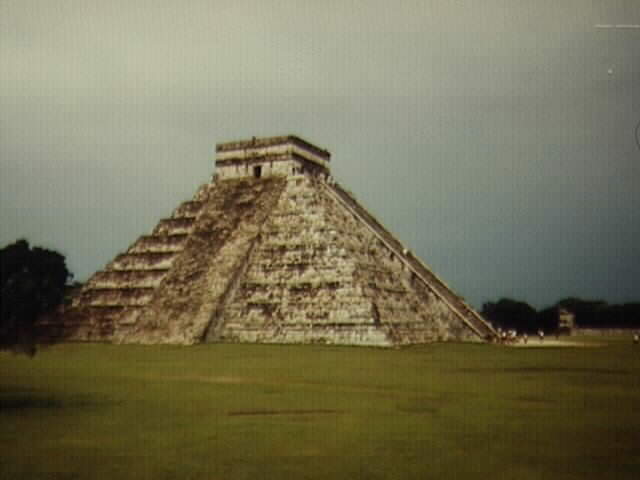
"Chichén Itzá. Major site, 4 1/2 km. in area, 120 km
from Mérida and 203 km west of Cancún. Built in the late
Classic period, Chichén Itzá reached its zenith between the
10th and 12th centuries. Influence of the Toltecs, a tribe from
central Mwexico, can be seen in the architecture. Major
structures are Kukulcán Pyramid, site of the Equinox solar
phenomena, Temple of the Warriors, Temple of the Jaguars, El
Mercado, Caracol (also known as the Observatory), and the Ball
Court (the largest in Mesoamerica). Another interesting part of
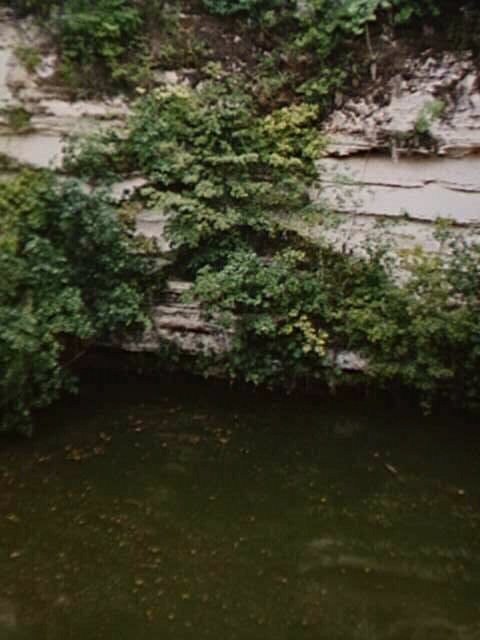
the site is the Cenote or Sacred Well
where ritual sacrifices of young women and children took
place."
All right, lets see what we find here.
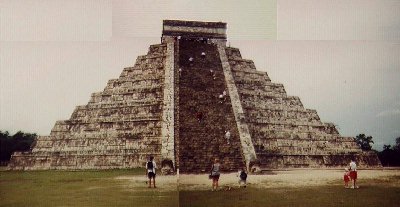
While we were not there during the correct time of the year;
"the construction of Kukulcán was planned so that each
Equinox the dying sun would cast a shadow of a serpent writhing
down the steps of the pyramid."
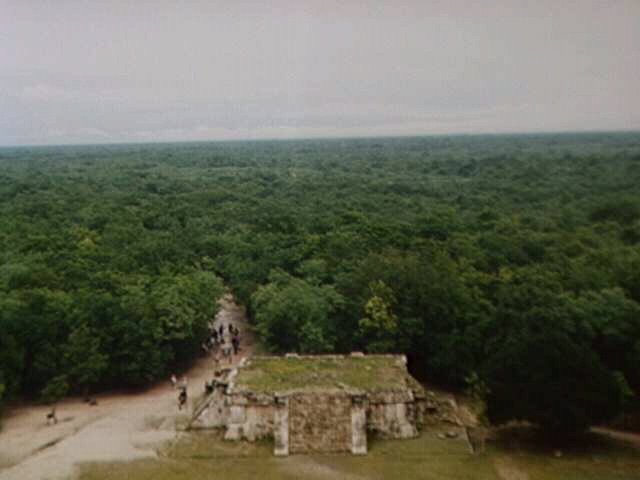
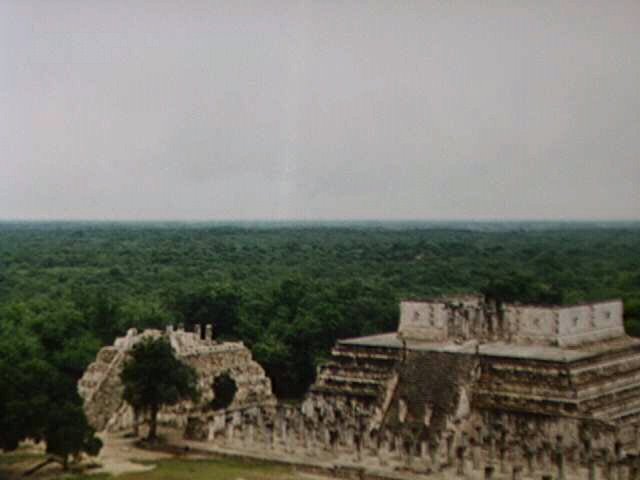
The view from the top of this pyramid
is Godlike!. You could see
that the original city stretched for Miles in all
directions. We could enter the structure at the top; there wasn't
much to see in there, but there were passages that we couldn't go
in. There was also a cistern room with some python statues in it
under the pyramid, but because of the rain it was submerged when
we were there.
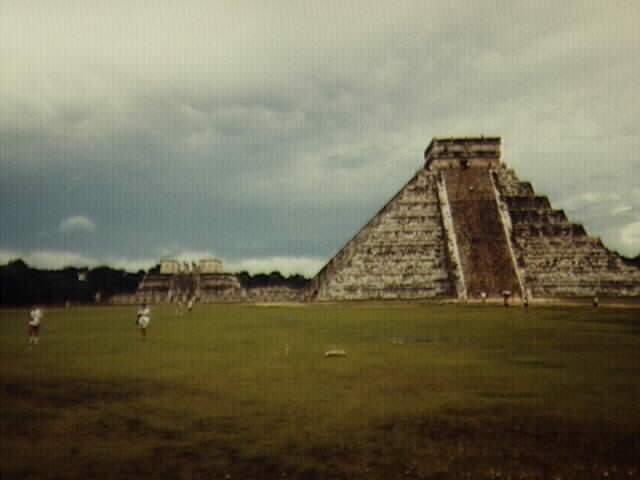
I have some more photos of Kukulcán; looking
up the stairs, from a different angle,
and with the temple attached to
El Mercado in the background.
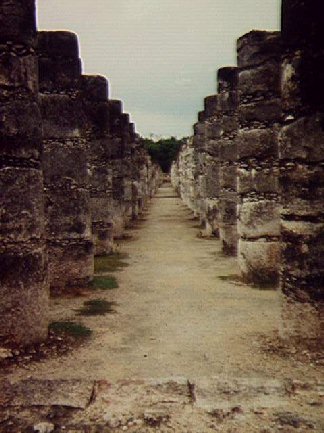
This was one of the more cool structures at Chichén Itzá. If
you look at this photo of Kukulcán
you will see a temple attached to El
Mercado. On the top was one of those sacrifice tables. I had
wanted to climb up and lay down on it with my shirt open to have
my picture taken like I was a sacrifice! But the stairs were
roped off due to the rain having made them too treacherous. The
hall itself was an L shaped market, and originally had a steeped
roof on it. Behind the back leg of the L, was a pile of bread box
sized carvings, all numbered like they were awaiting restoration.
I was amazed that they were lying in the open like that; anyone
could have walked off with one as a souvenir!
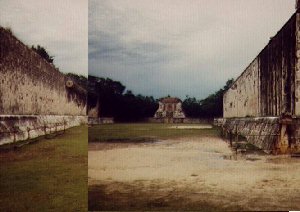
This is the largest Mesoamerican ball court yet discovered. It
was used to play a game called Pok-Ta-Pok. This game was
not for pussies! Two teams would pair off on the large
(280'×115') grassy court bounded by two high walls, and try and
put a hard rubber ball (using only their knees elbows and hips)
through those stone hoops on either side of the court. The hoops
are about 22' off the ground. The ball is a symbol of the sun,
and was not allowed to touch the ground (they believed it would
alter the course of the real sun) as that would be sacrilege! and
punishable by death. Players were often seriously injured. The
captain of the WINNING team had the honour of
having his beating heart ripped out in a celebration of his
victory. Brutal.
At the rear entrance of the ball court, are these snake thingies.
I have a photo of one, but it came out
crappy.
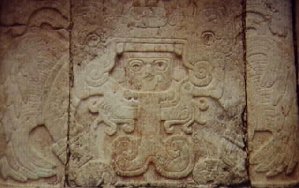
I think this exquisite example of Mayan sculpture was
on the Temple of Warriors, which lies directly in front of the
Kukulcán Pyramid, on the way to the sacred Cenote. I have no
idea who or what the guy depicted is, but I thought he was cool.
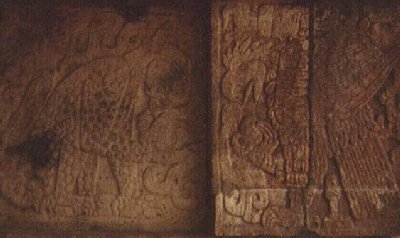
These eagles came off the Temple of the Jaguar (or perhaps the
Temple of Warriors? maybe I have them reversed?) and even thought
they are holding human hearts in their claws, I liked them too.
Notice the similarity of the eagle on the right to the eagle in
the Mexican flag? Perhaps they are related in some way? (Amateur
Anthropology Attempt)
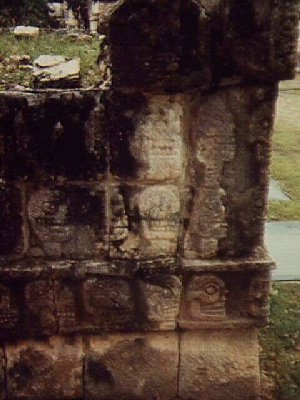
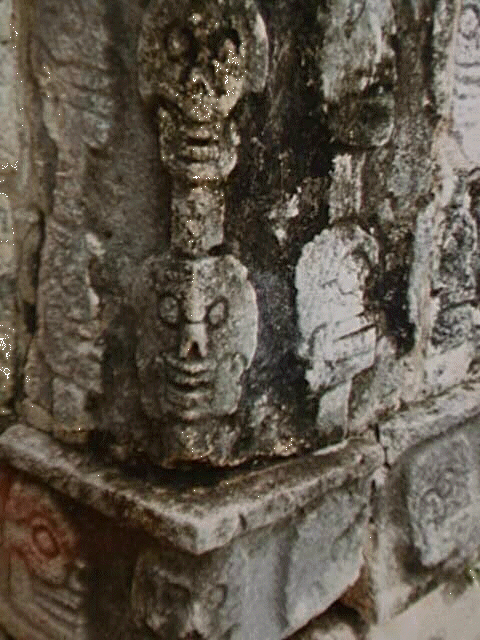
These relief carvings of skewered skulls represent the skulls
of vanquished enemies and criminals. They are all different, each
with its own personality. Along the sides of the structure, the
skulls are profiles, but on the corners
they are frontal. They used to stack the skulls on top of
this structure in a pyramid many stories tall as a warning to
all. Gruesome. I thought that the carvings looked a lot like the
Day of the Dead art that you see all over México around
Halloween. Perhaps they too are related? (Another Amateur
Anthropology Attempt)
La Ruta
Maya (Part I) |