

What is Economics??? (Economics is the study of making choices.) We need economics because we as individuals and as a society experience scarcity (of raw materials, of goods and services, of time, and so on) in relationship to our ever-growing needs and wants. Economics examines how we make choices: a new car or college tuition? more hospitals or more highways? more free time or more income from work? It gives us a way of understanding how to make best use of natural resources, machinery, and people's work efforts. .
|
 |
|---|---|
Economics helps us examine trade-offs between various goals and anticipate the outcomes of changes in governmental policies, company practices, or composition of the population, and so on. Almost all issues of public and private policy involve economics and so do your own individual choices. insufficient to satisfy all wants and needs. With Absent scarcity and alternative uses of available resources, there is no economic problem |
 |
|
 |
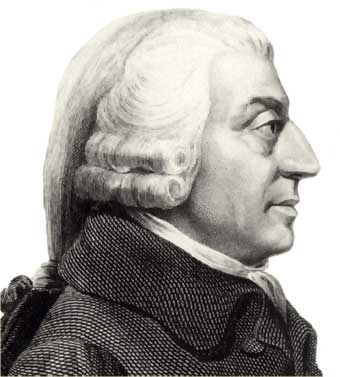
The founder or Economics is Adam Smith , Smith referred to the subject as 'political economy', but that term was gradually replaced in general usage by 'economics' after 1870.The term economics comes from the Greek for oikos (house) and nomos (custom or law), hence "rules of the house(hold) |
 |
Principles of Economics |
|---|
| 12.1 Students understand common economic terms and concepts and economic reasoning |
| 12.2 Students analyze the elements of America's market economy in a global setting |