Pirrello’s Illustrated Guide to a HazMat
Incident (for Susanne)
Fire department first responders
have responded to an incident and discovered that a tractor trailer carrying
hazardous materials (dangerous goods) has been leaking fluid from the back
doors.
The entrance to the
facility is controlled by law enforcement personnel.
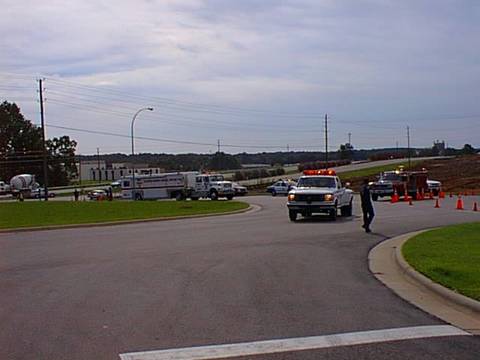
In keeping with their
training at the First Responder–Awareness Level, they establish an isolation
perimeter around the incident to protect the public, and try to identify the
hazards by looking at placards on the outside of the vehicle and the shipping
papers they obtain from the driver.
Traffic cones are used to
mark zone boundaries. Sand is used to prevent
the spill from spreading. The “warm zone” is the
area responders use to remove contamination. The “hot zone” is the
area of known or expected spread of the contaminant, and requires the use
of personal protective equipment (PPE).



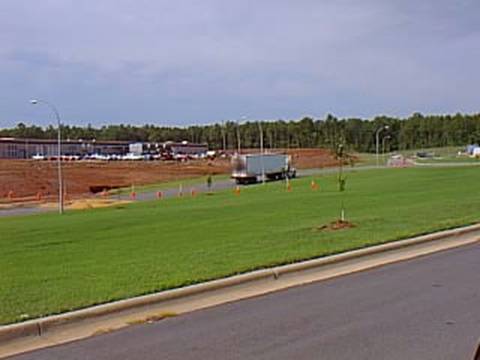
In keeping with their
training at the First Responder – Operations Level, they take defensive actions
to control the spill, and establish operational zones for the protection of
personnel.
The first responders request
the assistance of more highly trained and better equipped Hazardous Materials
Technicians to address the source of the leak.
ME!
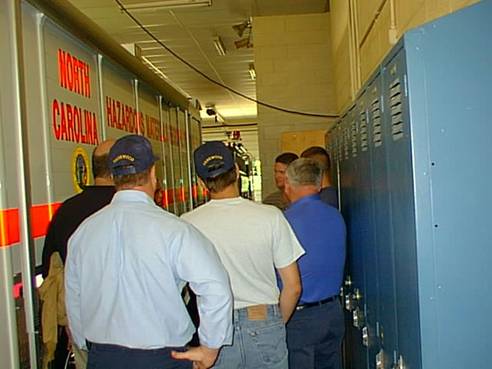
HazMat Technicians report to the station after being
dispatched.
Command Vest Staging Rehab


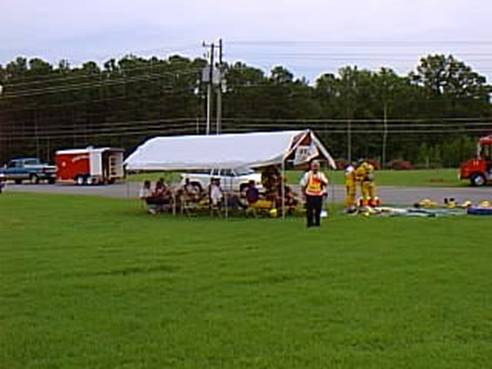
While the first responders
wait for additional help to arrive, they establish designated incident
facilities such as a Command Post, a rehabilitation (rehab) area, and a staging
location for unassigned personnel and equipment in the “cold zone.” Key
personnel put on vests to identify their role within a site-specific Incident
Command System.

Before making an entry, hazmat
personnel set up a decontamination (decon) line in the warm zone. The decon
line is composed of stations for the washing, rinsing, and removal of PPE in an
orderly fashion.
This is either me or my
partner on the backup team. It’s hard to tell. An encapsulating suit
surrounds the wearer and the respiratory protection.

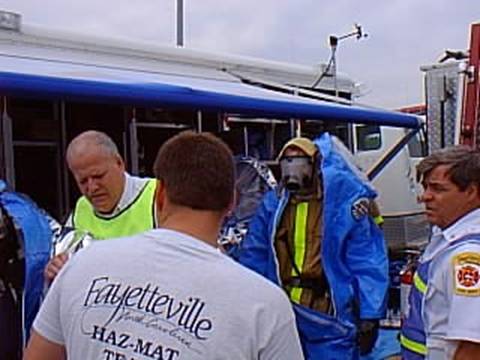
Entry and backup personnel
don (put on) chemical protective clothing and respiratory protection in the
form of encapsulating suits and self-contained breathing apparatus (SCBA) after
being medically monitored.
A non-encapsulating suit
does not cover the facepiece of the respiratory
protection.
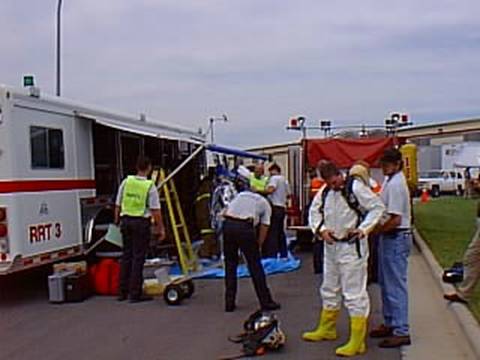
Decon personnel don a lower level of chemical protective
clothing comprised of a non-encapsulating coverall and an SCBA.
I’m one of the guys in
blue.
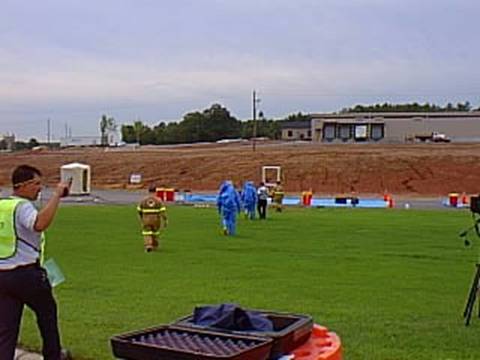
Backup team and decon personnel take up their positions while the entry team
is given a briefing to explain the objectives of the entry. The safety officer then
makes a final check of PPE before noting the time that the entry team goes on
air. All personnel in PPE have a partner (the “buddy system”).
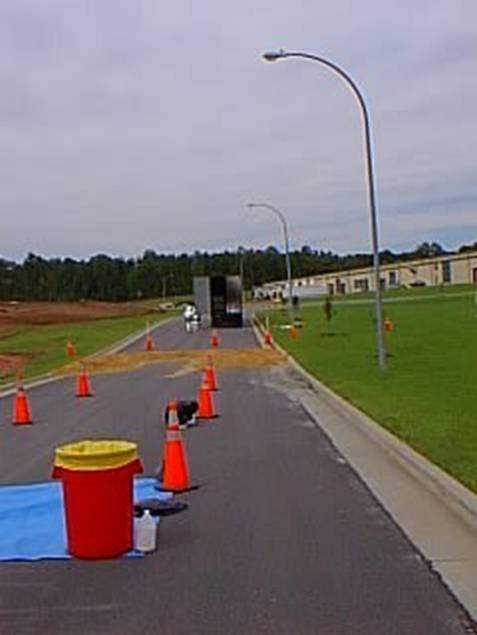
The entry team enters the hot
zone. As they open up the back of the trailer, additional liquid splashes out.
They sample the liquid and monitor the atmosphere for corrosivity,
oxygen content, flammability, and toxicity. They then proceed to enter the
trailer and find the source of the leak.
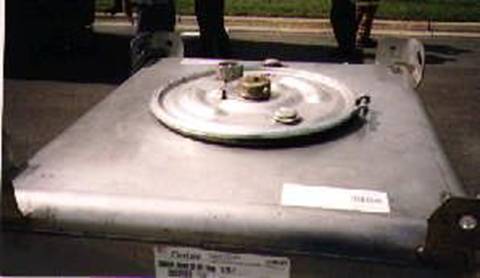
The lid of an intermediate
bulk container (IBC) or “tote” has come part of the way off during
transportation, resulting in some of the liquid sloshing out inside the truck.
The gasket is replaced and the lid is easily resecured,
but the interior of the truck still needs to be decontaminated.
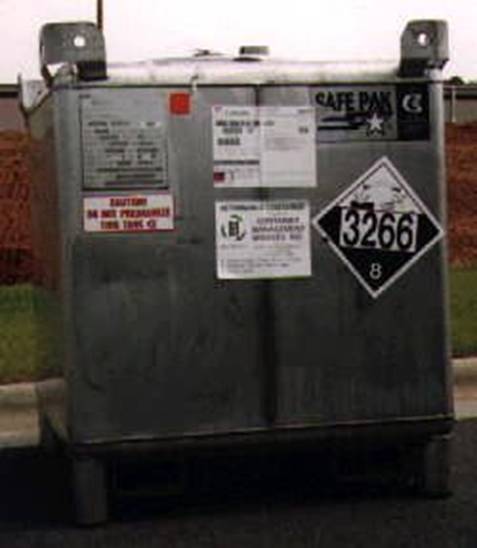
In this particular case, the
material was a corrosive dye used to make blue jeans.
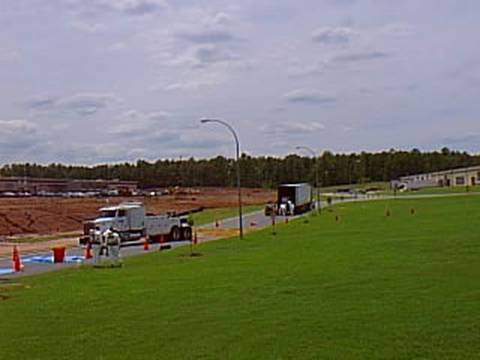
Additional resources are
called for. Skilled support personnel (a tow truck driver and a forklift
operator) are utilized to help remove containers from the truck so that the
cleanup can be completed.
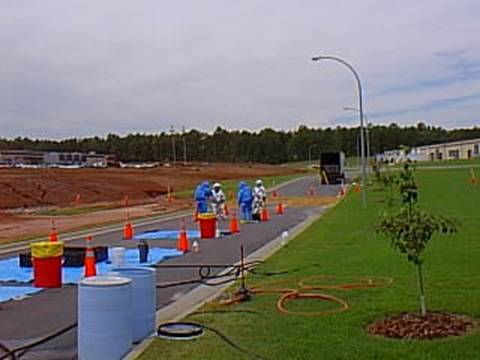
Each time that personnel
leave the hot zone, they must pass through the decon
line. The first station in the decon line is the
“tool drop” where tools and monitoring instrumentation are put down.
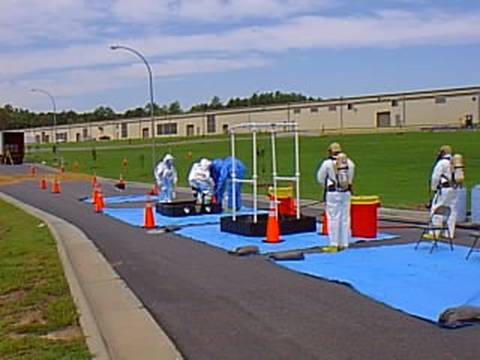
Entry personnel then have
their boots and outer gloves washed, rinsed, and removed by decon
personnel.
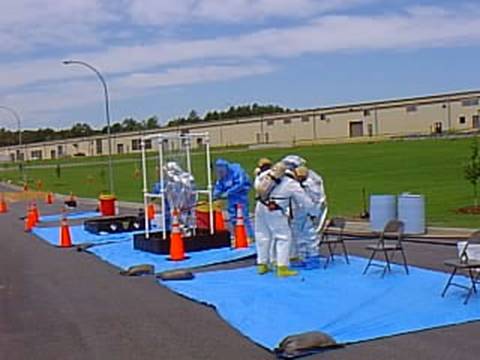
This is followed by a suit
wash and rinse station, after which the encapsulating suit is removed,
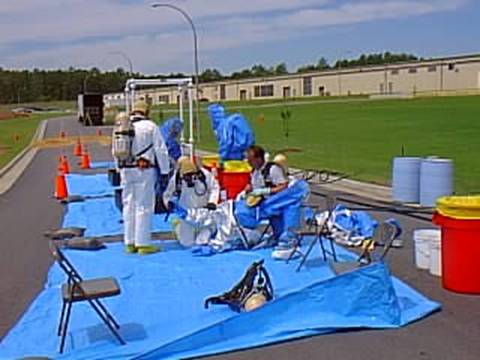
Trust me when I tell you it
feels pretty good to get that suit off…
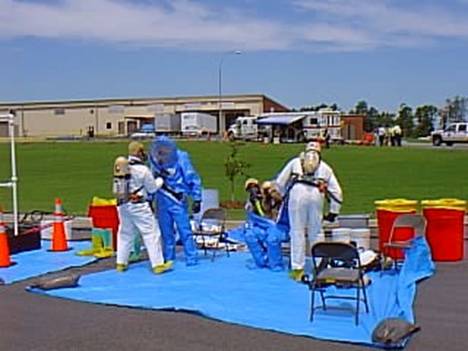
The decon
personnel then go through the same routine.
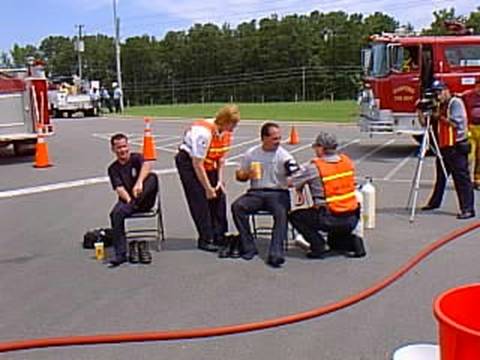
After being deconned, entry personnel rehydrate and are medically
monitored again. If the debriefing concludes that all objectives have been
accomplished, the response is considered to be complete, and the incident is
terminated.
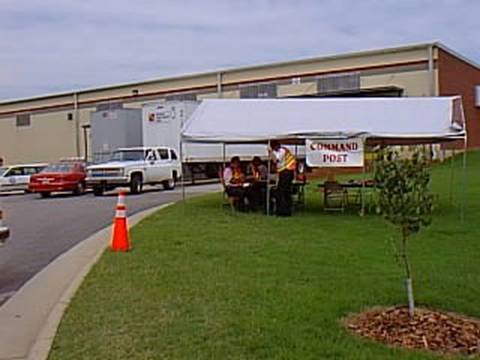
No one is ever quite sure
what the guys in the Command Post have actually done… ;)