SYNCHROTRON RADIATION
What is a Synchrotron?
A synchrotron is a huge machine that produces very bright
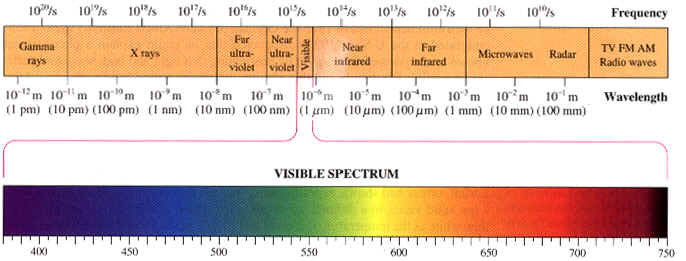
light of many different wavelengths. The light is much brighter than that found
in your TV remote, microwave oven, or dentist’s X-ray machine because
the synchrotron beams of light are focused into very small spots. A synchrotron
can be thought of as a giant
microscope. It allows matter to be observed at the atomic scale. The development
of high-resolution synchrotron radiation as a source of probing metal surfaces
allowed scientists to reveal intricate mechanisms only previously speculated.
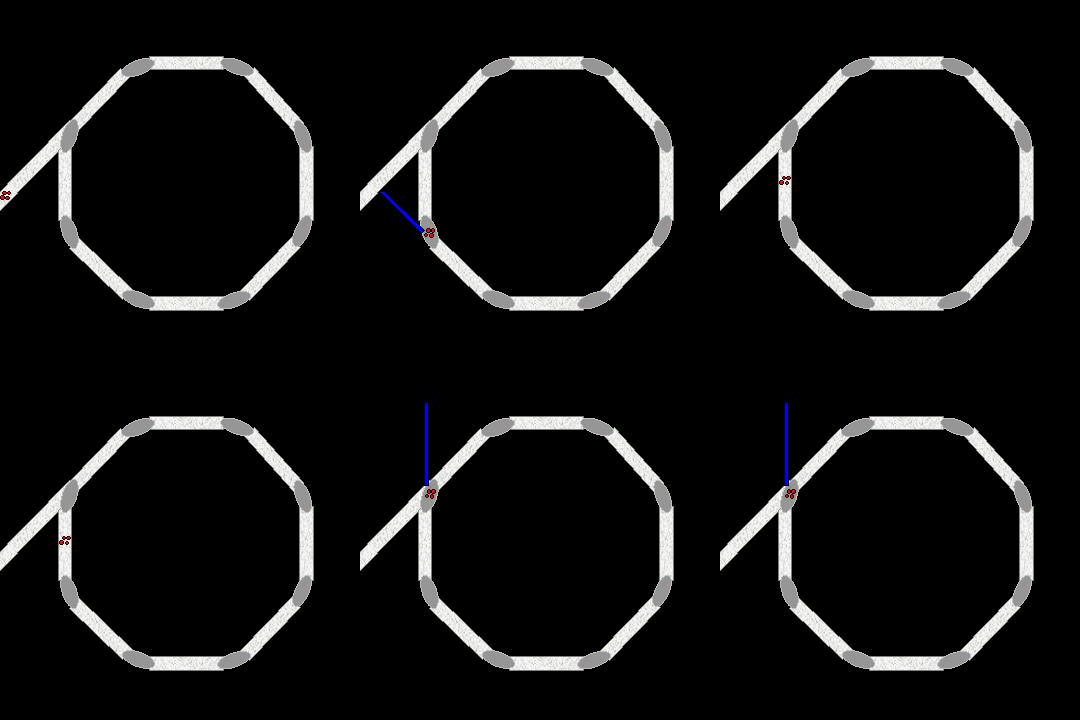
Synchrotron radiation is created when light charged particles (i.e. electrons or positrons) traveling at almost to the speed of light enter a strong magnetic field and undergo transverse acceleration into circular paths. As the electrons turn, photons are given off.
The characteristics of synchrotron radiation are listed below:
1. Synchrotron radiation has a continuous radiation spectrum depending on the
energy of the electron. It extends from infrared to soft or hard x-rays. This
tunable photon energy makes it possible to vary the degree of surface sensitivity.
2. The electrons in the storage ring are clustered in groups that lead to the
synchrotron radiation being emitted as pulses from each bunch as they pass through
a magnet.
3. Synchrotron radiation is highly polarised making it possible to select electronic
transitions between states of certain symmetries.
4. High Brilliance facilitates a high degree of monochromation, which in turn
enables high-energy resolution.
The strong magnetic fields are positioned at the end of straight sections (bending magnet) or an array of permanent magnets in a straight section (insertion device) that form a ring that the electrons travel around. The ring is under Ultra High Vacuum (UHV) to prevent the electrons colliding with air particles and allow UHV measurement techniques to be used. Positioned at each magnet are UHV chambers called beam lines that utilise the synchrotron radiation for measurement. The infrared, UV, and X-rays are sent down the beamlines to work areas where scientists run their experiments.
 |
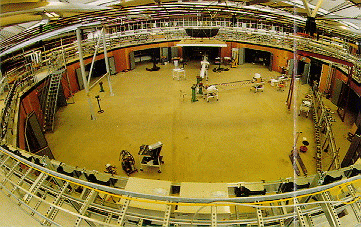
Picture of synchrotron ring at Max Lab at the University of Lund, Sweden.
|
Australias first synchrotron will be built in the next few years just outside Melbourne in Victoria. This project will enhance the research expertise in Austalia and consequently increase technology in industry and medicine in this country.
 Synchrotron
radiation
Synchrotron
radiation