| THE DIFFERENT BREEDS OF MICE |
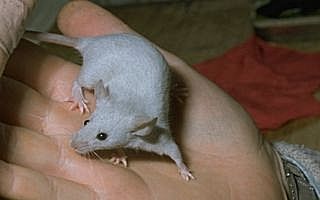
| At present, mice are shown in seven varieties, according to their coat type, namely: Standard: Short sleek coat. Satin: Ideal coat has a unique and distinct appearance with its lustrous sheen. The hair should be very fine, dense, soft, and silky to the touch. Long Hair:The coat should be as long as possible, but combined with density, and is to be fine and silky in texture. Long Hair Satin: The coat should be as long as possible, but combined with density, and is to have the distinctive sheen of satin. Rex: The coat should be tightly waved or frizzed over the entire body. This is more pronounced in young mice and should not influence the placement. Rex may also be long haired. Satin Rex: The coat should be tightly waved or frizzed over the entire body as with the Rex, and should also have the distinctive satin sheen. Whiskers should be curly. Manx (tailless): The sole feature is the complete absence of a tail. Hairless: Hairless mice should have a thin, bright, rather translucent skin, free of scars and blemishes, and be as hairless as possible. The whiskers may be very short or missing. Within each variety, mice are grouped into six sections by colour and body markings: 1. Self: Entire body consists of the same uniform colour. They are: Beige: Colour is a warm greyish-tan, very light. Eye colour is black Black: Colour is a deep lustrous black. Eye colour is black. Blue: Medium slate blue, with no hint of silver or ticked hairs. Eyes to be black. Champagne: The colour of champagne silk with a pinkish tinge. Eye colour to be pink. Chocolate: Rich, deep plain chocolate, with no trace of red or ginger. Eyes to be black. Ears tail and feet to mach body colour Coffee: Colour is a light brown, similar to coffee with cream. Not to be confused with Beige. Eye colour is black. Cream: Very pale even cream, distinguished from off-white by its `creaminess'. Eye colour to be pink or black. Dove: Warm dove grey, distinguishable from silver by its warmth. Eye colour to be pink. Fawn: Warm, medium shade of fawn, free of `mealiness', light patches and silvery hairs. Eyes to be pink or black. Gold: Colour is light yellowish-orange, similar to that of gold metal. Eye colour may be pink or black. Ivory: Colour is white with a pale yellow hue. Eye colour is black. Lilac: Colour is a medium dove grey, like that of the lilac rabbit. Eye colour is pink. Orange: Colour is vivid, bright orange, as rich as possible. Eye colour may be pink, ruby or black. Red: Color to be a burnt orange red, the deeper the better, clear and without sootiness. Eyes black Silver: Colour to have the cold metallic quality of an old silver coin. Showing no hint of lilac. White: Pure snow white with no trace of cream or ivory. Eyes can be pink or black. 2. Tan and Fox: Tan: The belly colour being a rich golden-red tan. The feet should be tanned on the inside and of the top colour on the outside. Tan hairs will be found behind the ears. Fox: Foxes can be exhibited in any recognised colour and are similar to the Tans above. However, their belly colour is to be as near white as possible. 3. Marked: Banded: The distinctive feature is the white band around the body. Foot colour is white. Broken Marked: Broken marked mice can be exhibited in any recognised colour. Should have as many coloured spots or patches as possible on a white background. Dutch: The forward half of the body will be white, with the exception of the cheek patches. A wedge shaped Blaze of white should run from the muzzle to the neck, running between coloured ears. The white stops on the hind feet should be uniform in length and their dividing line should be about halfway between the toes and the hocks. Even Marked: They should be of any uniform pattern other than Dutch markings and should have as many clear-cut and balanced spots or patches as possible. Spotted Tans: Spotted Tans can be exhibited in any recognised colour and can include even marked, broken marked Dutch, and variegated. Where the spotting pattern runs into the stomach, the colour should be a rich golden-red tan. Variegated: Variegated mice can be exhibited in any recognised colour, splashed on a white background. The splashes should be small and abundant, ragged in outline, roughly the same size, and cover the entire body. Rump White: is any standard colour having a white rump. The line of demarcation should be straight and encircle the body so that the lower third of the mouse, including the hind feet and tail is completely white. 4. AOC (Any Other Colour): Agouti: Colour is a rich golden brown with dark slate at the base of the hair, with black ticking throughout the coat that should extend over the entire body, including the under parts and feet, and be as even as possible. Eye colour is black. Argent: An Argente mouse shall be of a delicately blended shade of light fawn and silver. The under colour to be blue, as dark as possible in shade. The belly to be a golden fawn and as similar to the top as possible. Chinchilla: the colouring is a pearl-grey background evenly tipped with black, and a slate blue base to the hairs. The belly and the inside of the legs is white, the outside of the legs to match the top colour. Eye colour is black. Cinnamon: The Cinnamon is similar to the Agouti, except with a golden tan background, and the base of the hair is medium slate with chocolate ticking distributed evenly throughout the coat. The eye colour is deep ruby or black. English Gold: Colour resembles the fawn, but not quite so bright. The under colour is a strong lilac. Eye colour is pink Silver Black: The base colour should be as black as possible. Under colour to be a rich blue-black. The silvering should be even throughout, carried well onto the feet. Pearl: A pearl mouse shall be of the palest silver, shading to a whitish under colour. 5. AOCP (Any Other Colour Pattern): Blue Point Siamese: Body colour is silvery blue, the shading is to be gradual over the saddle and hindquarters, being darkest at the tail root. Belly colour is silvery blue. The points (nose, ears, feet, tail, and tail root) are a medium slate blue. Brindle: Brindle mice will have cream, fawn, or white body with dark tiger striping from head to tail tip and to a lesser extent on the belly. Himalayan: The Himalayan mouse should be as nearly white as possible over the entire body, with well defined points. The points are to be a light milk chocolate. Siamese: The Siamese mouse is to be a warm beige, as even as possible over the entire body, Shading to a deeper colour on the hindquarters. The points should be a rich chocolate colour Reverse Siamese: Color to be a medium coffee-with-cream color with white points. Points to be as white as possible to contrast against the dark background. Siamese Sable: The Siamese Sable is to be a very light brown similar to the coffee, over the entire body. The points, which are a very dark brown, almost black, are as for the Siamese. Eye color is black 6. Unstandardised: Any coat type, colour, or markings not described, or any other unique physical feature. |
 |