 |
| Biography of Andrew Jackson |
|
 |
|
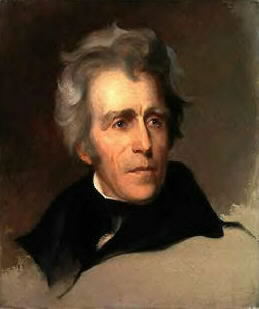 |
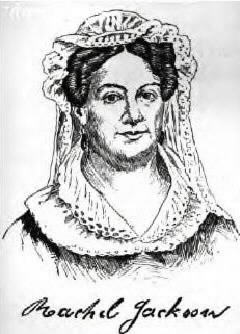
| Seven President 1829-1987 Married to Rachel Jackson Andrew Jackson is on the 20 dollar bill |
| More nearly that any of his predecessors, Andrew Jackson was elected by popular vote; as president he sought to act as the direct representative of the common man. Born in a back woods settlement in the Carolinas in 1767, he received sporadic education. But his late teens he read law for about two years, and he became an outstanding young lawyer in Tennessee. Fiercley jealous of his honor, he engaged in brawls, and a duel Andrew Jackson killed a man who cast an unjustified slur on his wife Rachel. Jackson prospered sufficiently to buy slaves land to build a Mansion, The Hermitage, near Nashville, He was the first man elected from Tennessee to the House of Representatives and he served briefly in the Senate. Andrew Jackson Became a Major General in the war1812, Jackson became a national hero when he defeated the British at New Orleans. In 1824 some State political factions rallied around Jackson; by elections and control of the Federal administration in Washington. In the first Annual message to Congress, Jackson recommended eliminating the Electoral Collage. He also tried to democratize Federal officeholding Already state machines were being built on Patronage, and a New York Senator openly proclaimed" that to the victors belong the Spoils..'' Jackson took a milder view. Decrying office holders duties could bells so plain and simple' that offices should rotate among deserving applicants. As national politics polarized around Jackson and his opposition, two parties grew out of the old Republican Party the Democratic Republicans, or Democrats, adhering to Jackson; and the National Republicans, or wings, opposing him. Henry Clay, Daniel Webster, and other Wing leaders proclaimed them slaves defenders of popular liberties against the usurpation of Jackson. Hostile cartoonist portrayed him as King Andrew. Behind their accusations lay the fact that Jackson, unlike previous Presidents, did not defer to Congress in policy-making but used his power of the veto and his party leadership to assume command. The greatest Party battle centered on the Second Bank of United States, a private corporation but virtually a Government sponsored monopoly, when Jackson appeared hostile toward it, the Bank threw its power against him. Henry Clay, Daniel Webster, who had acted as attorneys for the Bank, led the fight its recharter in Congress. The Bank," Jackson told Martin Van Buren," is trying to kill me, but I will win!" Jackson vetoing the reccharter bill, Charged the Bank with undue economic privilege. His view won approval from Americans electorate; in 1932 he polled more then 56 percent electoral vote and almost five times as many electoral votes as Clay. Jackson met head-on the challenge John C. Calhoun leader of forces trying to rid them seleves of high protective tariff. When South Carolina under took nullified the tariff, Jackson ordered armed forces to Charleston and privately threatened to hang Calhound. Violence seemed imminent until clay negotiated a compromise: staffs were lowered and South Carolina In January of 1832, while the president was dinning with friends at the White House, someone whispered to him that the Senate had rejected the nomination of Martin Van Burers as Minster to England. "I'll smash them! So he did. His Favorite, Van Buren became Vice President and succeeded to presidency. When "Old Hickory" retired to The Hermitage, Where he died in June 1845 |
|
 |
 |
 |