 |
|
|
|
|
|
|
|
|
|
|
|
|
|
|
|
|
|
|
|
|
Astronomy Page |
|
|
|
The following images are real photographs taken by powerful telescopes. It was not possible to obtain these images 10 years ago. We are living in an astronomical revolution. |
|
|
|
 |
|
|
|
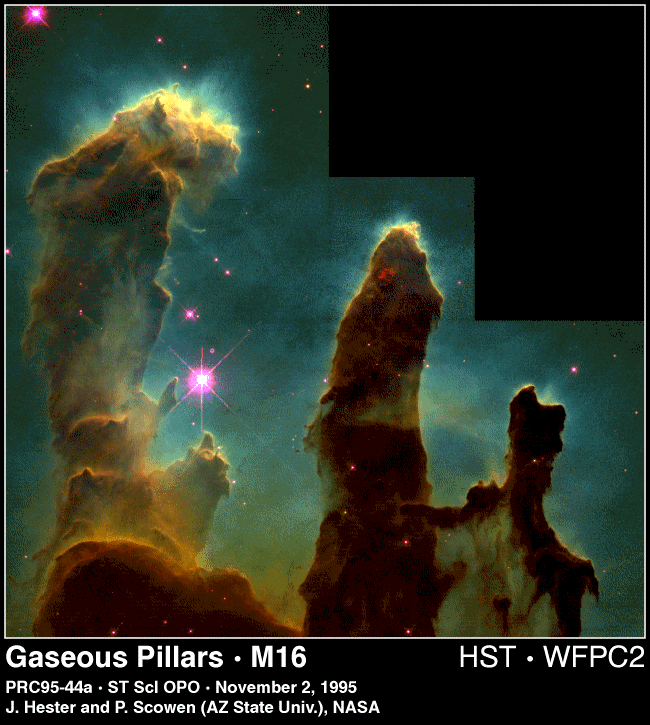
This is nebula M16 taken by the HST Hubble Space Telescope Wide Field Planetary Camera 2. A nebula is a cloud of gas and dust that is the remnant of an exploded star. Ironically, when a star explodes, it releases the material needed to create new stars. That is what is happening in the picture. Stars are being born in the three pillars. Star creation has never been observed before in such detail. |
|
|
|
 |
|
|
|
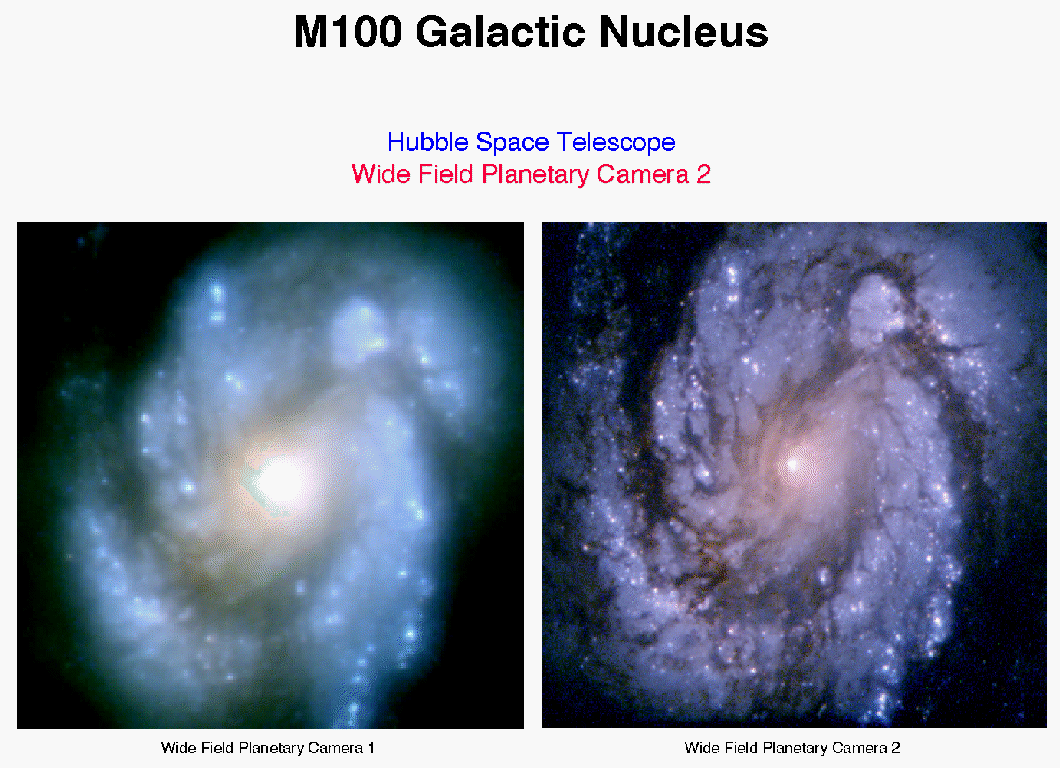
The HST took a picture of the centre of a galaxy. Nobody knows what is at the centre of galaxies, but most believe each has a black hole. |
|
|
|
|
|
The small picture at left is the whole galaxy. The centre is what the HST looked at. One shot is fuzzy because it was taken before the telescope was repaired. |
|
|
|
 |
|
|
|
|
|
|
|
|
 |
|
|
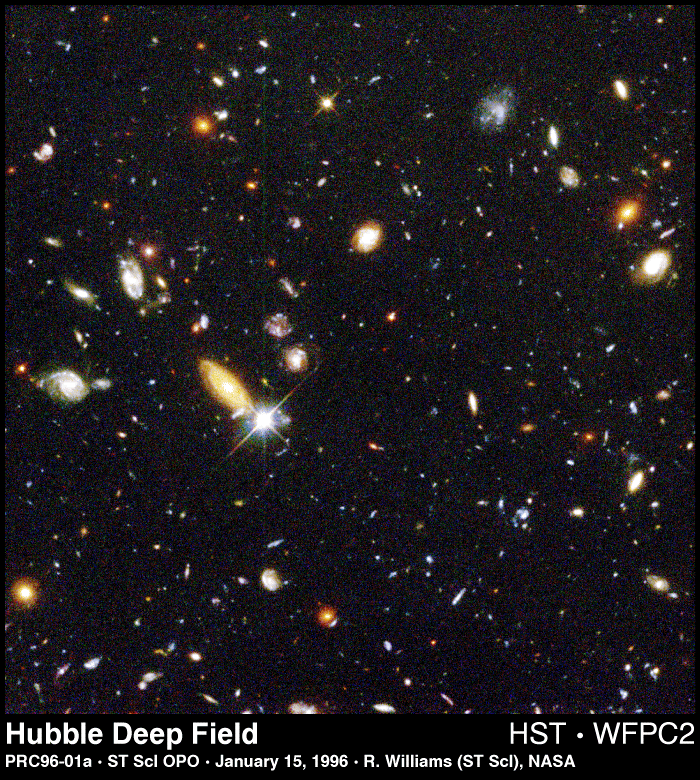
This is an influencial and moving photo if it is understood what we are looking at.
This is beyond the stars that we see in the night sky. The stars we see are part of our own galaxy. What we see here are other galaxies. Only one of our stars, at centre left, is visible. If we could get out of our galaxy, this is what we would see.
This shot took 100 hours of exposure, by the most powerful telescope, looking the farthest ever into space. The technology simply wasn't available until now. Each galaxy contains not millions, but billions of stars. There are 1500 galaxies in the photo; some are only specks. The scary thing is that this photo covers an area of the sky only 3% of the moon's diameter. If we could take enough of these to cover the whole sky, there would be billions of galaxies, meaning hundreds of trillions of stars - hard to imagine, but true. |
|
|