|
Philosophy Statement |

Philosophy of Education
According to the Philosophy of Education Inventory, I fall primarily into the Progressive category. I believe that the primary role of education is to help people live responsibly and resolve problems cooperatively within the framework of my personal religious belief, which governs all aspects of my life view. I enjoy projects, especially those that provide an opportunity to utilize technology, and I appreciate incorporation of validation of prior learning. My score in this area was eleven points higher than in any other domain.
The other two areas on the Inventory that yielded a high score were Humanistic and Radical. I do value individualism, self-reliance, and a strong belief that the learner is responsible for his/her own learning, and I look to education as a way to help people develop their full potential. It is important for all learners to maximize their ability to be
self-directed; however, I do not support learning that is totally egocentric with little or no benefit for others.The Radical aspect of my philosophy can perhaps be traced back to growing up in the sixties, where political consciousness and social action were an integral part of my college experience. I still remember being profoundly effected by
Dr. Martin Luther King, Jr. when I heard him speak in person at the University of Pittsburgh. The idea that all persons should be treated with dignity and respect is underscored in my strong Christian faith. Christianity, in its truest form, is quite radical.It is interesting to me that my philosophy of education has changed dramatically in the past six months, and I can attribute that to participating in
Dr. Knee’s course last term. For the first time in my life, I found myself enjoying a Constructivist approach to learning. While initially this approach was centered on technology (What a joy it was to learn NOT to fear the computer, but instead to use it as a tool!), I have discovered that there has been significant transfer of this way of looking at learning.Although I received formal training in the
theories of education, it was not until I had my own children that I truly appreciated the contributions of Piaget and Dewey. Watching children progress through various developmental and cognitive stages was more valuable than reading any textbook, and this realization transformed my philosophy of education.Early influences on my education came from my parents. While my mother took more of a
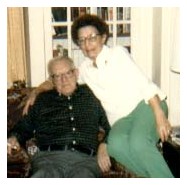
Behaviorist approach, my father viewed all aspects of life as opportunities for learning and joy. Forced to leave school at the age of fifteen to support his eleven brothers and sisters, it was my dad who instilled in me a desire to learn, the thrill of discovery, and the confidence that I could do anything if I put my mind to it. These two seemingly paradoxical approaches have created interesting periods of conflict within me. At different stages of my life, each has had periods of control. It is lately, however, that I have tapped into my father’s legacy as both a learner and a teacher.|
|
My parents instilled in me a sense of wonder and confidence as well as a sense of duty and obligation. |
Having recently received my
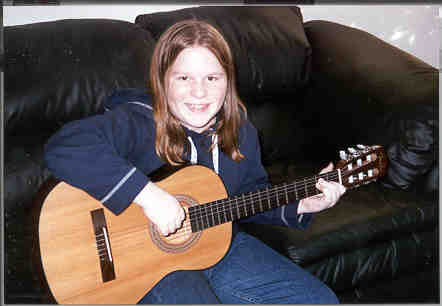
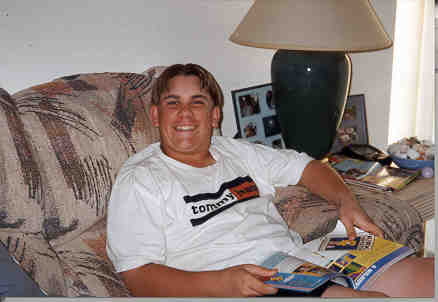
AARP card, I now hold firmly to the belief that life-long learning is fundamental to fulfillment. Perhaps it is only as we grow wiser with age that we can see the value and delight in all things. It is my strong desire to leave my own children (Lauren and Will), as well as the children I teach, with the kernels of this philosophy.|
|
|
|
Lauren |
Will |