|
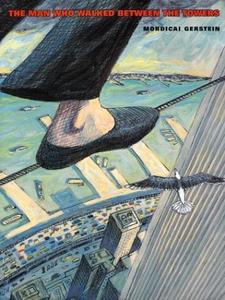
walk between the towers. Looking back on some of the dangerous feats he had already carried out, Philippe tells himself that this dream can and will become a reality. He begins to device a plan to carry this out and thinks that, since the towers are not yet finished, he might be able to get through by dressing as one of the construction workers. He and a few of his friends enter the towers one night and through several struggling attempts, manage to secure the cable. Just as the sun is rising, the cable is ready and Petit makes his most historical and daring act of his life. For close to an hour, astonished viewers witness Petit [walk, dance, run, and kneel] side to side as police try to get to him in order to arrest him. Fascinated by the fact that they couldn�t get to him, he is happy knowing that, �As long as he stayed on the wire he was free.� For a more dramatic effect, the book contains a few foldout pages which are meant to show in more detail the view from the top of the buildings, as well as what the pedestrians are witnessing from the ground. Seagulls are shown flying past him in almost every page, and the author shows a content Petit lying on the rope in sheer blissfulness. Once the French performer felt satisfied, he walked over to the edge ready to be arrested. Ironically, the judge sentenced him to perform for the children at the park!
It is with good reason that this books has been awarded the Caldecott Medal and has come to be an instant classic. With the towers now gone and the story behind their disappearance, teachers can share this beautiful story with their students to show a more innocent time before the September 11 attacks. Librarians can proudly use this book in a display of such an event in order to spark readers� interests and keep the memories alive.
Gerstein, Mordicai. 2003. The man who walked between the towers. United States: Roaring
Book Press. ISBN 0-7613-2868-8. |
|