


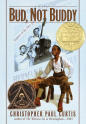
Christopher P. Curtis brings the story alive through the eyes of Bud, a delightful character who is honest and decisive. Herman E. Calloway and several other characters Bud encounters, help bring history into the picture. They speak of what life is like in the 1930's. Lefty Lewis, one of the characters Bud encounters along the way, is a supporter of the labor organizers who �try to make things better for themselves and their children� during a time when African Americans do not have the rights they have today. The author uses his characters wisely to inform readers about the difficulties people faced in those times. Mr. Calloway, another very important character in the story, is a successful man who is often forced to hide his success. He must put his property under a different person�s name (a white man) because �It�s against the law for a Negro to own any property,� in the 1930's. The characters go on to describe the racist ways of society by describing how the jazz band needed a white man to represent them and get them hired to play. �A lot of these white folk wouldn�t hire us if they knew we were a Negro band, so [a white man] goes out and sets up everything.�
Quite cleverly, Mr. Curtis revives the historical way of life through the characters and through their dialogue. This method of writing, and the talent he displays in doing so, helps reluctant readers of history learn without the need of a textbook.
Curtis, Christopher P. 1999. Bud, not Buddy. New York: Delacorte Press. ISBN 0-385-32306-9.
