Manufacturing Leather
These are the following stages in manufacturing leather:
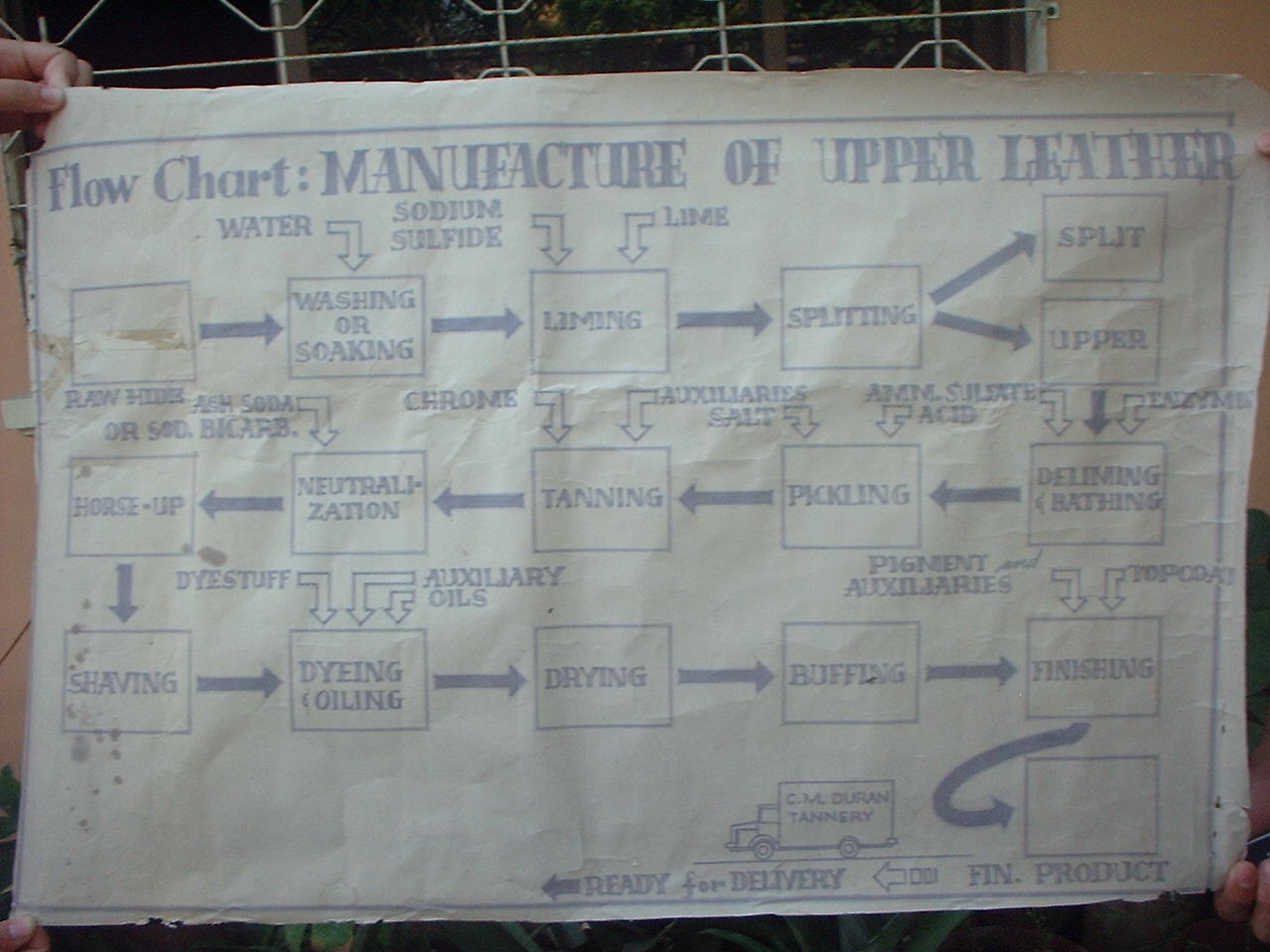
- PRESERVATION: this involves keeping the skin or hide until the tanner is ready to convert it into leather.
- DRYING: the tanner makes the leather unappetizing to bacteria, if moisture remains low, the skins are kept indefinitely.
-

- DRY SALTING: addition of salts to help the leather dry more quickly and wet back more easily.
- WET SALTING: the salt added removes much, but not all of the original moisture to inhibit the bacteria in the leather and the skins or hides are more easily soaked back.
- SOAKING: applying treatment with the use of water to clean and get skin back to original condition.

- LIMING: applying treatment with the use of lime and sodium sulphide to remove hair.
- DELIME: back toward neutrality.

- BATING: enzyme treatment to clean inside of the skin and help to give softer leather.
- PICKLING: applying treatment with sulphuric acid and salt, this is a preparation for tannage.
- TANNAGE: this is the conversion of the skin or hide, which will putrefy into leather.
- VEGETABLE TANNING: it uses bark and wood extracts to give a brown colored tanned leather used mainly for sole leather and leather goods.
- OIL TANNING: the leather is limited to chamois production and gives very soft, water absorbent leather.
- COMBINATION LEATHER: it uses combination of tannages to get the best properties of specific purposes.
- DYEING: coloring with the use of soluble dyes.
- FAT LIQUORING: introduction of oil in an emulsion form.
- FINISHING: it's the application of surface coatings for protection, color, fastness to light, rubbing, flexing.
Processing Leather Goods

measuring leather

designing leather

smoothering leather goods

painting leather

sticthing leather
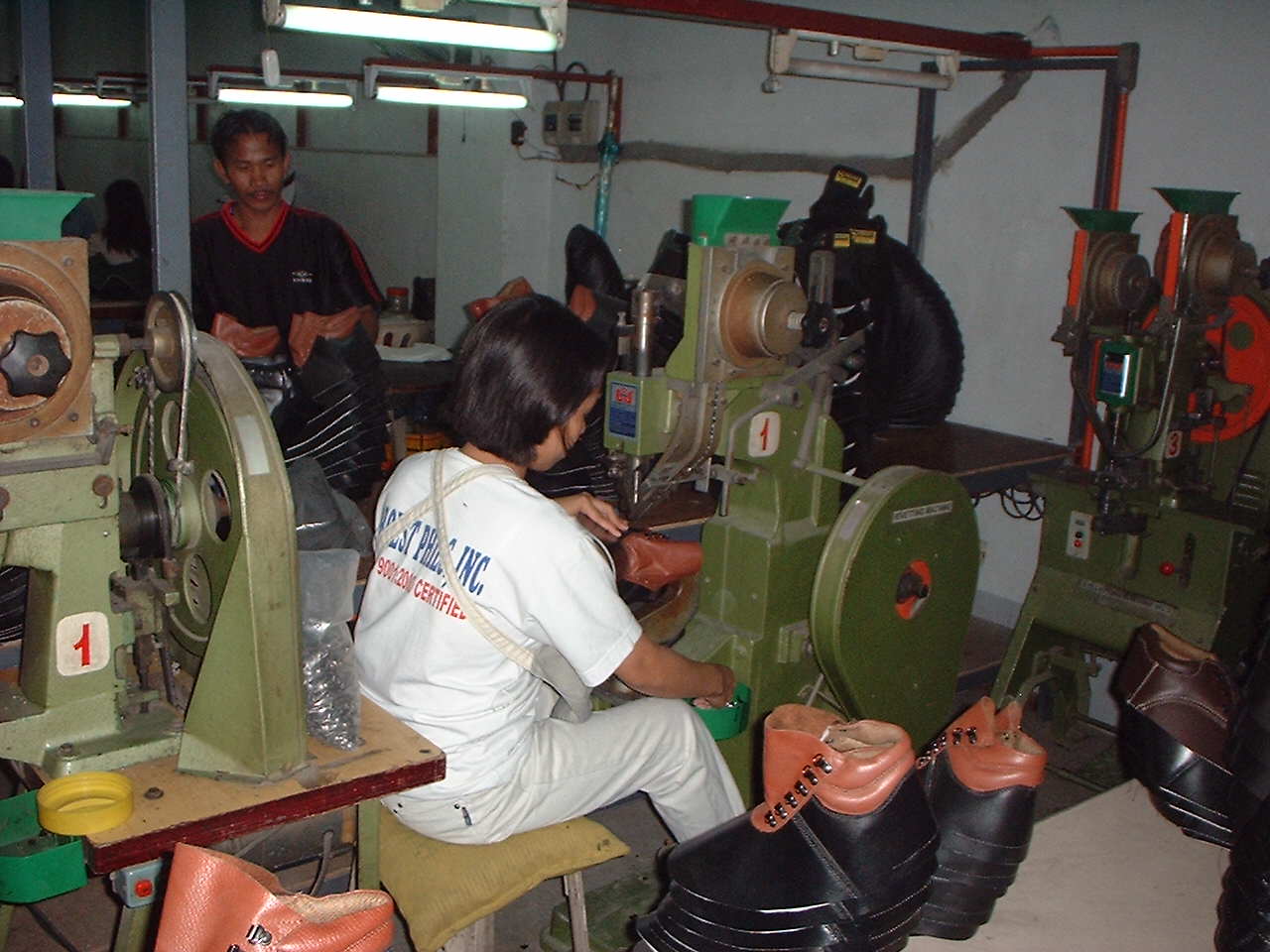
assembling leather goods
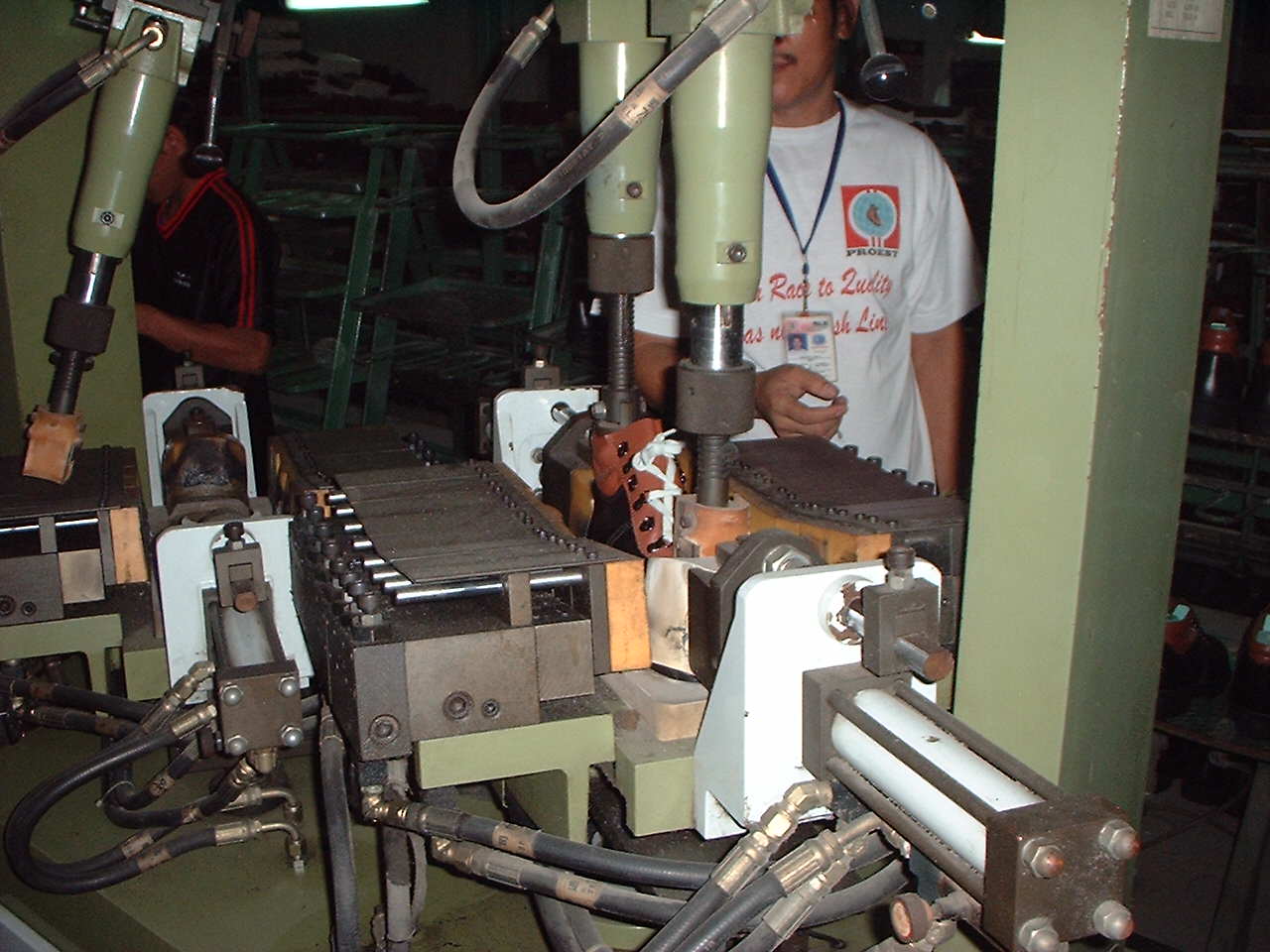
pressing
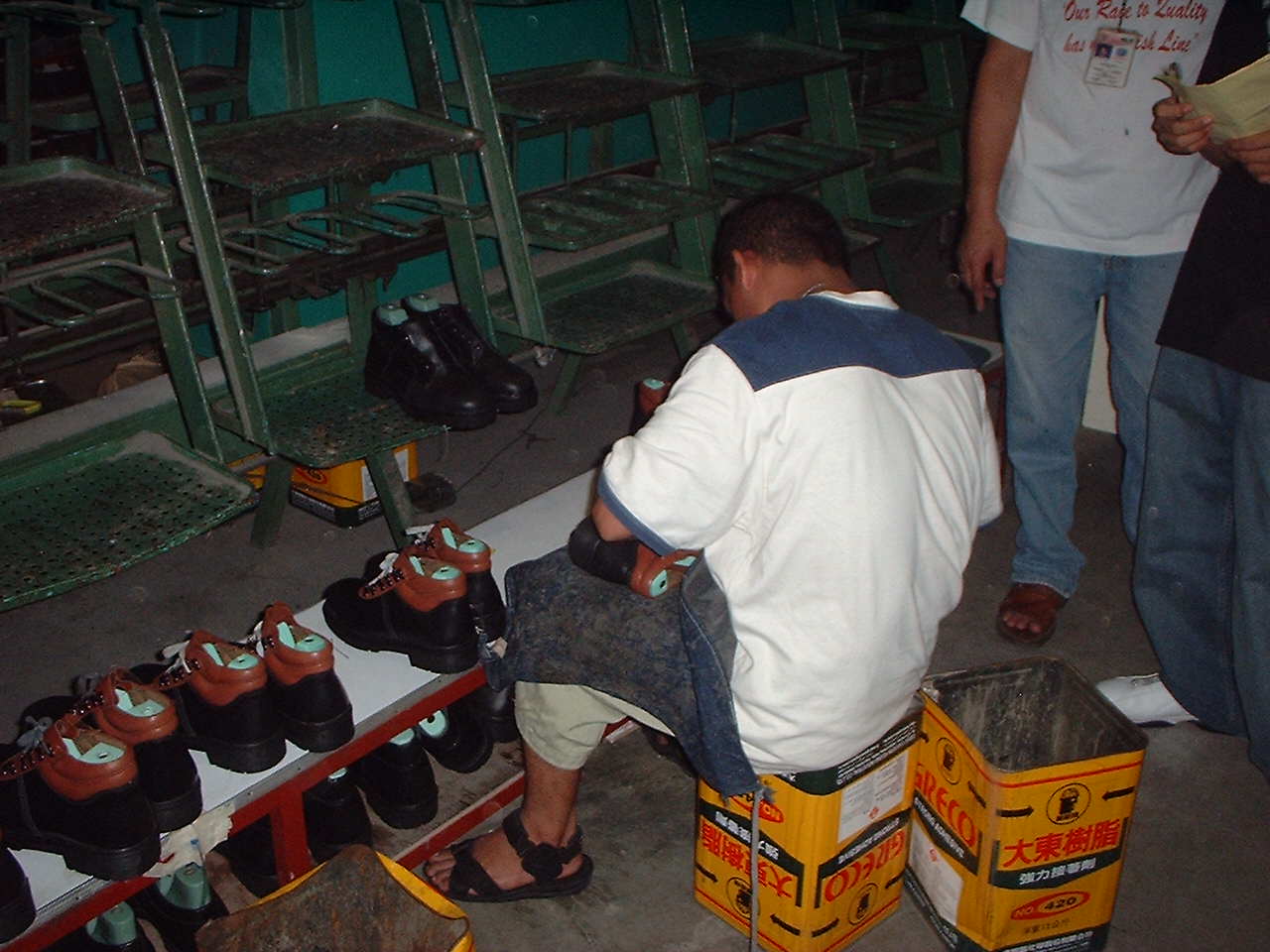
brush coating