How Many Men On The Sixth Floor?
Several witnesses in Dealey Plaza reported seeing two men in the right-hand window of the sixth floor of the Texas School Book Depository, the window known as the sniper's nest. It should be made known that the sixth floor of the depository is actually one big room, so anyone at one end of the floor should be able to see anyone at the other end.
Fifteen minutes before the assassination, a bystander called Arnold Rowland asked his wife if she would like to see a Secret Service agent. He pointed to a window on the sixth floor where he noticed "a man back from the window- he was standing and holding a rifle... we thought momentarily that maybe we should tell someone, but then the thought came to us that it is a security agent." Rowland testified that he had seen the rifle clearly enough to make out the telescopic sight and realize it was a high-powered weapon. The man he saw was not in the famous window, at the right-hand end of the sixth floor, but in the far left-hand window. Rowland also said that, at the same time, he spotted a second figure, at the famous right-hand window. The second man was dark complexioned, and Rowland thought he was a Negro. (Summers, Anthony. "Conspiracy", pg.42)
Shortly before the assassination a female bystander, Mrs. Ruby Henderson, saw two men standing back from a window on one of the upper floors of the Book Depository. Like Rowland, she noticed that one of the men "had dark hair... a darker complexion than the other." (Summers. "Conspiracy", pgs. 42-43)
Mrs. Carolyn Walther noticed two men with a gun in an open window at the extreme right-hand end of the depository. As Mrs. Walther described it, "I saw this man in a window, and he had a gun in his hands, pointed downwards. The man evidently was in a kneeling position, because his forearms were resting on the windowsill. There was another man standing beside him, but I only saw a portion oh his body because he was standing partly up against the window, you know, only halfway in the window; and the window was dirty and I couldn't see his face, up above, because the window was pushed up. It startled me, then I thought, 'Well, they probably have guards, possibly in all the buildings,' so I didn't say anything." (Summers. "Conspiracy", pg. 43)
On November 22, 1963, John Powell was one of the many inmates housed on the sixth floor of the Dallas County Jail. The window in his cell was an ideal vantage point for observation of the famous Depository window. Powell, who was spending three days in custody on minor charges, has long told friends and family members that, in the minutes before the assassination, he and his cellmates watched two men with a gun in the window opposite. He claims he could see them "fooling with the scope" on the gun. Powell recalls, spontaneously, that one of the men appeared to have darker skin than a white American. (Summers. "Conspiracy", pgs. 43-44)
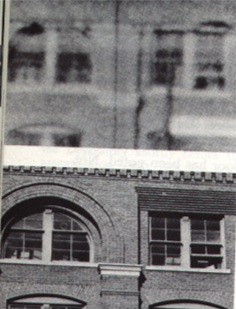
Another witness, Richard Carr, was working on a construction site at the county courthouse overlooking Dealey Plaza. He reported seeing a heavyset man wearing a tan jacket, hat, and horn- rimmed glasses at the sixth floor window just before the shots. After the shooting, he said he saw two men running from behind the Depository or from inside it. The two jumped into a Rambler station wagon. Carr has since had dynamite wired to his car's ignition, and was attacked by knife-wielding assassins.
That is not the end of the Rambler station wagon. Deputy sheriff Roger Craig testified he saw a man running down the north side of Elm Street from the direction of the Book Depository, and jump into a Rambler station wagon that had slowed to pick him up. Craig's life was thrown into turmoil when he refused to recant his testimony. Several attempts were made on his life, his marriage broke up and he committed suicide.