 |
| The West Memphis Three |
| Here is an essay I did for an english class when I went to Centralia College. I got an A- on it. For more information regarding the case, please go to www.wm3.org. The wrongly convicted need your help! |
| The Police, the Devil, and a False Confession The Injustice of the West Memphis Three Case by David Montgomery Police are always pressured to find the culprit of any crime, whether it is a small town or a large city. In many small towns, the citizens want criminals captured and removed quickly so that the can feel safe at night and leave their doors unlocked whenever they please. Police can be blind to the evidence and only willing to comply with public opinion. Because of this, some police will abuse the rights of whomever it takes to get the conviction. Even though there are many safe guards for protecting the rights of a suspect, many mentally handicapped individuals are suggestible and susceptible to giving false confessions. The West Memphis Three are a group of three young men from West Memphis, Arkansas, a town just across the Mississippi from the large city of Memphis, Tennessee. The three were convicted of brutally murdering eight-year-olds Steve Branch, Michael Moore, and Christopher Byers. One of the West Memphis Three, Jessie Misskelley, Jr., is mentally handicapped. The West Memphis Police Department used nearly any means necessary to get a confession from Misskelley, from ignoring state laws to trickery. In the end, Misskelley confessed to be an accomplice to the other two. He was sentenced to life in jail. The other two, Damien Echols and Jason Baldwin, were tried together and convicted. Baldwin now serves life and Echols waits his turn on the Arkansas State Death Row. Even though there is a staggering lack of evidence and there are many discrepancies and conflicting statements in the confession, the West Memphis Three were still convicted. The evidence presented in the case will show that there was never any firm ground for the prosecution to convict the three. The West Memphis Three should be released from prison or given a fair re-trial in which a judge and jury can see all the facts of the case which were not shown originally. The bodies of Branch, Moore, and Byers were found nude and hog-tied in a drainage ditch in area known as Robin Hood Hills. The police found the bodies had been severely beaten and suspected rape. The body of Byers had even had his testes, scrotum, and the skin of his penis removed. The police figured that only a monster could have committed these murders, someone who was obviously a member of a satanic cult, since in the Bible belt, the ultimate monster is Satan. . The police immediately directed its attention to Damien Echols and his friend Jason Baldwin. Police then sought out Misskelley, knowing that he had become a friend to them. Police had picked up Misskelley to question him at 10:00am on June 3, 1993. They questioned him for about an hour in which he denied activity in satanic cults and the murders. Not convinced of his truthfulness, they administered a polygraph examination. Misskelley was told afterwards that he had failed the examination. However, it is a common deceitful practice for police to administer a polygraph, and regardless of results, tell the suspect that he/she failed. As Jerome Skolnick and Richard Leo wrote, police can get away with tactic because courts view a polygraph examination as non-scientific, therefore making the results inadmissible (5). There are many different ways to show that Misskelley�s confession was indeed coerced. The facts that he does get correct in the confession were either public knowledge or he was being lead by the interrogators. In the confessions, Misskelley goes into great detail on how Echols and Baldwin anally and orally rape two of the three young boys. Although the police thought that the boys were raped, autopsies done by Medical Examiner Dr. Frank Peretti reveal that none of the boys were raped as no semen was found in oral or anal swabs. The police originally thought that the boys might have been raped, because their anuses were all dilated. This is normal in death. Criminal profiler Brent Turvey writes, �the anus is a sphincter; a muscle which is tight and closed in most living individuals, and always open and dilated in deceased individuals� (7). Misskelley�s defense brought in Warren Holmes, who has administered polygraphs in such cases as the assassination of President John F. Kennedy, the assassination of Martin Luther King and Watergate. He testified that Misskelley had in fact passed the polygraph examination, and the false results were used to make him confess (12). By giving the polygraph and then telling Misskelley that he failed it is one of the ways that the WMPD deceived him and lured him into giving a confession. Jerome Skolnick and Richard Leo write that this is �one of the most common physical evidence ploys (6). The reason why polygraph examinations or �Lie Detectors� are non-scientific is that even though a person is not telling the truth, they may believe themselves. The test will indicate that the suspect told the truth, when really they were lying (Skolnick and Fyfe 51). In the confession, Misskelley states that at the beginning of the killings, Echols used a large stick to hit then choke Chris Byers. The autopsy does say there were some abrasions on his neck, but no evidence of choking. In Dr. Peretti�s autopsy report, he mentions only a �few scattered abrasions� on the left side of the neck, and no other additional injuries (Peretti ME 331-93). One major discrepancy in the case is that Misskelley stated that brown rope was used to tie up the victims. In Peretti�s autopsy report of Steve Branch, he writes that �the right hand bound to the right ankle with a black shoe lace, the left hand was bound to the left ankle with a white shoe lace� (ME 330-93). The other two boys were tied with either black or white shoelaces. Clearly anyone knows the difference between shoelaces and brown rope. At the very beginning of Misskelley�s confession, he says that the murders happened at about 9 a.m. and that the boys had skipped school. Court documents point out that �the victims had not skipped school on May 5� (Misskelley v. State CR 94-848). Other contradictory statements given by Misskelley was he first stated that Byers had been face down and was being cut on �his bottom� (Misskelley 12:40). He then states just seconds later that Byers was face up and that he was being cut �there real close to his penis (Misskelley 12:40). Misskelley also states in the first confession that on the day of the murders, he wore a plain white T-shirt and Jason Baldwin wore a black shirt of the band Metallica with a skull on it. In the second confession he states that he wore a white T-shirt with a basketball logo on it and Baldwin�s shirt description is too vague as many Metallica shirts have a skull on them. Misskelley cannot make up his mind as to what he wore or what really happened. The biggest fault in the confession is the question of which of the several times stated by Misskelley is the actual time the murders were committed. At first Misskelley tells police that the murders happened around 9 a.m. Just minutes later, however, he states it was around noon. The only thing he does seem sure of is that in the morning. In the second confession, he claims it was around 5 or 6 p.m., definitely not in the morning. Inspector Gary Gitchell, who conducted the second confession, then says, �alright you told me earlier around 7 or 8, which is it?� Misskelley then complies and says it was 7 or 8. Seconds later, he goes back to his old story. �We got up there at 6:00 and the boys come up and it was starting to get dark� (Misskelley 5:00). The question that now needs to be asked is was Misskelley led by the police during his confession? Some would say that Jessie did get many of the facts correct. The boys were tied up, they were beaten, and they were cut. All of those facts were out in the media surrounding this case. One of the other faults of the confession is that police showed Misskelley a picture of one of the victims before he gave his confession. In front of Misskelley during the confessions was a newspaper with the boys� pictures and their names. Officer Bryn Ridge said to Misskelley during the confession � if you read the caption, �the grizzly slain from left 8 year old Michael Moore, Steven Branch, and Christopher Byers�� (Misskelley 12:40). All of the material was presented to Misskelley before the confessions were given, and before the tape recorder was even turned on. The only thing Misskelley had to do was make up his own little story that fit the facts that he had and would be exactly what the police wanted to hear. There are many ways that the WMPD took the confession from Misskelley in an unethical way. It is law in the state of Arkansas that the parent, guardian, or custodian of a minor must sign a waiver form with the suspect acknowledging their right to a lawyer. Judge David Burnett ignored the law claiming it did not matter in this case because Misskelley was being tried as an adult. At the time of the confessions, the police would not have known whether Misskelley would be charged as an adult or not. They should have secured the signature of Misskelley�s father. A mentally overbearing tactic that the police used was the playing of an audiocassette of a boy saying, �nobody knows what happened but me�(Misskelley v. State CR94-848). The boy was a friend of Misskelley and he surely would have thought if he did not confess, somebody would come forward and say that he was there. This was a lose-lose situation for Misskelley. Other examples of coerced confessions by the mentally handicapped are presented in the essay �The Consequences of False Confessions: Deprivations of Liberty and Miscarriages of Justice in the Age of Psychological Interrogation� by Richard Leo and Richard Ofshe. Leo and Ofshe bring up the case Richard Lapointe. In 1989, Manchester, Connecticut Police interrogated Lapointe, a mentally handicapped adult, for over nine hours in which he signed three confessions, which contradicted each other. Lapointe�s wife provided an alibi for him that day and was with him except for a forty-five minute span. In this time, Lapointe would have had to walk ten minutes, rape and kill his victim, and walk back (439). Lapointe admitted that he raped the victim with his penis, strangled her with his hands while she was on the couch, and moved the body. It was later revealed that she was raped with a blunt object, was strangled by compression by an object, and wasn�t even killed on the couch. Lapointe suffers from Dandy Walker Syndrome and cannot lift more than fifty pounds, thus making him incapable of moving the 160-pound victim. The police obtained the confession two years after the murders happened, and obtained the what they thought was correct in the confessions. The police abused his mental condition and he was subsequently convicted. He was sentenced to life in prison without parole plus sixty years. Unfortunately, the mentally handicapped can be taken advantage of in our current system. They are often quick to please and suspect that if they give the information the police want and get in trouble, it can be taken care of easily at a later time. Misskelley stated in a brief 1996 interview when asked about the interrogation that, �it was like they (the police) already knew who did it. I just told them what they were wanting me to say. I just wanted to go home.� The possibilities of other suspects were raised twice in this case during the trials of Jason Baldwin and Damien Echols. A call from the owner of Bojangles Restaurant near the crime scene to police reported that an African-American man had entered the restaurant muddy and covered in blood. He went into the women�s bathroom, where he stayed for a period of time. Police responded to the restaurant, but never even got out of the car. No report was even written. This could have been important to the case because a Negroid hair was lifted from the crime scene. All of the parties involved are Caucasian, meaning the hair must have come from someone else. Upon receiving this new evidence, the WMPD took blood and soil samples from the restroom. All of these samples were subsequently lost. The adoptive father of Chris Byers, John Mark Byers, gave the HBO crew that was doing a documentary of the case a knife as a gift that was supposedly not used. The knife as it turned out, had blood on it that matched John Mark Byers� and Chris Byers blood type (Echols v. State CR94-928). There too was a knife found in a pond behind Jason Baldwin�s house. On the knife was the wording �Special Forces II.� Deanna Holcomb, Echols girlfriend in 1991, testified she remembered him owning a knife, but it had a compass at the end of it. The knife was never linked to the scene by blood, fingerprints, or tissue. It was admitted into evidence because it had �circumstantial links� (Echols v. State CR94-928). Criminal Profiler Brent Turvey was notified of this case by Misskelley�s lawyer Dan Stidham and then took up the case pro bono. In his expert analysis of the case, he stated that there were bite marks on the victims that were previously overlooked. Bite marks are unique to the individual and were even used as evidence to convict Ted Bundy (Nickell 280). Teeth molds of Misskelley, Echols, and Baldwin reveal that the bite patterns do not match their molds. This was then confirmed by David Thomas, a board certified forensic odontologist. (Turvey 10) At the site where the bodies were found, there was very little blood. Because of the injuries that were inflicted on Byers, there would have been a substantial amount of blood. Also because of the severity of the injuries, Byers would have screamed. Residents of the area heard no screaming that night. This proves that the site where the bodies were recovered was merely a dumpsite for the bodies. Additional proof to that is that there was no mosquito bites on the victims, meaning that the bodies were cold when they arrived at the scene. Dr. Dale Griffis testified in the case that the killings were a satanic ritualistic killing. Griffis claims that the date of the murder was important to the killings. The killing took place days after the neo-pagan holiday of Sabbat and just before a full moon. The belief that the a full moon is significant in Satanism is false, and celebration for Sabbat only takes place on the morning of May 1, not the evening of May 4 (Worthington 20). Dr. Dale Griffis also claims that numbers were important in this case. The number 3 was important for how many boys were murdered and the number 8 for how old they were. The number 3 is actually more important in Christianity than Wicca, which Echols was interested in. The number 3 in Christianity stands for the Father, the Son, and the Holy Spirit. In Wicca, however, the important number is four. The number 8 bears no importance in Wicca or Satanism, but is mentioned over 100 times in the Bible (Worthington 20). The biggest folly of Dr. Griffis occurs when he claims that the testicles of Byers were removed to milk them for semen (Worthington 21). Semen is not produced in the testicles, but rather in the prostate, the Cowper�s gland and other glands. The biggest fault in this claim is the fact that Byers was only eight years of age, far too young to produce semen. Griffis, the supposed �cult cop,� received his PhD from Columbia Pacific University, a mail order college. CPU was shut down by the state of California in December of 1999 (Foley1). They had been illegally operating since 1997. CPU owners were fined $10,000 and forced to reimburse students that attended since 1997. Follies of the CPU �diploma mill� include �a Ph.D. dissertation written in Spanish was approved by four faculty who cannot speak the language� and another dissertation that �had no hypothesis, no data collection, and no statistical analysis.� The sixty-one-page dissertation was titled �The Complete Guide to Glass Collecting� (Niemann2). Griffis� degree is valued by no one and should not have even been allowed to testify. Griffis� claims were baseless and he clearly had no idea what he was talking about. In the West Memphis Three case, there is a terrible lack of evidence. The confession that was given by Jessie Misskelley was mostly fiction and should be inadmissible on the grounds that the West Memphis Police Department was deceitful and did not follow the state�s law on parental consent. Much of the evidence that pertained to this case was deemed inadmissible in court or was lost by the police. The evidence that was presented in court did not by any means establish a firm link between the three young men and the victims. The West Memphis Three should be released from prison and allowed to live their lives, which were so quickly taken away by a system that can make mistakes. |
| Bibliography Echols v. State. Arkansas CR94-928. 1996. Foley, Gregory. �Chileno Man�s �Diploma Mill� Ordered Shut.� Point Reyes Light. 30 Dec. 1999. Holmes, Warren. �Warren Holmes� Polygraph Analysis and Testimony.� 18 Oct. 2000 <www.wm3.org/html/polygraph.html>. Leo, Richard and Richard Ofshe. �The Consequences of False Confessions: Deprivations of Liberty and Miscarriages of Justice in the Age of Psychological Interrogation.� Journal of Criminal Law and Criminology 88.2 (Winter 1998) 429-97. Misskelley, Jessie Jr. Confession conducted by the West Memphis Police Department June 3, 1993 12:40pm. ---. Confession conducted by the West Memphis Police Department June 3, 1993 5:00pm. Misskelley v. State. Arkansas CR94-848. 1996. Nickell, Joe and John F. Fischer. Crime Science: Methods of Forensic Detection. Lexington: UP of Kentucky, 1999. Niemann, Paul. �Chileno Doctor in Trouble over �Phony� University.� Point Reyes Light. 24 Dec. 1997. Peretti, Frank J. M.D. Case No. ME-329-93, Moore, James Michael. Autopsy Report. 7 May, 1993. ---. ME-330-93, Branch, Steve Edward. Autopsy Report. 7 May, 1993 ---. ME-331-93, Byers, Christopher Mark. Autopsy Report. 7 May, 1993. Skolnick, Jerome H. and James J. Frye. Above the Law: Police and the Excessive Use of Force. New York: Free Press, 1993. Skolnick, Jerome H. and Richard A. Leo. �The Ethics of Deceptive Interrogation� Criminal Justice Ethics 11.1 (Winter/Spring 1992) 3-13. Turvey, Brent E., MS. �Equivocal Examination and Psychological Profile of Case Evidence.� 15 Nov. 2000 www.wm3.org/html/profile.html. Worthington, Chris. �The West Memphis Three on Trial: The Evidence.� 26 Nov. 2000 <www.wm3.org/framesets/caseframe.html>. |
|
 |
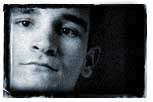 |
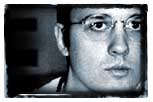
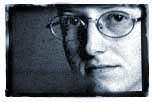
| Jessie Misskelley, Jr. |
| Damien Echols |
| Jason Baldwin |
 |