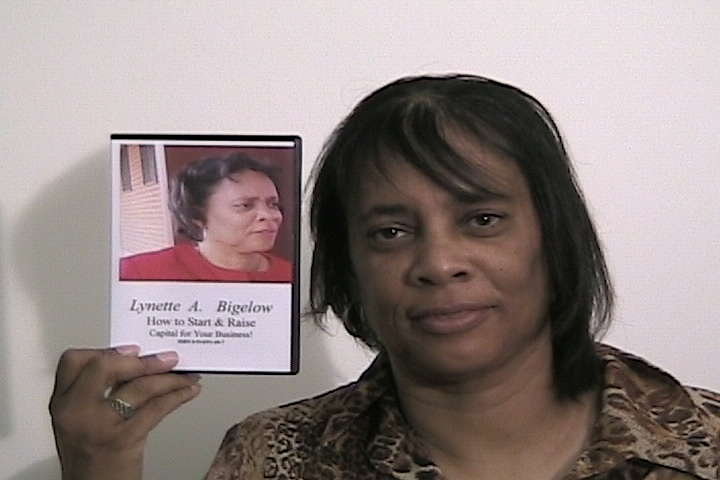
Lynette Bigelow
Script Writing for
Investment Capital Seekers
You can get prepared for your VC process by learning what types of questions venture capitalists will ask, what intrigues them, their motives for asking specific questions, and what they want to hear.
Bigelow Associates provides a research and development department has completed an extensive study on this topic, and has developed a targeted list of questions VCs typically ask.
What is Venture Capital?
Venture Capital is the process by which investors fund early stage, more risk oriented business endeavors. A venture capital funding arrangement will typically entail relinquishing some level of ownership and control of the business. The investment is usually in the form of stock or an instrument which can be converted into stock at some future date.
Venture capitalists typically expect a 20% to 50% annual return on their investment at the time they are bought out. Some will invest as little as $50,000 and as much as $20 million in any one company, but typical investments range from between $500,000 and $5 million. Management experience is a major consideration in evaluating financing prospects.
How to Approach a Venture Capitalist
Venture Capitalists are not untouchable people, but they are very busy. Telephone conversations should be friendly, but succinct and to the point. Many times the venture capitalist will require a review of your business plan before talking with you. Be willing to send your plan in advance of any conversation, and follow up on the stated date and time mentioned in your cover letter. There are many sources for venture capital and you as the entrepreneur should be willing to solicit several firms. The initial response time is usually several weeks, with the entire deal taking several months.
Remember, this is a long term relationship you are developing. Evans Partners urges Capital Seekers send a investor lead letter and simply wait until the investor makes contact. Do not Call VC MANAGERS!
Required Documentation
Be sure to have all of the following documents on-hand and ready for review before soliciting venture capitalist for funding. They will judge you by your preparedness and knowledge of how to work with them. Executive Summary - a succinct document that outlines: management, profits, strategic position and exit. Business Plan - a detailed document of the company including: business strategy, marketing plan, financial document, competitive analysis. Marketing Material - any document that directly or indirectly relates to the sales of your product/service.
How to Talk to Venture Capitalists
The process of venture funding will take several meetings. During most of the meetings, you and the venture capitalist will be dealing from the business proposal you previously sent him. It is necessary for the venture capitalist to understand your product or service. Bringing along a proto-type or the actual product will go a long way in this process. Stay focused on your business plan. Meetings can sometimes last several hours and you may become talkative. Avoid mentioning any grandiose plans you may have for the future. Also, do not mention any products that were not covered in the business plan. Such conversation could present you as a dreamer, or someone who is trying to run before learning how to walk.
VC Do's and Don'ts There are some general guidelines that can help you significantly in your search for venture capital. You may want to cut out these do's and don'ts and paste them somewhere you can study them before embarking on your meeting with a
Lynette Bigelow & Associates
PO BOX 71351
LOS ANGELES, CA 90071
(323) 877-4093
YOUR BUSINESS PLAN
Physically putting a business plan together requires you to translate your thoughts about how you're going to run your business (and how it will perform) into a format that is dictated, in large part, by the business you're in and the expectations of your audience .
While most business plans share a similar structure and contain similar information about a business, your business plan will be distinguished by those characteristics that are unique to your business. The following items need to be examined before you can start to write your plan:
Whom are you writing it for?
If you are writing for third parties outside your business, their needs and expectations will govern the type of information and level of detail in your plan.
Planning horizon: How far out into the future will your plan extend? Normally this is three or five years.
Type of business: Your business's classification as a service provider, product producer or seller, or mixed provider of products and services will have a large impact on the type of information needed in your plan.
Sources of information: What information is available to you in creating a business plan? How can you reduce the time and effort required to analyze your idea? How can you set yourself up for success by taking a realistic look at internal and external conditions of your business, so as to make reasonable predictions about the future?
Costs: Expect to spend $1,000-$2,500 for a well prepared professional venture capital funding proposal.
I urge my clients to prepare an investor lead letter program. A well written Executive Summary, Management Statement and Deal Sheet are critical paperwork.
