HANDBALL
Handball is a popular, spectacular, dynamic and exciting sport that requires teamwork, speed and athleticism, teamwork, patience and finesse, teamwork, strength and power, teamwork, flamboyance and individual skills, teamwork, stamina and fitness and, above all, teamwork. The game is played over 140 nations and by over 15 million participants around the world and it is a wonderful mixture of soccer, basketball and a few water polo tactics thrown in (that'll get your imagination going).
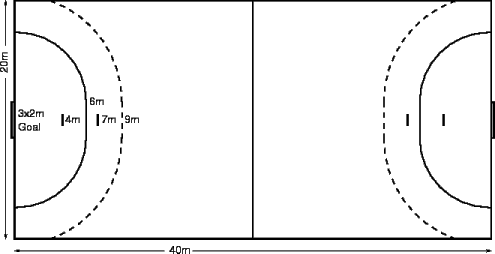
Handball comes in a variety of guises from the now rarely played Field (Outdoor) Handball which was played on a soccer sized field with soccer-sized goals, to the now popular Olympic (Indoor) Handball played on a 40 m x 20 m court to the now recently introduced Beach (Sand) Handball played on the sands of a beach on a 27 m x 12 m playing area, both of which have 3m by 2m goals. Both have soccer-type goals on either end protected by a goalkeeper and the idea is to score more goals than your opposing team by throwing the ball into the goal. You may punch, throw, or even head the ball to a team mate. Touching the ball with your leg below the knee is not allowed. However, you are allowed to take 3 steps, dribble the ball and then have an extra 3 steps or up to 3 seconds to rid of the ball. And court players are not allowed in the goal area (only the goalkeeper). Otherwise, the ball is turned over to the opponents.
The game is fast and the players need to be fit and work for the team. The essance of the game is to catch, throw, run and jump. There are issues of tactics and strategies to resolve the problem of overcoming the opponents defence and discipline and concentration is required in defence to keep the opponents attack at bay. The goalkeepers need to be athletic, flexible, brave and have extremely quick reflexes.
Playing Court
The Players
There are 12 players on each team, 2 goal keepers and 10 field players. There is one goal keeper and a maximum of 6 field players on court at a time. Substitution can occur at anytime so long as player-off before player-on.
Ball-playing rules
The ball-playing rules are in 3's:
No time waisting. There is no shot clock, but if the refs (there are two) think you havn't been trying to score then you'll lose the ball. Whether after 10 seconds or 2 minutes.
If the ball goes out over the side (all the ball passes completely over) then the other side gets it. If the goal keeper directs it over the back line when saving the goal then its still the goal keepers (unlike soccer). If the defenders direct it over the back line in blocking a shot then it goes back to the attacker. If the attacker misses and throws it over the back line then they lose it of course and its a goal throw.
Goal Scoring rules
A goal is scored when it passes completely over the back goal line within the goal. Play resumes at the center line with the non-scoring team in control of the ball.
The goal keeper is the only player allowed in the goal area (6m semi-circle).
The attackers may shoot from in the air above the goal area but must shoot before landing. A defender (or an attacker can not travel through the goal area in order to get an advantage at another spot, (no short cuts). Casual entry into the goal area is OK. The rule only applies if you are seen to gain some advantage by entry into the goal area.
The goal keeper can play as a field player, but the transition must by without the ball, ie if the goal keeper comes out in control of the ball - its a 9m foul. If they go in in control of the ball - its a 7m penalty. If you pass the ball back to your own keeper when they are inside then its a 7m too.
Fouls
Attacking Fouls:
Punishment
The punishment system is:
Source :