Biography
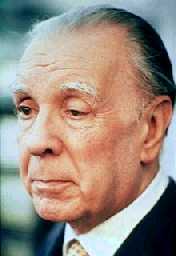
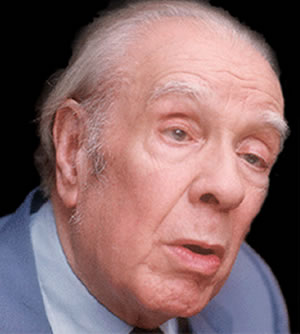
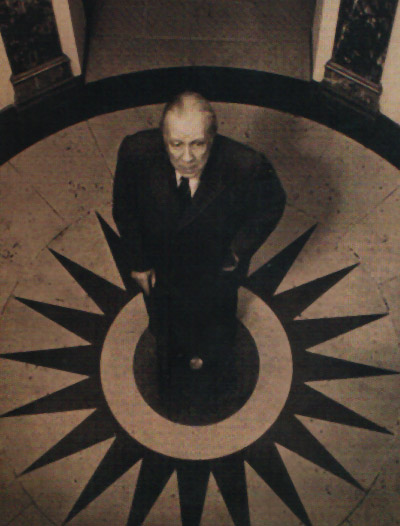
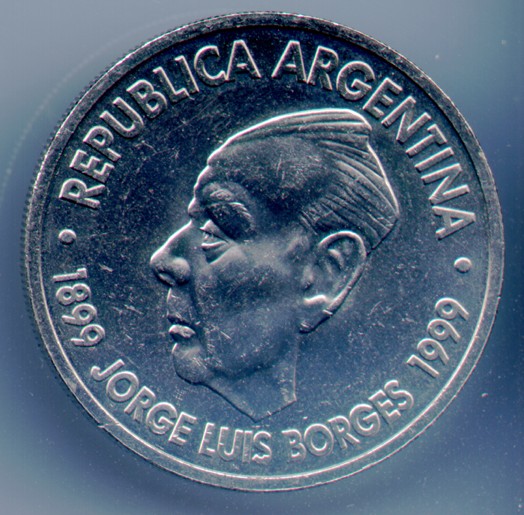
Jorge Luis Borges was born in Buenos Aires, Argentina on August 24, 1899 (died on June 14, 1986 in Geneva
Switzerland). After his birth, his family moved to Palermo, a suburb on the northern outskirts of Buenos Aires. Borges's full name was Joege Francisco Isidoro Luis Borges Acevedo but he never used the entire name. After World War I ended, the borges family
spent three years variously in Lugano, Barcelona, Majorca, Seville, and Madrid.
In Spain, Borges became a member of the avant-gade Ultralist literary movement. His first poem, "Hymn to the Sea," written in the style of Walt Whitman,
was published in the magazine Grecia ("Greece", in Spanish). There he frequented such notable Spanish writers as Rafael Cansinos Assens and
Ramón Gómez de la Serna.
|
|
Early Writing Career
In 1921, Borges returned with his family to Buenos Aires where he imported the doctrine of Ultralism and launched his career as a writer by publishing poems and essays in literary journals. Borges's first collection of poetry was Fervor de Buenos Aires (1923). He contributed to the avant-garde review
Martín Fierro, co-founded the journals Prisma (1921–1922, a broadsheet distributed largely by pasting copies to walls in Buenos Aires) and Proa (1922–1926). He was, from the first issue, a regular contributor to Sur, founded in 1931, by Victoria Ocampo, which became Argentina's most important literary journal. Ocampo herself introduced Borges to
Adolfo Bioy Casares, who was to become Borges's frequent collaborator and Ocampo's brother-in-law, and another well-known figure of Argentine literature.
In 1933 Borges was appointed editor of the literary supplement of the newspaper Crítica, and it was there that the pieces later published in Historia universal de la infamia ( A Universal History of Infamy ) appeared. These pieces lay somewhere between non-fictional essays and fictional short stories, using fictional techniques to tell essentially true stories, and literary forgeries, which typically claimed to be translations of passages from famous but seldom read works. In the following years, he served as a literary adviser for the publishing house
Emecé Editores and wrote weekly columns for El Hogar, which appeared from 1936 to 1939.
|
|
Maturity
Left without a job, his vision beginning to fade, and unable to fully support himself as a writer, Borges began a new career as a public lecturer. Despite a certain amount of political persecution, he was reasonably successful, and became an increasingly public figure, obtaining appointments as President of the Argentine Society of Writers (1950–1953) and as Professor of English and American Literature (1950–1955) at the Argentine Association of English Culture. His short story Emma Zunz was turned into a film (under the name of Días de odio , which in English became Days of Wrath ) in 1954 by Argentine director
Leopoldo Torre Nilsson. Around this time, Borges also began writing screenplays.
|
|
Later Personal Life
When Perón returned from exile and was re-elected president in 1973, Borges immediately resigned as director of the National Library. Borges was twice married. In 1967 his mother, then over 90 years old and fearing her own death, wanted to find someone to care for her blind son. Thus she and his sister Norah arranged for Borges to marry the recently widowed Mrs Elsa Astete Millán. It is said that Borges never consummated the marriage. He and his wife slept in separate bedrooms and the marriage lasted less than three years. After the legal separation, Borges moved back in with his mother, with whom he lived all his life until her death at 99.
Although he had done quite a bit of travelling previously, after 1975, the year his mother died, Borges started a series of extensive visits to countries all over the world, continued until the time of his death. In these travels, he was often accompanied by his amanuensis and research assistant,
María Kodama. This companionship soon developed into a very close personal relationship.
|
|
Borges as Argentine and as world citizen
As a young man, he visited the frontier pampas where the boundaries of Argentina, Uruguay , and Brazil blurred, and lived and studied in Switzerland and Spain ; in middle age he traveled through Argentina as a lecturer and internationally as a visiting professor; and he continued to tour the world as he grew older, ending his life in Geneva where he had attended high school (he never went to university). Drawing on influences of many times and places, Borges's work belittled nationalism and racism.
Borges grew acquainted with the literature from Argentine, Spanish, North American, English , German , Italian , and Northern European/Icelandic sources, including those of Anglo-Saxon and Old Norse . He also read many translations of Near Eastern and Far Eastern works. The universalism that made him interested in world literature — and interesting to world readers — reflected an attitude that was not congruent with the Perón government's extreme nationalism . That government's meddling with Borges's job fueled his skepticism of government (he labeled himself a Spencerian anarchist in the blurb of Atlas ). When extreme Argentine nationalists sympathetic to the Nazis asserted Borges was Jewish — the implication being that his Argentine identity was inadequate — Borges responded in "Yo Judío" ("I, a Jew"), where he indicated he would be proud to be a Jew, but presented his actual Christian genealogy.
|
|